
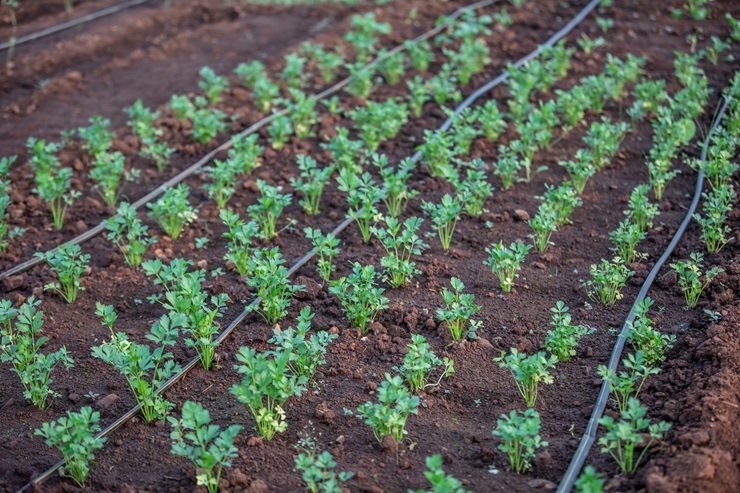
Organic crop farming is a method of growing crops that focuses on soil health, natural nutrient management, crop diversity and responsible pest management. Instead of depending primarily on synthetic fertilizers and pesticides, organic farming systems use practices such as composting, crop rotation, green manure, cover crops and biological pest management.
Organic crop farming is not simply about avoiding chemical products. A successful organic farm requires planning from soil preparation to harvesting and marketing.
For example, a farmer growing vegetables organically may use compost to improve soil fertility, rotate crops between seasons, use mulch to manage weeds and monitor plants regularly for pests. These practices work together rather than relying on one technique alone.
Organic crop farming can be used on small farms, commercial farms, vegetable gardens and larger agricultural operations. However, the exact practices and certification requirements vary by country and production system.
In this guide, we will look at 10 organic farming methods, suitable organic crops, benefits, soil management, pest control, practical examples, challenges and important factors farmers should consider before starting organic crop production.
What Is Organic Crop Farming?
Organic crop farming is the production of agricultural crops using farming practices that emphasize natural processes, soil health, biodiversity and responsible resource management.
Depending on the applicable organic standard, organic farming generally restricts or prohibits certain synthetic inputs and requires farmers to follow specific production practices.
Common organic farming practices include:
Composting
Crop rotation
Green manure
Cover cropping
Mulching
Biological pest management
Organic fertilizers
Natural soil improvement
Biodiversity management
Responsible water management
Organic crop farming can include cereals, pulses, vegetables, fruits, oilseeds, herbs and other agricultural crops.
For a broader overview, link Types of Farming here.
How Does Organic Crop Farming Work?
Organic crop farming works by managing the farm as a connected system rather than focusing only on the individual crop.
A typical cycle may look like:
Soil Preparation → Organic Nutrient Management → Seed Selection → Planting → Crop Monitoring → Natural Pest Management → Harvesting → Storage
The farmer continuously monitors the soil and crops and adjusts management practices according to field conditions.
For example, instead of waiting for a pest problem to become severe, an organic farmer may inspect plants regularly and use physical, cultural or biological control methods where appropriate.
10 Methods of Organic Crop Farming
#1. Composting
Composting converts suitable organic materials into a nutrient-rich soil amendment.
Materials may include:
- Crop residues
- Plant material
- Farmyard manure
- Leaves
- Other suitable organic matter
Properly prepared compost can improve soil organic matter and support soil structure.
However, compost should be properly prepared and used according to the crop and applicable organic standards.
#2. Crop Rotation
Crop rotation means growing different crops in a planned sequence.
For example:
Wheat → Chickpea → Maize → Vegetable Crop
Rotation can help diversify the farm and may support soil and pest management.
#3. Green Manure
Green manure involves growing a crop primarily to incorporate its plant material into the soil rather than harvesting it as the main commercial crop.
Suitable plants can contribute organic matter and nutrients to the soil.
The exact crop selection depends on climate, soil and farming system.
#4. Cover Cropping
Cover crops are grown primarily to protect and improve the soil rather than for direct sale.
They can help with:
- Soil protection
- Weed suppression
- Organic matter
- Erosion management
Cover crops can be especially useful between major commercial crops.
#5. Mulching
Mulching means covering the soil surface with suitable organic or other approved materials.
Organic mulch can include:
- Straw
- Dry leaves
- Crop residues
- Grass clippings where appropriate
Mulching can help reduce evaporation, suppress some weeds and protect the soil surface.
#6. Organic Fertilizers
Organic crop farmers can use suitable organic nutrient sources such as:
- Compost
- Farmyard manure
- Vermicompost
- Plant-based organic amendments
Nutrient management should still be based on crop requirements and soil conditions.
More organic fertilizer does not automatically mean better crop growth.
#7. Biological Pest Management
Biological pest management uses natural organisms or biological processes to help manage pests.
Examples may include beneficial insects and approved biological control products.
The goal is to manage pest populations while reducing reliance on prohibited or unsuitable chemical controls.
#8. Natural Weed Management
Organic farms may combine several weed-management techniques.
These can include:
- Mulching
- Crop rotation
- Mechanical cultivation
- Hand weeding
- Cover crops
- Proper crop spacing
The best approach depends on the crop and farm size.
#9. Biodiversity Management
Organic farming can benefit from greater diversity within the farm.
Farmers may include:
- Different crops
- Flowering plants
- Cover crops
- Trees
- Beneficial habitat
A diverse agricultural environment can support beneficial organisms and improve overall farm resilience.
#10. Integrated Organic Farm Management
The strongest organic systems usually combine several practices instead of relying on just one.
For example:
Crop Rotation + Compost + Cover Crop + Mulching + Pest Monitoring
This integrated approach can help farmers manage soil, crops and pests together.
Best Crops for Organic Farming
Many crops can be produced using organic farming systems if suitable growing conditions and applicable organic requirements are met.
Vegetables
Common examples include:
- Tomato
- Carrot
- Spinach
- Cabbage
- Cauliflower
- Potato
- Onion
- Peas
Read More About Vegetable Farming here.
Fruits
Examples include:
- Apple
- Mango
- Guava
- Banana
- Orange
- Strawberry
Fruit production often requires long-term orchard planning.
Cereals
Organic production can include:
- Wheat
- Maize
- Rice
- Barley
- Oats
Read More About Cereal Crop Farming here.
Pulses
Examples include:
- Chickpea
- Lentil
- Pea
- Kidney bean
- Other suitable legumes
Pulses can also be valuable components of crop rotation.
Oilseeds
Organic farms may produce:
- Mustard
- Sesame
- Sunflower
- Soybean
- Groundnut
Read More about Oilseed Farming here.
Soil Management in Organic Crop Farming
Healthy soil is one of the foundations of organic agriculture.
Instead of treating soil simply as a medium for holding plants, organic farming focuses on maintaining its biological, physical and chemical properties.
Important practices include:
Adding Organic Matter
Compost, manure and suitable crop residues can contribute organic matter.
Avoiding Excessive Soil Disturbance
Unnecessary tillage can affect soil structure and biological activity.
Preventing Erosion
Mulching, cover crops and appropriate land management can help protect soil from erosion.
Crop Rotation
Different crops can provide different root systems and residue patterns.
Farmers should regularly observe soil condition and use soil testing where appropriate.
Organic Nutrient Management
Organic crop production still requires proper nutrient management.
Plants need nutrients such as:
- Nitrogen
- Phosphorus
- Potassium
- Calcium
- Magnesium
- Sulfur
- Micronutrients
Organic farming does not mean that plants can grow without nutrients.
The difference is primarily in how nutrients are managed and which inputs are permitted under the relevant organic standard.
A practical nutrient-management plan may include:
Soil Testing → Compost/Manure Planning → Crop Rotation → Nutrient Monitoring → Adjustments
Organic Pest and Disease Management
Pest management is one of the most important challenges in organic crop farming.
A good strategy starts with prevention.
Farmers can use:
- Healthy planting material
- Crop rotation
- Resistant varieties where available
- Field sanitation
- Proper spacing
- Beneficial insects
- Physical barriers
- Regular crop inspection
Practical Example
Suppose a vegetable farmer notices insects appearing on young plants.
Instead of immediately applying a treatment, the farmer first identifies:
- What insect is present?
- How severe is the infestation?
- Which part of the plant is affected?
- Are beneficial insects present?
- Is the problem spreading?
Only after identifying the problem should an appropriate management method be selected.
This kind of monitoring is more sustainable than treating every insect as a pest.
Weed Management in Organic Farming
Weeds compete with crops for:
- Water
- Nutrients
- Sunlight
- Growing space
Organic farmers can combine several methods.
Mulching
Can suppress some weeds while protecting the soil surface.
Crop Rotation
Changing crops can disrupt some weed patterns.
Cover Crops
Can compete with weeds and keep the soil covered.
Mechanical Weed Control
Suitable tools can be used to remove weeds between crop rows.
Hand Weeding
This may still be practical on small farms and vegetable plots.
Benefits of Organic Crop Farming
#1. Focuses on Soil Health
Organic farming places significant emphasis on soil organic matter, biological activity and long-term soil management.
#2. Encourages Crop Diversity
Crop rotation and diversified production can reduce dependence on a single crop.
#3. Supports Natural Pest Management
Organic systems often emphasize prevention, monitoring and biological or cultural methods.
#4. Can Reduce Dependence on Certain Synthetic Inputs
Organic standards restrict or prohibit many synthetic inputs, although the exact rules depend on the certification system.
#5. Can Create Premium Market Opportunities
Certified organic products may receive premium prices in some markets.
However, premium pricing is not guaranteed and depends on consumer demand, certification and market access.
#6. Supports Sustainable Farming Practices
Organic farming can overlap with sustainable practices such as:
- Crop rotation
- Composting
- Cover cropping
- Soil conservation
- Biodiversity management
Read More about Sustainable Farming.
#7. Diversifies Farm Production
A farmer can combine organic:
- Vegetables
- Fruits
- Cereals
- Pulses
- Oilseeds
depending on land and market conditions.
#8. Can Improve Farm Resource Management
Careful use of organic matter, water and crop residues can contribute to efficient resource management.
#9. Creates Opportunities for Direct Marketing
Some organic farmers sell through:
- Local markets
- Farmers’ markets
- Direct subscriptions
- Retailers
- Restaurants
- Online channels
The best option depends on the local market.
#10. Encourages Long-Term Planning
Organic farming often requires farmers to think beyond a single harvest.
Soil fertility, crop rotation, pest management and market development need to be planned over multiple seasons.
Challenges of Organic Crop Farming
Organic farming has benefits, but it also has challenges.
Higher Labour Requirements
Weed control and crop monitoring can require more labour, especially on smaller farms.
Pest Management
Managing pests without prohibited synthetic pesticides can require more planning.
Certification Costs
Farmers selling products as certified organic may need to meet certification and record-keeping requirements.
Market Access
Not every area has a strong market for certified organic products.
Transition Period
Farmers converting from conventional production to certified organic production may have to follow a defined transition period under the applicable standard.
Yield Variability
Organic yields vary by crop, location, soil condition, management and farm experience. Organic farming should not be presented as automatically producing either higher or lower yields in every situation.
Organic Crop Farming vs Conventional Farming
| Feature | Organic Crop Farming | Conventional Crop Farming |
|---|---|---|
| Soil management | Strong focus on organic matter and biological processes | Uses a range of soil and nutrient management methods |
| Synthetic inputs | Restricted under organic standards | May be used where legally permitted |
| Pest management | Prevention, biological and approved methods | May include synthetic pesticides |
| Fertilization | Organic and approved nutrient sources | Wider range of fertilizers |
| Crop rotation | Commonly emphasized | Depends on farm |
| Certification | Required for certified organic claims | Generally not required |
| Labour | Can be higher for some activities | Varies |
| Market | Organic and general markets | Mainly general markets |
Practical Organic Farming Examples
Example 1: Organic Vegetable Farm
Imagine a small farmer growing vegetables near a city.
Instead of planting tomatoes continuously, the farmer may use a rotation such as:
Tomato → Beans → Cabbage → Cover Crop
The farmer can combine this rotation with compost, mulch, manual weed control and regular pest monitoring.
The advantage is that several management practices work together instead of relying on a single technique.
Example 2: Organic Wheat and Chickpea Farm
A farmer may grow:
Year 1 → Wheat
Year 2 → Chickpea
The farmer can add suitable organic matter and monitor soil fertility between seasons.
Chickpea also provides a different crop type within the rotation, helping diversify production.
Example 3: Organic Fruit Orchard
An organic fruit farmer may focus on:
- Soil organic matter
- Mulching
- Cover crops
- Beneficial insects
- Weed management
- Regular tree monitoring
Because fruit trees remain in the same location for years, orchard management requires a long-term approach rather than a single-season strategy.
How to Start Organic Crop Farming
Step 1: Choose Your Crop
Start with crops that are suitable for your local climate, soil and market.
Do not choose a crop only because organic products can sometimes receive higher prices.
Step 2: Test the Soil
Understand:
- Soil pH
- Nutrient levels
- Organic matter
- Drainage
- Soil texture
This helps you create a more realistic nutrient-management plan.
Step 4: Plan Crop Rotation
Prepare a rotation for multiple seasons rather than deciding what to plant after every harvest.
Step 5: Build Soil Fertility
Use suitable organic matter and approved inputs according to crop requirements and applicable standards.
Step 6: Plan Pest Management
Prepare a monitoring system before the crop is planted.
Regular inspection is easier than trying to control a severe infestation later.
Step 7: Maintain Farm Records
Record:
- Seed varieties
- Planting dates
- Inputs
- Pest observations
- Harvest quantity
- Selling price
- Production costs
These records can help you understand what is actually working on your farm.
Common Organic Farming Mistakes
#1. Assuming Organic Means No Farm Management
Organic farming still requires careful planning.
#2. Using Too Much Compost
More compost does not automatically mean better soil.
Nutrient balance matters.
#3. Ignoring Weeds
Weeds can quickly become difficult to control if they are not managed early.
#4. Treating Every Insect as a Pest
Some insects are beneficial.
Farmers should identify the insect before taking action.
#5. Ignoring Market Demand
Growing organic crops without a realistic sales plan can create financial problems.
#6. Not Keeping Records
Certification and good farm management both benefit from accurate records.
#7. Assuming Organic Always Means Higher Profit
Premium prices can help, but certification, labour, inputs, storage and marketing costs must also be considered.
Is Organic Crop Farming Profitable?
Organic crop farming can be profitable, but profitability varies considerably.
A farmer should calculate:
Total Revenue − Total Production Costs = Approximate Return
Costs can include:
- Seeds
- Labour
- Compost
- Organic inputs
- Irrigation
- Equipment
- Certification
- Packaging
- Transportation
- Marketing
For example, an organic vegetable farm may receive a higher selling price but also require more labour for weed control and crop monitoring.
Therefore, profitability should be calculated using the actual costs and prices for the farm’s location.
FAQs.
Q1. What is organic crop farming?
Organic crop farming is the production of crops using farming practices that emphasize soil health, biodiversity, natural processes and inputs permitted under applicable organic standards.
Q2. Which crops can be grown organically?
Vegetables, fruits, cereals, pulses and oilseeds can all be produced under organic systems when suitable production practices and applicable standards are followed.
Q3. Is organic farming completely chemical-free?
The phrase “chemical-free” is misleading because everything is made of chemicals, including water and natural substances. Organic standards focus on which inputs and production practices are permitted or restricted.
Q4. Is organic crop farming profitable?
It can be profitable, but results depend on crop choice, yield, labour, certification, production costs, market demand and selling price.
Q5. Does organic farming improve soil?
Organic farming practices such as composting, crop rotation and cover cropping can support soil health when properly managed.
Q6. Can organic farming control pests?
Yes. Organic systems use prevention, monitoring, crop rotation, biological controls, physical methods and other permitted approaches.
Q7. Does organic farming require certification?
Farmers generally need to meet the applicable certification requirements if they want to legally market their products as certified organic. Requirements vary by country and certification system.
Q8. What is the difference between organic farming and natural farming?
The terms can refer to different production philosophies and standards. Organic farming may involve formal standards and certification, while “natural farming” can describe different approaches depending on the region and practitioner.
Conclusion:
Organic crop farming is more than replacing conventional fertilizers or pesticides with organic alternatives. It is a complete farm-management approach that considers soil health, crop diversity, nutrient management, pest prevention, water use and long-term productivity.
A farmer starting with organic production should begin with crops that are suitable for the local environment and have a realistic market.
Practices such as crop rotation, composting, cover cropping, mulching and regular crop monitoring can work together to create a more balanced production system.
Most importantly, organic farming should be approached as a long-term process. Good records, proper planning and continuous observation can help farmers understand what works on their particular land.
2 thoughts on “Organic Crop Farming: 10 Methods, Benefits, Crops & Complete Guide”