
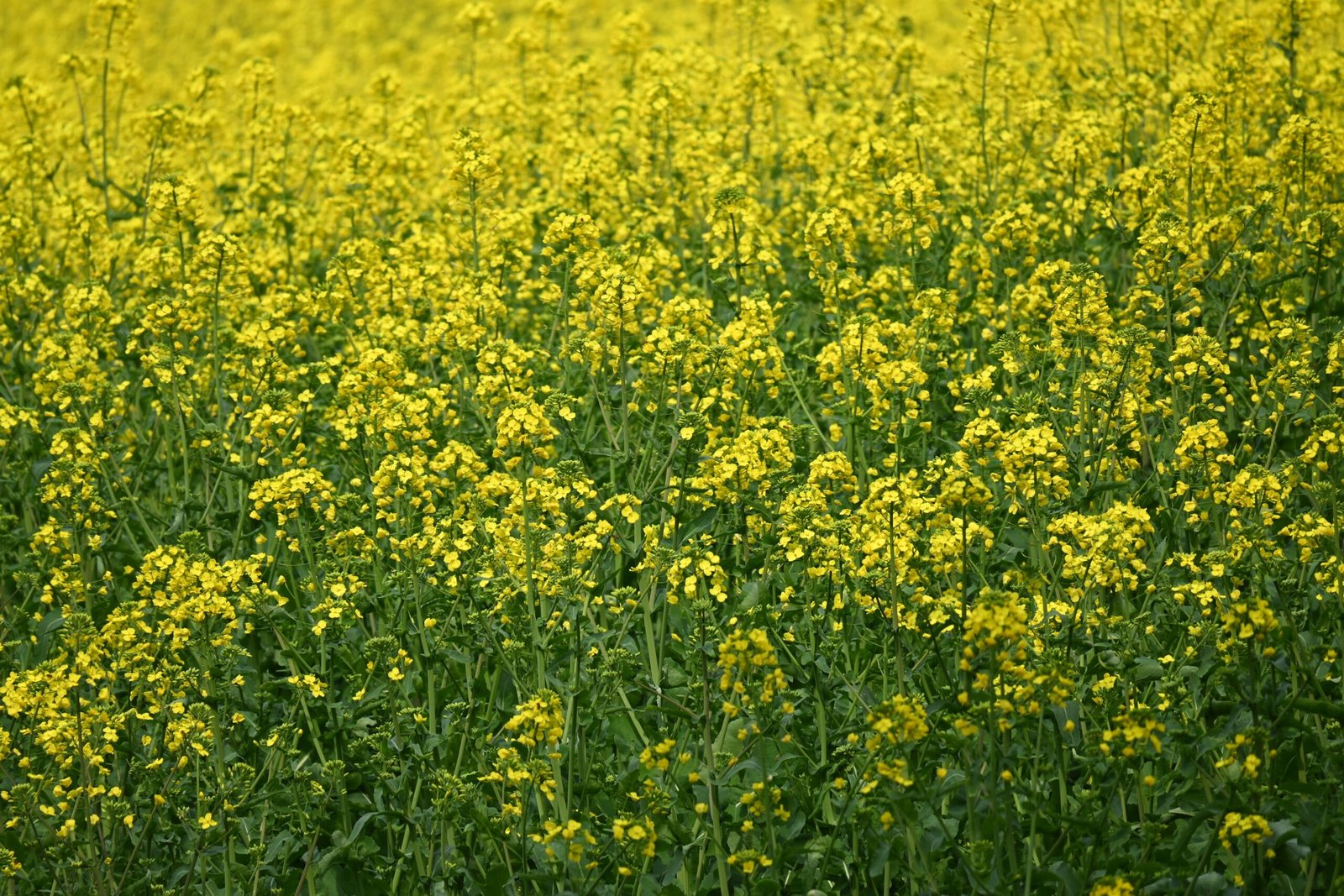
Oilseed farming is the cultivation of crops that produce seeds containing vegetable oils. These oils are used for cooking, food processing, animal feed, cosmetics, industrial products and several other applications.
Common oilseed crops include mustard, soybean, sunflower, groundnut, sesame, rapeseed, safflower, linseed, castor and coconut.
Oilseed farming is important because these crops can serve both food and commercial markets. However, choosing an oilseed crop is not simply a matter of planting whichever crop has a high market price. Soil, climate, rainfall, irrigation, crop duration, input costs and local buyers all influence the final result.
For example, a farmer with limited irrigation may choose a crop suited to local rainfall instead of a crop with higher water requirements. Similarly, a farmer near an oil-processing facility may have different marketing opportunities from someone located far from major buyers.
Oilseed farming is one of several agricultural production systems used around the world. To understand how oilseed production fits into agriculture as a whole, you can also learn more about Types of Farming and the different farming systems used in different conditions.
What Is Oilseed Farming?
Oilseed farming is the agricultural production of crops that contain oil-rich seeds.
After harvesting and processing, these seeds can produce edible or industrial oils.
Examples include:
- Mustard
- Soybean
- Sunflower
- Groundnut
- Sesame
- Rapeseed
- Safflower
- Linseed
- Castor
- Coconut
Oilseed crops can be grown on small farms, large commercial farms and mixed farming operations.
Some oilseed crops are primarily used for edible oil, while others have important industrial applications.
Why Is Oilseed Farming Important?
Oilseed crops have an important role in agriculture because they provide raw materials for several industries.
Food and Cooking
Many oilseed crops are processed to produce cooking oil.
Animal Feed
Oil extraction produces meals or other by-products that can be used as livestock feed, depending on the crop and processing method.
Industrial Products
Some oils are used in:
- Paints
- Soaps
- Cosmetics
- Lubricants
- Biofuel-related applications
- Other industrial products
Crop Rotation
Oilseed crops can also be included in crop rotation systems.
For example:
Wheat → Mustard → Maize → Legume
The suitability of a rotation depends on local soil, climate and farm management.
Read More information about Crop Rotation.
10 Major Oilseed Crops
#1. Mustard
Mustard is an important oilseed crop in many regions.
Its seeds are processed to produce mustard oil, while some varieties are also used as food.
Mustard generally grows well under suitable cool-season conditions, but exact requirements depend on the variety and location.
#2. Soybean
Soybean is both an oilseed and a major protein-rich crop.
Soybean seeds are processed for vegetable oil, while soybean meal is widely used in animal-feed industries.
Soybean is particularly important in commercial agriculture because it has multiple uses and established processing markets in many regions.
#3. Sunflower
Sunflower is grown primarily for its oil-rich seeds.
It is recognized by its large flower heads and relatively high oil content in suitable varieties.
Sunflower requires appropriate sunlight, soil and water conditions for good production.
#4. Groundnut
Groundnut, also called peanut, is an oilseed and food crop.
It is used for:
- Cooking oil
- Food products
- Peanut-based products
- Oilseed processing
Unlike many above-ground oilseed crops, groundnut develops its pods below the soil surface.
#5. Sesame
Sesame is an important oilseed crop known for its small oil-rich seeds.
It can be used for:
- Sesame oil
- Food products
- Bakery products
- Traditional foods
Sesame is grown in different climates and production systems depending on variety and local conditions.
#6. Rapeseed
Rapeseed is an important oilseed crop grown in several agricultural regions.
Some rapeseed varieties are specifically developed for oil production and are important in commercial oilseed agriculture.
Rapeseed is closely related to mustard and is included in many oilseed production systems.
#7. Safflower
Safflower is an oilseed crop that can be grown in relatively dry agricultural conditions depending on variety and local climate.
Its seeds can be processed for oil.
Safflower can therefore be considered where farmers are looking for oilseed options suitable for particular soil and water conditions.
#8. Linseed
Linseed, also known as flaxseed, is grown for its oil-rich seeds.
Linseed oil has food and industrial applications, although the exact use depends on the variety and processing method.
#9. Castor
Castor is an important industrial oilseed crop.
Castor oil has applications in several industrial and commercial products.
Because castor is primarily associated with industrial uses, its production and marketing can differ from crops mainly grown for edible oil.
#10. Coconut
Coconut is a perennial crop that can provide oil from its kernel.
Coconut farming differs significantly from annual oilseed crops such as mustard or sunflower because coconut palms remain productive for many years.
This makes coconut a useful example of how oil-producing crops can belong to very different farming systems.
Types of Oilseed Farming
Oilseed farming can be classified in different ways depending on the farm and production system.
#1. Small-Scale Oilseed Farming
Small farmers may grow oilseed crops primarily for household consumption, local sale or both.
For example, a farmer may grow mustard and retain part of the harvest for household oil processing or food use while selling the remaining production.
#2. Commercial Oilseed Farming
Commercial farmers grow oilseed crops mainly for market sale.
The farmer’s decisions may be influenced by:
- Market price
- Processing facilities
- Input costs
- Expected yield
- Transportation
- Buyer demand
Read More About Commercial Farming.
#3. Organic Oilseed Farming
Organic oilseed farming follows applicable organic production practices and certification requirements.
Farmers may focus on soil fertility, crop rotation, organic inputs and integrated pest management.
#4. Rainfed Oilseed Farming
Rainfed farming depends mainly on rainfall rather than regular irrigation.
Suitable crops vary according to the local rainfall pattern, soil and climate.
#5. Irrigated Oilseed Farming
Irrigation provides additional water when rainfall is insufficient.
The amount and timing of irrigation should depend on the crop’s growth stage and local conditions.
How Oilseed Farming Works
A basic oilseed farming cycle looks like this:
Land Preparation → Seed Selection → Sowing → Crop Management → Pest Monitoring → Harvesting → Drying → Storage → Marketing
Each stage affects the final quality and yield.
Soil and Climate Requirements
Different oilseed crops have different requirements.
Soil
Depending on the crop, farmers may need to consider:
- Soil texture
- Drainage
- Soil fertility
- Soil pH
- Organic matter
- Water-holding capacity
There is no single soil type suitable for all oilseed crops.
For example, a crop that performs well in one soil may not perform equally well in heavy or poorly drained soil.
Climate
Temperature and rainfall requirements vary between crops.
Some oilseed crops are better suited to cooler seasons, while others perform well in warmer conditions.
Before selecting a crop, farmers should check the recommended growing conditions for the particular variety.
Oilseed Farming Methods
#1. Conventional Oilseed Farming
Conventional production may use standard farming practices involving mechanized land preparation, improved seeds, fertilizers, irrigation and crop-protection methods.
The exact practices depend on the crop and region.
#2. Organic Oilseed Farming
Organic systems focus on approved organic inputs and production practices.
Crop rotation and organic matter management can be important components.
#3. Sustainable Oilseed Farming
Sustainable farming may combine:
- Crop rotation
- Efficient irrigation
- Soil conservation
- Integrated pest management
- Appropriate fertilizer use
- Residue management
Read More About Sustainable Farming.
#4. Precision Oilseed Farming
Precision agriculture can help farmers use data to make decisions about:
- Fertilizer
- Irrigation
- Crop monitoring
- Field variability
- Pest management
Read more about the Precision Farming.
Benefits of Oilseed Farming
#1. Provides Vegetable Oil
Many oilseed crops are major sources of vegetable oil for food and cooking.
#2. Multiple Market Uses
Oilseed crops can have several markets, including:
- Food
- Oil processing
- Animal feed
- Industrial products
This can create different marketing opportunities.
#3. Supports Crop Diversification
Farmers can include oilseed crops alongside cereals, pulses, vegetables and other crops.
This can help diversify farm production.
#4. Useful for Crop Rotation
Oilseed crops can form part of a planned crop rotation system.
However, the rotation should be designed according to crop families, disease risks and local conditions.
#5. Supports Processing Industries
Oilseed farming supplies raw material to oil mills and food-processing businesses.
This creates connections between farmers and agricultural processing industries.
#6. Provides By-Products
Oil extraction produces by-products such as oilseed meals.
The value and use of these by-products depend on the crop and processing method.
#7. Can Provide Commercial Opportunities
Farmers in areas with strong oilseed markets may find commercial opportunities in growing suitable oilseed crops.
Profitability still depends on production costs and market prices.
#8. Different Crops Suit Different Conditions
Farmers have several oilseed choices.
This allows them to consider crops according to:
- Climate
- Water
- Soil
- Farm size
- Market
- Production season
#9. Can Fit Into Mixed Farming
Oilseed production can sometimes be combined with livestock or other crops.
This may create a more diversified farm system.
#10. Supports Food and Industrial Supply Chains
Oilseed crops contribute raw materials to food, feed and industrial markets.
Their importance therefore extends beyond the farm itself.
Challenges of Oilseed Farming
Oilseed farming also comes with several challenges.
Market Price Changes
Oilseed prices can change because of supply, demand, weather, processing costs and broader market conditions.
Weather Risk
Drought, excessive rainfall, storms and unusual temperatures can affect crop production.
Pest and Disease Problems
Oilseed crops can be affected by insects, fungal diseases and other crop-health problems.
Regular monitoring is important.
Input Costs
Seeds, fertilizers, irrigation, labour, machinery and crop protection can contribute significantly to total production costs.
Storage Problems
Oilseed quality can deteriorate if harvested seeds are not dried and stored properly.
Moisture management is particularly important.
Irrigation and Nutrient Management
Water and nutrients should be managed according to the specific crop.
Over-irrigation can cause problems, particularly in poorly drained fields.
Similarly, excessive fertilizer application does not automatically result in higher yields.
Farmers should consider:
- Soil testing
- Crop nutrient requirements
- Growth stage
- Soil moisture
- Rainfall
- Irrigation availability
A practical approach is to keep records of fertilizer and irrigation use and compare them with crop performance.
Pest and Disease Management
Oilseed farmers should inspect crops regularly.
Look for:
- Leaf damage
- Discoloration
- Wilting
- Insect activity
- Unusual plant growth
- Fungal symptoms
Integrated pest management can combine:
- Field monitoring
- Crop rotation
- Resistant varieties
- Biological control where suitable
- Cultural practices
- Appropriate crop-protection products
The exact treatment should be based on the crop, pest or disease and local agricultural recommendations.
Harvesting and Storage
Harvest timing is important for oilseed quality.
Harvesting too early can result in immature seeds, while delayed harvesting can increase the risk of losses from weather, pests or shattering depending on the crop.
After harvest, seeds may need to be:
- Cleaned
- Dried to a suitable moisture level
- Graded
- Stored in appropriate conditions
- Protected from pests and moisture
Good post-harvest management can reduce avoidable losses.
Practical Oilseed Farming Examples
Example 1: Mustard After a Cereal Crop
A farmer growing wheat may consider mustard as the next crop if the local climate, soil and farming calendar are suitable.
The sequence could be:
Wheat → Mustard → Pulse Crop
The farmer can evaluate the results each season and adjust the rotation according to soil conditions and market demand.
Example 2: Soybean as a Commercial Crop
A farmer with suitable rainfall and soil conditions may grow soybean for commercial sale.
Before planting, the farmer should consider:
- Seed cost
- Expected yield
- Local soybean prices
- Nearby buyers
- Transportation
- Storage
The crop should be selected based on the complete business calculation rather than price alone.
Example 3: Small-Scale Sesame Farming
A small farmer may grow sesame as an additional crop where the climate and soil are suitable.
Part of the harvest may be sold locally while some may be retained for household or local food uses.
This illustrates how oilseed farming can be integrated into a diversified small-farm system.
Oilseed Farming vs Cereal Farming
| Feature | Oilseed Farming | Cereal Farming |
|---|---|---|
| Main product | Oil-rich seeds | Grain |
| Examples | Mustard, soybean, sunflower | Wheat, rice, maize |
| Main uses | Oil, food, feed, industry | Food, feed, processing |
| Crop diversity | Many oilseed options | Many cereal options |
| Processing | Often requires oil extraction | Milling or processing varies |
| Market | Food and industrial markets | Food, feed and industrial markets |
| Crop rotation | Can be included | Can be included |
Neither category is automatically more profitable. Farmers should compare crops using local production costs, expected yield and market conditions.
How to Choose the Right Oilseed Crop
Before selecting an oilseed crop, consider these questions:
- Is the climate suitable?
Check temperature, rainfall and growing season.
- Is sufficient water available?
Determine whether the crop can be grown under rainfed conditions or requires irrigation.
- Is the soil suitable?
Consider soil texture, drainage, fertility and pH.
- Is there a reliable market?
Identify local buyers, processors, wholesalers or cooperatives.
- What are the production costs?
Calculate seed, fertilizer, irrigation, labour, machinery, harvesting and transportation costs.
- What is the expected harvest period?
Make sure harvesting does not conflict with other crops or available labour.
Common Oilseed Farming Mistakes
Planting Without Checking the Market
A crop may produce a good yield but still generate a poor return if the selling price is low or buyers are difficult to reach.
Using Poor-Quality Seed
Seed quality can have a major effect on crop establishment and final production.
Ignoring Soil Testing
Applying fertilizer without understanding soil conditions can result in inefficient nutrient management.
Overwatering
Excess water can create root and disease problems in crops that do not tolerate waterlogging.
Ignoring Post-Harvest Handling
Poor drying and storage can reduce seed quality.
Choosing a Crop Only Because Prices Are High
Market prices change. A crop should be selected based on the complete production and marketing plan.
Is Oilseed Farming Profitable?
Oilseed farming can be profitable, but there is no fixed profit figure that applies to every farmer.
Profit depends on:
- Crop
- Yield
- Seed cost
- Fertilizer cost
- Labour
- Irrigation
- Machinery
- Market price
- Transportation
- Storage
- Processing access
A simple calculation is:
Gross Revenue = Yield × Selling Price
Then:
Approximate Return = Gross Revenue − Total Production Costs
For example, if a farmer expects a crop to produce a certain yield, they should compare the expected revenue with all major costs before planting.
This is a more realistic approach than assuming that a high market price automatically means high profit.
FAQs.
Q1. What is oilseed farming?
Oilseed farming is the cultivation of crops that produce oil-rich seeds used for food, animal feed and industrial purposes.
Q2. What are the major oilseed crops?
Major examples include mustard, soybean, sunflower, groundnut, sesame, rapeseed, safflower, linseed, castor and coconut.
Q3. Which oilseed crop is most profitable?
There is no single most profitable crop for every location. Profitability depends on yield, local prices, production costs, climate and market access.
Q4. Is soybean an oilseed crop?
Yes. Soybean is an important oilseed crop and is also valued for its protein-rich meal.
Q5. Is groundnut an oilseed crop?
Yes. Groundnut is both an edible food crop and an important oilseed crop.
Q6. Can oilseed crops be used in crop rotation?
Yes. Suitable oilseed crops can be included in crop rotation, depending on the crops, soil, climate and disease risks.
Q7. What is the main use of oilseed crops?
Many oilseed crops are processed to produce vegetable oils. Some also provide food, animal-feed products and industrial raw materials.
Q8. How can oilseed farmers reduce losses?
Farmers can reduce losses through suitable crop selection, timely harvesting, proper drying, appropriate storage and regular pest monitoring.
Conclusion:
Oilseed farming is an important part of agriculture because oilseed crops provide raw materials for food, animal feed and industrial products.
However, successful oilseed production requires more than selecting a crop and planting it. Farmers need to consider soil, climate, water, seed quality, crop management, harvesting, storage and market demand.
A practical approach is to start with crops that are already suited to the local environment and have an established market. Farmers can then compare production costs and results over several seasons.
With proper planning and suitable crop management, oilseed farming can become a useful part of a diversified agricultural system.
One thought on “Oilseed Farming: 10 Major Oilseed Crops, Methods, Benefits & Complete Guide”