

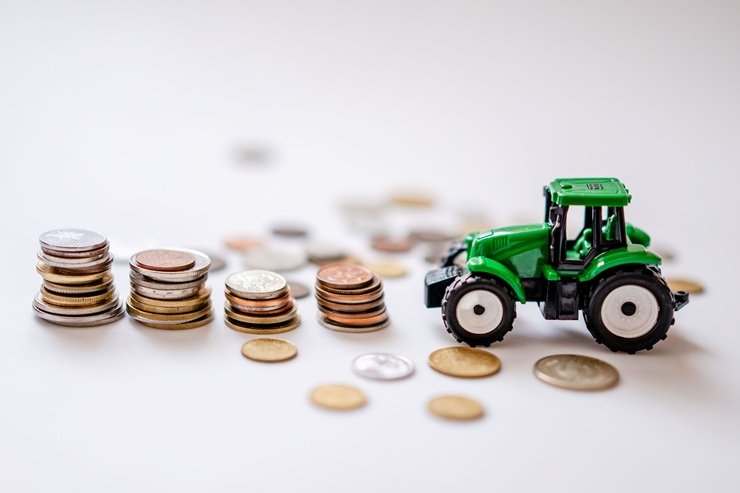
Farming is often described as a way to produce food and earn an income from land, but running a farm is also a business. Farmers spend money on seeds, labour, fertilizers, irrigation, machinery, transportation and many other activities before they receive money from the harvest.
This is why a good harvest does not always mean a good profit.
A farmer may produce a large quantity of crops but still earn less than expected if production costs are high or market prices fall. On the other hand, a smaller farm can sometimes generate a healthy return when expenses are controlled and the farmer has a reliable market.
Understanding farming cost and profit helps farmers make better decisions about what to grow, how much to invest and when to sell.
For example, if a farmer spends ₹60,000 to produce a crop and receives ₹95,000 from selling the harvest, the approximate profit before considering any additional excluded costs is ₹35,000.
Revenue = ₹95,000
Total Cost = ₹60,000
Approximate Profit = ₹35,000
However, real farm calculations can be more complicated because land, machinery, family labour, interest, storage and other costs may also need to be considered.
This guide explains farming costs, farm income, profit calculation, practical examples, major expenses, cost-saving methods and ways farmers can improve farm profitability.
What Is Farming Cost and Profit?
Farming cost is the money spent to produce and sell agricultural products.
These costs can include:
- Seeds
- Fertilizers
- Labour
- Irrigation
- Machinery
- Fuel
- Pesticides or crop-protection products
- Land preparation
- Harvesting
- Storage
- Packaging
- Transportation
- Marketing
Farm revenue is the money received from selling agricultural products.
Farm profit is the amount left after eligible farming costs are deducted from revenue.
A simple formula is:
Farm Profit = Farm Revenue − Total Farming Costs
For example:
If:
Farm Revenue = ₹2,00,000
and
Total Farming Costs = ₹1,40,000
then:
Approximate Profit = ₹60,000
The exact profit depends on what costs have been included in the calculation.
Why Is Farming Cost Calculation Important?
Many farmers focus mainly on production.
For example:
I harvested 100 quintals, so I made a good profit.
But production alone does not tell you whether the farm was profitable.
A farmer should also know:
- How much was spent?
- What was the cost per acre?
- What was the cost per kilogram?
- What was the selling price?
- How much was spent on labour?
- How much did irrigation cost?
- How much was spent on machinery?
- What was the final net return?
Practical Example
Farmer A produces 50 quintals and spends ₹70,000.
Farmer B produces 60 quintals but spends ₹1,20,000.
If both farmers sell at the same price, Farmer B has a higher production quantity but may not have the higher profit.
This is why yield and profit are not the same thing.
Types of Farming Costs
Farming expenses can be divided into different categories.
The most useful distinction for farm planning is between fixed costs and variable costs.
Fixed Costs in Farming
Fixed costs are expenses that generally do not change directly with the quantity of crop produced in the short term.
Examples can include:
- Farm buildings
- Certain machinery ownership costs
- Equipment depreciation
- Long-term infrastructure
- Certain land-related costs
- Permanent installations
For example, if a farmer owns a tractor, the tractor represents an investment even when it is not being used every day.
However, the way fixed costs are allocated to individual crops can vary.
Variable Costs in Farming
Variable costs generally change according to production activity.
Examples include:
- Seeds
- Fertilizers
- Labour
- Irrigation
- Fuel
- Crop-protection products
- Packaging
- Harvesting
- Transportation
If a farmer increases the cultivated area, these expenses may increase as well.
Direct and Indirect Farming Costs
Another useful way to understand farming expenses is to divide them into direct and indirect costs.
Direct Costs
These are costs directly associated with a particular crop.
Examples:
- Seed
- Fertilizer
- Crop-protection inputs
- Crop-specific labour
- Harvesting
Indirect Costs
These support the overall farm operation but may not belong to only one crop.
Examples:
- Farm office expenses
- General equipment maintenance
- Administration
- Certain storage costs
- General transportation
- Depreciation
For mixed farms growing several crops, allocating indirect costs properly can make profit calculations more accurate.
How to Calculate Farming Cost
Start by making a complete list of expenses.
For example:
| Expense | Cost |
|---|---|
| Seeds | ₹10,000 |
| Fertilizer | ₹15,000 |
| Labour | ₹20,000 |
| Irrigation | ₹5,000 |
| Machinery | ₹8,000 |
| Crop Protection | ₹4,000 |
| Harvesting | ₹7,000 |
| Transportation | ₹3,000 |
| Total | ₹72,000 |
In this example:
Total Farming Cost = ₹72,000
The actual cost will vary depending on the crop, location, farm size and production system.
How to Calculate Farm Revenue
Farm revenue is usually calculated using:
Farm Revenue = Quantity Sold × Selling Price
For example:
A farmer sells:
50 quintals
at:
₹4,000 per quintal
Then:
50 × ₹4,000 = ₹2,00,000
So:
Farm Revenue = ₹2,00,000
If the farmer has additional income from by-products, those may also be included when calculating total farm revenue, depending on the purpose of the calculation.
How to Calculate Farming Profit
Once you know total revenue and total costs:
Farming Profit = Total Revenue − Total Farming Cost
Suppose:
Total Revenue = ₹2,00,000
Total Farming Cost = ₹1,25,000
Then:
Farming Profit = ₹75,000
This is the basic calculation.
However, farmers should make sure that all relevant expenses are included.
Practical Farming Profit Example
Let’s consider a hypothetical crop farm.
A farmer cultivates one acre.
Production Costs
- Seeds: ₹6,000
- Land preparation: ₹8,000
- Fertilizer: ₹12,000
- Labour: ₹15,000
- Irrigation: ₹5,000
- Crop protection: ₹4,000
- Harvesting: ₹8,000
- Transportation: ₹3,000
Total Cost
₹61,000
Suppose the farmer produces:
25 quintals
and sells the crop at:
₹3,500 per quintal
Revenue
25 × ₹3,500 = ₹87,500
Approximate Profit
₹87,500 − ₹61,000 = ₹26,500
So the approximate return in this simplified example is ₹26,500.
This is only an illustration. Actual farming costs and selling prices vary significantly by crop, location, season and farm conditions.
Understanding Cost Per Unit
Farmers can also calculate production cost per kilogram or quintal.
Formula
Cost Per Unit = Total Production Cost ÷ Total Production
For example:
Total cost = ₹61,000
Production = 25 quintals
Therefore:
₹61,000 ÷ 25 = ₹2,440 per quintal
If the farmer sells at ₹3,500 per quintal, the difference before other excluded costs is:
₹3,500 − ₹2,440 = ₹1,060 per quintal
This calculation can help farmers understand whether their selling price is covering production costs.
Crop-Wise Farming Cost and Profit
Different crops have very different production economics.
Oilseed Farming can also provide commercial opportunities, but profitability depends on crop yield, oilseed prices, production costs and access to suitable buyers or processing facilities.
Wheat Farming
Costs may include:
- Seed
- Land preparation
- Fertilizer
- Irrigation
- Labour
- Harvesting
- Transportation
Profit depends on yield and market price.
Rice Farming
Rice can involve significant expenses related to:
- Land preparation
- Nursery or direct sowing
- Water management
- Labour
- Fertilizer
- Harvesting
Water availability and local production methods can significantly affect cost.
Maize Farming
Maize production costs can include:
- Seeds
- Fertilizer
- Land preparation
- Irrigation
- Labour
- Harvesting
- Transportation
Market demand and yield have a major effect on profitability.
Vegetable Farming
Vegetables can have higher labour and input requirements, but some crops can also achieve higher selling prices.
Profit can be affected by:
- Crop quality
- Season
- Local demand
- Storage
- Transport
- Post-harvest losses
Read More Information Vegetable Farming
Organic Farming
Organic production may involve different cost structures.
For example, labour for weed management can be higher in some systems, while input costs may differ.
Certification and marketing expenses can also matter for certified organic producers.
Read More Information about Organic Crop Farming .
Factors Affecting Farming Profit
Farm profitability is influenced by many factors.
#1. Crop Yield
Higher yield can increase revenue if the selling price remains favorable and additional costs are controlled.
#2. Market Price
A good harvest does not guarantee high profit if market prices fall.
#3. Input Costs
Higher seed, fertilizer, labour or fuel costs can reduce profit.
#4. Weather
Drought, excessive rain, storms and extreme temperatures can affect production.
#5. Water Availability
Irrigation costs and water availability can have a significant impact on crop economics.
#6. Labour Costs
Labour requirements vary greatly between crops.
#7. Farm Size
Larger farms may benefit from economies of scale in some operations, while they may also require greater investment.
#8. Storage
Storage can sometimes allow farmers to avoid selling immediately after harvest, but storage itself has costs and market timing involves risk.
#9. Transportation
Distance from markets can significantly affect the final return.
#10. Crop Selection
The right crop for one farm may not be the right crop for another.
How to Reduce Farming Costs
Reducing costs does not mean simply spending less.
The goal should be to reduce unnecessary costs without damaging crop productivity or quality.
#1. Use Quality Seed
Poor-quality seed can lead to weak crop establishment and wasted inputs.
#2. Plan Fertilizer Use
Use soil information and crop requirements rather than applying fertilizer without a plan.
#3. Improve Irrigation Efficiency
Efficient irrigation can reduce unnecessary water and energy use.
#4. Control Input Waste
Measure and record how much fertilizer, seed and other inputs are actually being used.
#5. Maintain Machinery
Regular maintenance can help prevent expensive breakdowns.
#6. Reduce Post-Harvest Losses
Good harvesting, drying, storage and transportation practices can protect the value of the crop.
#7. Compare Suppliers
Farmers may be able to reduce input costs by comparing reliable suppliers and purchasing appropriately.
How to Increase Farm Profit
Reducing costs is only one side of the equation.
Farmers can also work on increasing revenue.
For farmers with suitable crops and market demand, Greenhouse Farming can be another option for intensive and protected crop production.
Improve Yield
Better seed, timely planting and appropriate crop management can improve productivity.
Improve Quality
Better-quality produce may receive better market opportunities depending on the crop and buyer.
Choose the Right Market
Selling directly to suitable buyers may sometimes provide better returns than selling through multiple intermediaries.
Diversify Crops
Growing more than one crop can spread production and market risk.
Add Value
Depending on the crop, farmers may consider:
- Cleaning
- Grading
- Packaging
- Processing
- Direct selling
Value addition requires additional investment and market knowledge, so it should be evaluated carefully.
Farming Cost vs Revenue vs Profit
These three terms should not be confused.
| Term | Meaning |
|---|---|
| Farming Cost | Money spent on production and related activities |
| Farm Revenue | Money received from selling farm products |
| Farm Profit | Revenue remaining after relevant costs are deducted |
Example
Farming Cost: ₹80,000
Farm Revenue: ₹1,20,000
Approximate Profit: ₹40,000
A farmer should always calculate all three
Common Mistakes When Calculating Farm Profit
Mistake 1: Ignoring Family Labour
If family members work on the farm, their labour may still have an economic value even if no cash wage is paid.
Mistake 2: Ignoring Machinery Depreciation
Machinery loses value over time.
This can matter when calculating long-term farm economics.
Mistake 3: Counting Revenue as Profit
Selling ₹1 lakh of produce does not mean the farmer earned ₹1 lakh in profit.
Production costs must be deducted.
Mistake 4: Ignoring Transportation
Getting the crop to market costs money.
Mistake 5: Ignoring Post-Harvest Losses
Damaged or spoiled produce reduces the amount that can actually be sold.
Mistake 6: Using Unrealistic Selling Prices
A calculation should use a realistic expected selling price rather than the highest price seen in the market.
Mistake 7: Looking at Only One Season
Weather and market conditions change.
Longer-term farm records can provide a better picture of profitability.
Simple Farming Cost and Profit Calculator
You can use these formulas:
Total Farming Cost
Seed + Fertilizer + Labour + Irrigation + Machinery + Crop Protection + Harvesting + Transportation + Other Costs
Farm Revenue
Quantity Sold × Selling Price
Farming Profit
Farm Revenue − Total Farming Cost
Cost Per Unit
Total Farming Cost ÷ Total Production
Profit Per Unit
Selling Price Per Unit − Cost Per Unit
Profit Margin
(Profit ÷ Revenue) × 100
Example of Profit Margin
Suppose:
Revenue = ₹2,00,000
Profit = ₹50,000
Then:
Profit Margin = (₹50,000 ÷ ₹2,00,000) × 100
= 25%
This means the approximate profit represents 25% of revenue in this simplified example.
Practical Farm Business Planning
Before starting a new crop, create a simple budget.
Expected Costs
- Seed
- Land preparation
- Fertilizer
- Labour
- Irrigation
- Machinery
- Crop protection
- Harvesting
- Transportation
- Storage
Expected Revenue
- Expected production
- Expected selling price
- Expected by-product income
Then calculate:
Expected Revenue − Expected Costs = Expected Return
It is also useful to create three scenarios:
Conservative Scenario
Lower yield + lower selling price
Expected Scenario
Normal yield + realistic selling price
Optimistic Scenario
Higher yield + favorable selling price
This gives a more realistic picture than relying on one profit estimate.
FAQs.
Q1. What is farming cost?
Farming cost is the total expense involved in producing and selling an agricultural product.
Q2. What is farming profit?
Farming profit is the amount remaining after relevant farming costs are deducted from farm revenue.
Q3. How do you calculate farm profit?
Use:
Farm Profit = Farm Revenue − Total Farming Costs
Q4. What is the biggest cost in farming?
It depends on the crop and farming system. Labour, fertilizer, irrigation, machinery, land and harvesting can all represent major costs.
Q5. Is farming profitable?
Farming can be profitable, but profitability varies according to crop, yield, market price, production costs, climate and farm management.
Q6. How can farmers increase profit?
Farmers can work on improving productivity, reducing unnecessary costs, improving quality, choosing suitable crops, reducing post-harvest losses and finding better market opportunities.
Q7. Is higher yield always equal to higher profit?
No. Higher yield can require higher inputs. Profit depends on the relationship between additional revenue and additional costs.
Q8. Should family labour be included in farm costs?
For a realistic economic analysis, it is useful to assign an appropriate value to family labour even when no cash wage is paid.
Conclusion:
Understanding farming cost and profit is essential for treating agriculture as a sustainable business rather than looking only at production volume.
A farmer should know how much is being spent, how much is being produced, what price the produce can realistically achieve and what remains after all relevant costs are considered.
The most useful approach is to maintain records for every crop and every season.
Even a simple notebook or spreadsheet containing seed costs, fertilizer, labour, irrigation, machinery, harvesting, transportation, production and selling price can make future decisions much easier.
Most importantly, don’t choose a crop based only on its market price or expected yield. A profitable farming decision should consider the complete picture: production cost, expected yield, selling price, market access, water availability, labour and risk.
When farmers regularly calculate these numbers, they can identify which crops and practices are actually generating good returns and which areas of the farm need improvement.