
Farming has changed a lot over the years. It is no longer limited to growing traditional crops and selling them after harvest. Today, a farming business can include vegetables, fruits, dairy, poultry, fish farming, plant nurseries, organic produce and even technology-driven systems such as hydroponics.
For some people, farming is a family tradition. For others, it is a business opportunity they are exploring for the first time.
But there is an important difference between farming for production and farming as a business. A business-minded farmer has to think about much more than what to grow or what animals to raise. Land, water, labour, input costs, customers, selling prices, storage and unexpected problems all affect the final result.
This guide explains what a farming business is, the different opportunities available, how to plan one, how farming costs and profits work, and what to consider before investing your money.
What Is a Farming Business?
A farming business is an agricultural activity carried out to produce and sell crops, livestock, fish, plants or other agricultural products for income.
The size of the business can vary considerably.
It could be:
- A small vegetable farm supplying a local market
- A family-run dairy operation
- A poultry farm producing eggs
- A fruit orchard supplying wholesalers
- A plant nursery selling seedlings
- A fish farm supplying local buyers
- A commercial crop farm
- A modern indoor or hydroponic growing operation
In other words, you do not need a huge farm to have a farming business.
What matters is whether the activity is planned, managed and operated with a clear understanding of production, costs and customers.
Farming as a Business vs Farming for Self-Consumption
Not all farming is done for commercial purposes.
A household may grow vegetables mainly for its own food. This is closer to subsistence or self-consumption farming.
A farming business, on the other hand, normally has a commercial purpose. The farmer produces something with the intention of selling it and generating revenue.
The two can sometimes overlap. A small farm might keep part of its harvest for the family while selling the remainder locally.
If you want to understand this distinction in more detail, our guide to Subsistence Farming is a useful next step.
Types of Farming Businesses
There is no single model that works for every farmer. The right option depends on land, climate, water, skills, available capital and local demand.
Here are some of the main farming business opportunities.
#1. Crop Farming
Crop farming involves growing plants for food, animal feed, fibre, oil or industrial uses.
Examples include:
- Wheat
- Rice
- Maize
- Pulses
- Cotton
- Sugarcane
- Oilseeds
- Barley
Large-scale crop farming can involve significant investment in machinery and land, while smaller operations may rely more heavily on manual labour.
The important point is to choose crops based on local growing conditions and market demand rather than simply following a trend.
#2. Vegetable Farming
Vegetable farming can be suitable for both small and larger farms.
Common crops include tomatoes, onions, potatoes, carrots, cabbage, cauliflower, spinach and chillies.
One potential advantage is that some vegetables have relatively short growing cycles, allowing farmers to plan several production cycles where local conditions permit.
However, vegetables can be highly perishable. Having a reliable market and a plan for harvesting, storage and transportation is therefore important.
#3. Fruit Farming
Fruit farming includes crops such as mangoes, apples, bananas, oranges, grapes, guavas and other regionally suitable fruits.
Fruit farming often requires more patience than some seasonal crops because certain trees can take several years to reach productive maturity.
Farmers also need to consider pollination, irrigation, pest management, harvesting and post-harvest handling.
#4. Dairy Farming
Dairy farming focuses mainly on producing milk.
It can provide regular revenue compared with seasonal crop production, but dairy animals require daily care.
Feed, clean water, housing, animal health, labour and milk collection are all important considerations.
The business can become more complex as herd size increases, so proper record keeping and management are essential.
#5. Poultry Farming
Poultry farming generally focuses on eggs, meat or both.
It can be started on a relatively small scale, although the level of investment varies according to the production system.
Feed costs, animal health, housing, ventilation, temperature management and access to buyers can all influence profitability.
#6. Goat and Sheep Farming
Goat and sheep farming can provide income through the sale of animals, meat, milk or other products, depending on the business model.
The suitability of this type of farming depends on local demand, available feed, land, animal health facilities and management skills.
More animals do not automatically mean more profit. Increasing the herd also increases feeding, healthcare and management costs.
#7. Fish Farming and Aquaculture
Fish farming involves raising fish under managed conditions, often in ponds, tanks or other suitable systems.
Water quality, fish health, feed, stocking density and access to buyers all matter.
Aquaculture can be an interesting option where suitable water resources and markets are available.
#8. Organic Farming
Organic farming places greater emphasis on natural processes, soil health and restricted use of certain synthetic inputs.
There can be opportunities to sell products into premium markets, but organic farming is not automatically more profitable.
Certification requirements, production methods, labour requirements and customer demand all need to be considered.
#9. Hydroponic Farming
Hydroponic farming grows plants without conventional soil-based cultivation by supplying nutrients through water.
It can be useful where land is limited or where growers want greater control over growing conditions.
However, hydroponics requires equipment, technical knowledge, monitoring and ongoing operating costs.
For a detailed explanation, see our guide to Hydroponic Farming.
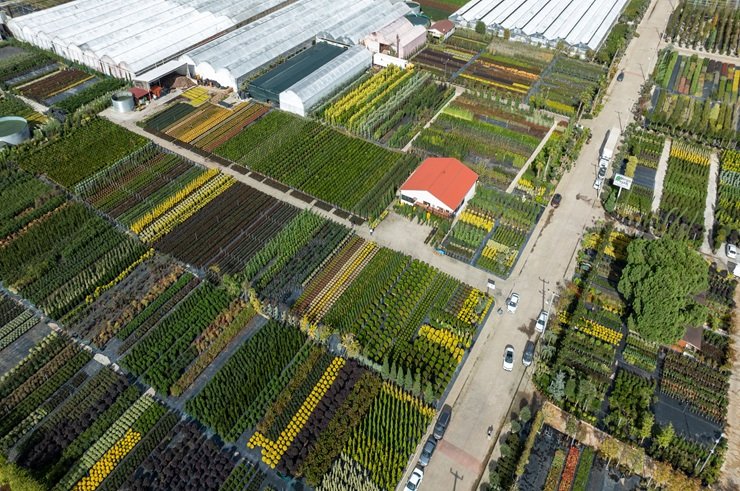
#10. Plant Nursery Business
A plant nursery grows and sells young plants, seedlings, ornamental plants, fruit plants or other planting material.
A nursery can be particularly interesting for people who have limited agricultural land but access to customers such as gardeners, farmers, landscapers or local businesses.
Profitable Farming Ideas
People often search for the most profitable farming business, but there is no universal answer.
Profitability depends on where the farm is located, what it produces, how much it costs to produce and how easily the final product can be sold.
Some areas worth exploring include:
- Vegetable farming
- Fruit farming
- Dairy farming
- Poultry farming
- Goat farming
- Fish farming
- Organic farming
- Plant nurseries
- Hydroponic farming
- High-value speciality crops
Instead of asking only, “Which farming business makes the most money?”, a better question is:
“Which farming business has a realistic market and fits my resources?”
That small change in thinking can prevent expensive mistakes.
For more ideas, see our upcoming guide to Profitable Farming Ideas.
Small Farm Business Ideas
You do not necessarily need hundreds of acres to start an agricultural business.
Depending on the location and market, a small farm could explore:
- Seasonal vegetables
- Herbs
- Nursery plants
- Fruit plants
- Poultry
- Beekeeping
- Mushrooms
- Direct-to-consumer produce
- Small-scale aquaculture
- Protected or controlled-environment farming
A small operation can sometimes have an advantage because the farmer may be able to sell directly to local customers instead of relying entirely on large wholesalers.
For example, a grower near a town might sell fresh vegetables directly through local shops, restaurants or a weekly market.
The key is to match the business model with the available space and customer base.
Read our detailed guide to Small Farm Business Ideas for more examples.
Why Market Research Matters
One of the easiest mistakes for a new farmer to make is choosing a product before finding out whether people actually want to buy it.
Suppose a crop grows extremely well in your area. That sounds positive.
But if several other farmers are already producing the same crop and local prices are low during harvest, the production result may not translate into a good business result.
Before investing heavily, try to understand:
Who will buy the product?
How much do they normally purchase?
What price do they pay?
When is demand highest?
Who are your competitors?
How far will the product need to travel?
Can the product be stored?
What happens if the market price falls?
Speaking with local farmers, traders, retailers, restaurants and potential customers can provide useful information before you commit significant money.
Farming Business Plans
A farming business plan does not have to be a complicated 50-page document.
For a small farm, even a simple plan can help you think through the important questions.
Your plan should cover:
What Will You Produce?
Decide whether you will focus on crops, livestock, fish, plants or a combination.
Who Will Buy It?
Identify your target customers before production begins.
What Will It Cost?
Estimate land, seeds, feed, fertiliser, labour, water, electricity, equipment, transport and other expenses.
How Will You Sell It?
Consider wholesalers, local markets, shops, restaurants, processors or direct customers.
What Could Go Wrong?
Think about drought, heavy rainfall, pests, disease, market price changes, equipment failure and other risks.
How Will You Scale?
Do not assume that bigger is always better.
Sometimes improving efficiency on an existing farm makes more sense than immediately expanding the land or livestock numbers.
Our upcoming Farming Business Plans guide will cover this process in greater detail.
Understanding Farming Cost and Profit
Revenue alone does not tell you whether a farming business is successful.
A farm may generate substantial sales but still have a small profit if its production and operating costs are high.
A simple formula is:
Profit = Total Revenue − Total Costs
For example, imagine a farm generates ₹10,00,000 in revenue and its total costs are ₹7,00,000.
The simple calculation would be:
₹10,00,000 − ₹7,00,000 = ₹3,00,000
But real farming is rarely this straightforward.
Costs may include:
Land rent or purchase
Seeds
Fertiliser
Crop protection
Animal feed
Labour
Water
Electricity
Fuel
Machinery
Repairs
Packaging
Transportation
Storage
Veterinary care
Insurance or certification, where applicable
Unexpected costs can also appear during the season.
That is why keeping accurate records is one of the most useful habits for a farming business.
Learn more in our detailed guide to Farming Cost & Profit.
Best Crops for Profit
There is no single crop that is guaranteed to produce the highest profit everywhere.
A crop that performs well in one region may perform poorly in another because of differences in climate, soil, water, labour costs, market demand and transport.
When comparing crops, consider:
- Growing conditions
- Production cost
- Expected yield
- Selling price
- Growing period
- Storage requirements
- Local competition
- Availability of buyers
- Risk of crop loss
- Labour requirements
For example, a crop with a high selling price may appear attractive, but if it requires expensive inputs or has a high risk of failure, it may not be the best choice.
Our Best Crops for Profit guide will explore these factors in more detail.
Agriculture Investment
Starting a farming business requires investment, but the amount can vary dramatically.
A small vegetable operation may require relatively modest capital compared with a large dairy, poultry or commercial crop farm.
Potential investment areas include:
Land
Irrigation
Farm machinery
Greenhouses or protected structures
Livestock
Poultry housing
Fish ponds or tanks
Seeds and planting material
Storage facilities
Transport
Technology
Modern agriculture can also require investment in sensors, automated irrigation, environmental controls and other technologies.
However, technology should be treated as a business decision rather than simply a trend.
If a piece of equipment saves labour, reduces water consumption or improves production enough to justify its cost, it may make sense. If it adds a large expense without solving a real problem, it may not.
Before investing, consider both the initial investment and the ongoing operating cost.
Our upcoming guide to Agriculture Investment will explore this topic further.
Benefits of Starting a Farming Business
A farming business can offer several potential advantages.
Multiple Business Opportunities
Agriculture is a broad sector. You can choose from crops, livestock, aquaculture, horticulture and modern farming systems.
Local Market Demand
Food and agricultural products are needed in every community, although the specific products in demand vary by location.
Opportunity to Add Value
Some farmers can increase revenue by cleaning, grading, packaging, processing or selling directly to consumers rather than selling raw produce immediately after harvest.
Scope for Modernisation
Technology can improve irrigation, monitoring, farm records, resource use and production management.
Possibility of Starting Small
Some agricultural businesses can begin on a small scale and expand as experience and market knowledge improve.
Challenges of Running a Farming Business
It is equally important to understand the risks.
Weather Uncertainty
Drought, flooding, extreme heat, frost and storms can affect production.
Market Price Changes
Agricultural prices can move significantly because of supply, demand and seasonal conditions.
Rising Input Costs
Feed, fertiliser, fuel, electricity, labour and equipment can affect margins.
Pests and Diseases
Both crops and livestock can face biological risks.
Perishable Products
Fresh produce can lose value quickly if it cannot be sold, stored or transported properly.
Labour and Management
Farming can be physically demanding and time-sensitive. Livestock businesses, in particular, require regular daily attention.
How to Start a Farming Business
If you are seriously considering starting a farming business, avoid rushing into a large investment.
A practical starting process looks like this.
#Step 1: Understand Your Resources
Look at the land, water, labour, equipment, skills and capital you already have.
#Step 2: Research Your Local Market
Find out what buyers want and how products are normally sold in your area.
#Step 3: Select a Suitable Farming Activity
Choose something that fits your resources instead of copying another farmer’s business model.
#Step 4: Calculate the Numbers
Estimate production costs, expected revenue and potential losses.
#Step 5: Start at a Manageable Scale
A smaller first project can give you valuable experience without exposing your entire budget to one farming cycle.
#Step 6: Find Buyers Early
Knowing where your product will go after harvest can make a major difference.
#Step 7: Keep Records
Record income, expenses, production, losses and selling prices.
#Step 8: Review the Results
After each production cycle, ask:
What worked?
What cost more than expected?
Which products sold well?
Where did I lose money?
What should I change next time?
This process of learning and adjusting is a normal part of building a farming business.
Common Mistakes to Avoid
New farmers can sometimes make decisions based on assumptions rather than numbers.
Here are some common mistakes worth avoiding.
Choosing a Crop Only Because Its Price Is High
A high market price does not automatically mean high profit.
Ignoring the Cost of Selling
Transport, packaging and market commissions can reduce the amount you actually receive.
Starting Too Large
A large investment before gaining practical experience can increase financial risk.
Depending on One Buyer
Having alternative customers can provide more flexibility when market conditions change.
Not Keeping Financial Records
Without records, it becomes difficult to know which activities are actually profitable.
Treating Online Profit Claims as Guaranteed
Farming results vary. Be cautious of claims promising easy or guaranteed returns.
Is a Farming Business Right for You?
Farming can be a rewarding business, but it requires patience and practical decision-making.
It may suit someone who enjoys working with agriculture and is prepared to learn about production, markets and financial management.
It may not suit someone looking for quick and guaranteed returns.
Before investing, ask yourself:
Do I have the resources, knowledge, time and market access required for this business?
If the answer is yes, start with a realistic plan and a manageable scale.
FAQs.
Q1. What is a farming business?
A farming business is an agricultural activity operated to produce and sell crops, livestock, fish, plants or other agricultural products for income.
Q2. What is the most profitable farming business?
There is no single farming business that is the most profitable everywhere. Profitability depends on location, demand, production costs, management and selling prices.
Q3. Can I start a farming business on a small farm?
Yes. Depending on local conditions, small farms can explore vegetables, nurseries, poultry, herbs, mushrooms, direct-to-consumer produce and other specialised activities.
Q4. How much money do I need to start a farming business?
There is no fixed amount. The investment depends on the type of farming, land, equipment, livestock, infrastructure and scale of operation.
Q5. Is farming a good business for beginners?
It can be, but beginners should learn the production process, understand the market and start at a manageable scale rather than investing heavily without experience.
Q6. How can I calculate farming profit?
A simple calculation is:
Profit = Total Revenue − Total Costs
For a more useful estimate, include all relevant costs such as labour, inputs, transport, electricity, equipment maintenance and losses.
Q7. Can modern technology make farming more profitable?
Technology can improve efficiency and resource management, but it does not automatically guarantee higher profits. The technology needs to provide enough practical value to justify its cost.
Conclusion:
A successful farming business is not built simply by producing more.
It is built by understanding what to produce, how much it costs, who will buy it and how the business can handle unexpected problems.
For someone starting out, the best approach is often to begin with a clear idea, research the local market, keep the initial scale manageable and learn from each production cycle.
There is no farming model that works equally well everywhere. What works for a farmer in one region may not be suitable for another.
That is why good farming decisions start with local conditions and realistic numbers.
If you are exploring farming as a business, continue with our guides on Profitable Farming Ideas, Small Farm Business Ideas, Farming Business Plans, Farming Cost & Profit, Best Crops for Profit and Agriculture Investment.
Explore. Learn. Grow.