

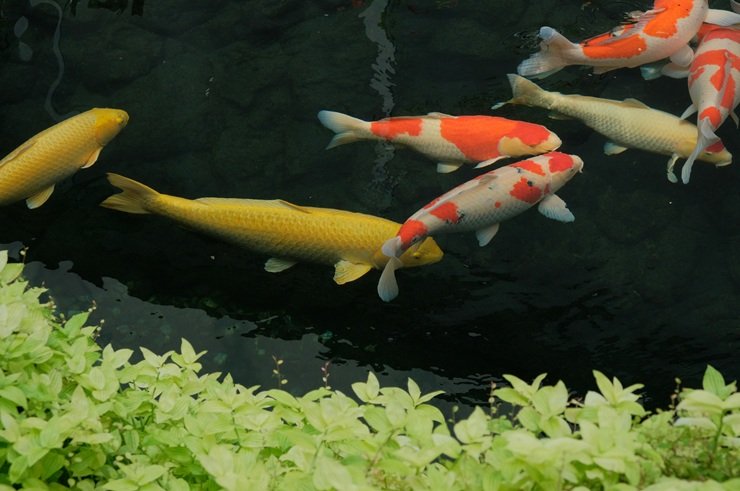
Growing plants and raising fish may seem like two completely different farming activities. But what if the waste from fish could help feed plants, while the plants helped clean the water for the fish?
That is the basic idea behind aquaponics.
Aquaponics combines aquaculture (fish farming) with hydroponic farming, creating a connected system where fish, plants, water and beneficial bacteria work together.
Instead of growing plants in traditional soil, aquaponic systems use nutrient-rich water from the fish tank. The plants absorb nutrients from this water, helping to filter it before it returns to the fish.
It may sound complicated at first, but the basic principle is quite simple: fish provide nutrients, plants help clean the water, and the water keeps circulating through the system.
In this guide, we will explore what aquaponics is, how it works, its main types, benefits, suitable fish and plants, practical examples, challenges and how beginners can get started.
What Is Aquaponics?
Aquaponics is a farming system that combines fish farming with soilless plant cultivation.
Fish are raised in a tank while plants grow in a separate growing area. Water moves between these two areas, creating a natural nutrient cycle.
Fish waste enters the water and is processed by beneficial bacteria. These bacteria convert ammonia into nitrite and then nitrate, which plants can use as a nutrient.
The plants absorb these nutrients and help clean the water before it returns to the fish tank.
Unlike traditional farming, aquaponics does not require conventional agricultural soil. It shares some similarities with hydroponic farming, but the main difference is where the plant nutrients come from.
In simple words:
Aquaponics is a farming method where fish and plants are grown together in a connected water-based system.
How Does Aquaponics Work?
An aquaponics system usually consists of four main components:
- Fish tank
- Beneficial bacteria
- Plant-growing area
- Water circulation system
Let’s look at the process step by step.
#1. Fish Produce Waste
Fish live in a tank and are fed regularly.
As they eat and digest their food, they produce waste that enters the water.
This waste contains ammonia and other compounds that need to be processed before the water can safely circulate back to the fish.
#2. Beneficial Bacteria Process the Waste
Beneficial bacteria are essential to the aquaponics cycle.
They convert ammonia into nitrite and then nitrate.
Plants can absorb nitrate as a nutrient.
#3. Plants Absorb Nutrients
Nutrient-rich water moves into the plant-growing area.
The plant roots absorb nutrients from the water, allowing the plants to grow without traditional soil.
#4. Plants Help Clean the Water
As plants absorb nutrients, the water becomes cleaner.
The filtered water can then return to the fish tank.
#5. The Cycle Continues
The water continues circulating between the fish and plants.
This recycling process is one of the main reasons aquaponics is considered an interesting approach to modern agriculture.
Similar resource-efficient ideas can also be found in modern farming systems such as hydroponics, vertical farming and precision agriculture.
7 Powerful Benefits of Aquaponics
#1. Efficient Use of Water
One of the biggest advantages of aquaponics is its efficient use of water.
Because water circulates through the system, it does not need to be replaced as frequently as in many conventional growing systems.
Some water is still lost through evaporation, plant transpiration, harvesting and maintenance, but much of the water remains within the system.
This makes aquaponics particularly interesting in areas where water availability is limited.
#2. Produces Fish and Plants Together
Unlike most farming systems, aquaponics can produce two types of food from the same integrated setup.
For example, a farmer could raise tilapia while growing lettuce, basil or other vegetables.
This can provide two potential sources of income from one production system.
#3. Less Dependence on Soil
Plants in aquaponic systems generally grow without traditional agricultural soil.
This makes the method useful in locations where fertile soil is limited.
Aquaponics can potentially be used in:
- Urban farms
- Greenhouses
- Backyards
- Rooftops
- Indoor growing spaces
- Areas with poor soil
This is also one reason aquaponics is often discussed alongside vertical farming and other space-efficient farming methods.
#4. Recycles Nutrients
Fish waste is not simply treated as waste.
Through the biological cycle, it becomes part of the nutrient supply for the plants.
This creates a useful relationship between fish, bacteria, plants and water.
The concept is different from precision farming, which focuses more on using data and technology to manage agricultural resources accurately, but both approaches can contribute to more efficient resource use.
#5. Suitable for Smaller Spaces
Aquaponics can be designed for relatively small areas.
A compact system can be installed in a greenhouse, garden or other suitable location.
This gives people an opportunity to experiment with food production without requiring a large amount of agricultural land.
#6. Can Reduce the Need for Conventional Fertilisers
Fish waste provides many of the nutrients needed by plants.
As a result, aquaponic systems may reduce the need for conventional fertiliser applications.
However, it is important to understand that fish waste does not always provide every nutrient in exactly the amount plants require. Nutrient monitoring and management are still necessary.
#7. Can Support Sustainable Farming
Aquaponics can combine several resource-efficient ideas:
- Water recycling
- Nutrient recycling
- Soilless growing
- Local food production
- Combined fish and crop production
It is not a completely waste-free system, but good system design and management can help make efficient use of water and nutrients.
For a wider look at technology-driven agriculture, see our guide to smart farming.
Types of Aquaponics Systems:
There are several ways to design an aquaponics system. The right choice depends on available space, budget, crops and production goals.
#1. Media-Based Aquaponics
In a media-based system, plants grow in a solid growing medium such as expanded clay pellets.
The medium supports the plants while nutrient-rich water moves through the root area.
Suitable for:
Beginners
Home systems
Backyard growing
Small-scale projects
It is one of the easier systems to understand when starting out.
#2. Nutrient Film Technique
NFT systems use narrow channels through which a thin layer of nutrient-rich water flows.
Plant roots sit inside the channels and receive water and nutrients while also having access to oxygen.
NFT can work particularly well for lightweight crops such as leafy greens and herbs.
#3. Deep Water Culture
In a Deep Water Culture system, plants are supported above nutrient-rich water while their roots remain in the water.
Air pumps are generally used to provide oxygen.
DWC is commonly suitable for crops such as lettuce and other leafy vegetables.
#4. Hybrid Aquaponics
Hybrid systems combine two or more aquaponics methods.
For example, a farmer might use media beds for larger plants and deep-water culture for leafy greens.
This can provide greater flexibility when growing different crops.
What Plants Can Be Grown in Aquaponics?
Aquaponics works particularly well for leafy vegetables and herbs.
Common choices include:
- Lettuce
- Spinach
- Kale
- Basil
- Mint
- Coriander
- Parsley
- Swiss chard
- Pak choi
- Watercress
Larger crops can also be grown in suitably designed systems.
These may include:
- Tomatoes
- Cucumbers
- Peppers
- Strawberries
- Beans
However, larger fruiting crops generally require more space, nutrients and careful management.
What Fish Can Be Raised in Aquaponics?
The best fish species depends on climate, water temperature, local regulations and the type of system.
#Tilapia
Tilapia are widely used in aquaponic systems, particularly where warm-water conditions are suitable.
#Carp
Carp can be used in some aquaponics systems and may be suitable in certain local conditions.
#Catfish
Some catfish species can also be raised in aquaponic systems where environmental conditions are appropriate.
#Trout
Trout require cooler water than warm-water species such as tilapia, so the system needs to be designed accordingly.
The most important point is to choose fish that are compatible with the local climate and the requirements of the plants.
Practical Example of Aquaponics
Imagine a small greenhouse with a fish tank containing tilapia.
The fish are fed regularly and produce waste.
A pump moves the water from the fish tank towards the plant-growing beds.
Beneficial bacteria process the fish waste, while plants absorb nutrients from the water.
The plants grow without traditional soil, and their roots take up nutrients.
After passing through the growing area, cleaner water returns to the fish tank.
The farmer monitors:
Water temperature
pH
Ammonia
Nitrite
Nitrate
Oxygen
Fish health
Plant growth
The cycle continues as long as the system remains properly balanced.
That is aquaponics in action.
Aquaponics vs Hydroponics
Aquaponics and hydroponics both allow plants to grow without traditional soil, but their nutrient systems are different.
| Feature | Aquaponics | Hydroponics |
| Fish | Yes | No |
| Plants | Yes | Yes |
| Main nutrient source | Fish waste + supplementation when needed | Prepared nutrient solution |
| Soil | No | No |
| Water circulation | Yes | Yes |
| Beneficial bacteria | Essential | Not necessarily essential |
| Complexity | Generally higher | Generally lower |
| Main output | Fish + plants | Plants |
If you want to understand the plant-focused alternative in more detail, read our complete guide to Hydroponic Farming
Aquaponics vs Traditional Farming
| Feature | Traditional Farming | Aquaponics |
| Soil | Usually required | Not required |
| Fish production | Separate activity | Integrated |
| Water use | Varies | Recirculated |
| Nutrient source | Soil and/or fertilisers | Fish waste + system management |
| Space | Usually requires farmland | Can work in smaller spaces |
| Technology | Varies | Pumps, filtration and monitoring |
| Management | Mainly crop-focused | Fish + plant ecosystem |
Aquaponics should not necessarily be viewed as a replacement for traditional agriculture. It is simply another farming approach with its own advantages and limitations.
Advantages and Disadvantages of Aquaponics
Advantages
Efficient water circulation
Produces fish and plants together
Does not require traditional soil
Can work in relatively small spaces
Recycles nutrients
May reduce dependence on conventional fertilisers
Suitable for controlled environments
Can support local food production
Disadvantages
- Initial setup can be expensive
- Requires pumps and other equipment
- Electricity is normally required
- Fish health must be monitored
- Water chemistry needs regular testing
- System balance can be difficult for beginners
- Pump failure can affect the entire system
- Not every crop is equally suitable
The key difference from ordinary gardening is that you are managing a living ecosystem, rather than simply growing plants.
Is Aquaponics Profitable?
Aquaponics can generate income, but profitability depends heavily on the scale and management of the system.
Potential sources of income include:
- Fresh vegetables
- Herbs
- Fish
- Seedlings
- Aquaponics training
- Farm visits and educational activities
However, farmers also need to consider:
- Fish feed
- Electricity
- Pumps
- Filters
- Seeds
- Water testing
- Infrastructure
- Labour
- Maintenance
- Replacement equipment
Before starting a commercial aquaponics farm, it is important to research local demand and calculate the expected costs and selling prices.
Aquaponics in India
Aquaponics has attracted interest in India as part of the wider development of soilless and controlled-environment agriculture.
It can be particularly interesting in urban and peri-urban areas where land availability is limited.
Potential applications include:
Rooftop food production
Small greenhouse farms
Educational projects
Urban agriculture
Small commercial farms
However, local conditions matter.
Indian growers need to consider climate, electricity availability, water quality, fish species, equipment costs and access to markets before investing in a system.
How to Start a Small Aquaponics System
If you are new to aquaponics, starting small is usually more practical than immediately building a commercial system.
#Step 1: Understand the Basic Cycle
Learn the relationship between:
Fish → Waste → Bacteria → Nutrients → Plants → Cleaner Water → Fish
This cycle is the foundation of aquaponics.
#Step 2: Choose a Suitable Location
You need a location with:
Suitable temperature
Good ventilation
Reliable electricity
Access to clean water
Enough space
#Step 3: Start With a Simple System
A small media-bed or deep-water culture system can be easier to understand than a large commercial installation.
#Step 4: Choose Compatible Fish and Plants
Fish and plants should be selected together.
Their temperature and environmental requirements need to be compatible.
#Step 5: Monitor Water Quality
Regularly monitor:
pH
Ammonia
Nitrite
Nitrate
Temperature
Dissolved oxygen
#Step 6: Expand Slowly
Once you understand how your system behaves, you can gradually increase the number of plants, fish or growing areas.
Common Problems in Aquaponics
Aquaponics can be rewarding, but it also requires attention.
Poor Water Quality
Incorrect water conditions can stress fish and affect plant growth.
Low Oxygen
Fish and beneficial bacteria need sufficient oxygen. Problems with aeration can become serious quickly.
Overfeeding Fish
Too much feed can contribute to poor water quality.
Fish should be fed appropriately rather than being overfed simply to produce more nutrients.
Pump Failure
Water circulation is essential.
A pump failure can affect both plants and fish, so having a backup plan can be useful.
Nutrient Imbalance
Fish waste may not provide every nutrient that plants need in perfect proportions.
Growers should monitor plant health and water conditions and make appropriate adjustments.
Aquaponics and Smart Farming
Aquaponics can become even more efficient when combined with smart farming technology.
For example, IoT sensors can monitor water temperature, pH and other conditions and send information to a mobile device.
Automated systems can also help control:
Water circulation
Feeding
Temperature
Aeration
Greenhouse conditions
This shows how different modern farming methods can work together rather than existing as completely separate systems.
The Future of Aquaponics
Aquaponics is likely to remain an interesting part of modern agriculture, especially in areas where water efficiency, urban farming and controlled food production are important.
Future systems may combine aquaponics with:
IoT sensors
Artificial intelligence
Automated feeding
Smart water monitoring
Solar energy
Automated climate control
As these technologies become more accessible, monitoring and managing aquaponic systems could become easier.
However, the basic principle will remain the same:
Fish + bacteria + plants + water = a connected farming ecosystem.
FAQs.
Q1. What is aquaponics in simple words?
Aquaponics is a farming method that combines fish farming with soilless plant growing. Fish waste provides nutrients for plants, while plants and beneficial bacteria help clean the water.
Q2. Is aquaponics better than hydroponics?
Neither system is automatically better. Aquaponics produces fish alongside plants but is generally more complex. Hydroponics focuses on plant production and provides more direct control over nutrients.
Q3. What plants grow best in aquaponics?
Leafy greens and herbs such as lettuce, basil, spinach, mint, coriander and kale are commonly suitable. Some fruiting crops can also be grown in larger systems.
Q4. What fish are commonly used in aquaponics?
Tilapia, carp and some catfish are commonly used where conditions are suitable. Trout can also be used in systems designed for cooler water.
Q5. Does aquaponics use soil?
No. Aquaponic plants generally grow without traditional agricultural soil.
Q6. Is aquaponics expensive?
A small system can be relatively affordable compared with a commercial installation, but costs vary depending on the equipment, size and level of automation.
Related Article for Modern Farming
Modern Farming: 6 Innovative Farming Methods Explained
Hydroponic Farming: 7 Benefits, Types & How It Works
Vertical Farming: 7 Powerful Benefits, Types & How It Works
Precision Farming: 7 Powerful Benefits, Technologies & Examples
Smart Farming: 7 Powerful Benefits, Technologies & Examples
Indoor Farming
Conclusion:
Aquaponics is a fascinating example of how different parts of agriculture can work together.
Fish produce waste. Beneficial bacteria process that waste. Plants use the resulting nutrients, and the plants help clean the water before it returns to the fish.
It is not a completely maintenance-free farming system, and it is certainly not the right choice for every farmer. But when properly designed and managed, aquaponics can provide an interesting way to produce both fish and plants while making efficient use of water and nutrients.
For anyone interested in modern agriculture, aquaponics is a great example of how farming can become more connected, resource-conscious and innovative.