
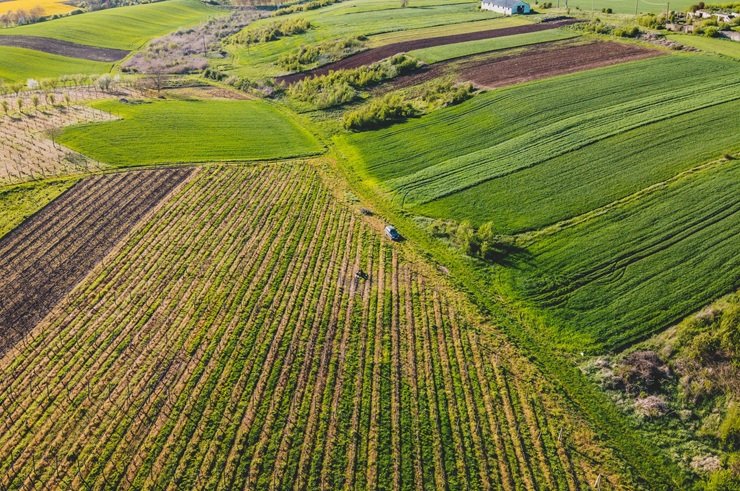
Have you ever wondered how farmers manage to produce a large amount of food when they have only a small piece of land?
This is where intensive farming comes in.
In simple terms, intensive farming is about making the best possible use of the land available. Instead of relying on a very large area, farmers try to get a higher level of production from a relatively small piece of land. They may do this through careful crop planning, irrigation, improved seeds, fertilisers, labour and modern farming techniques.
You can find examples of intensive farming in many parts of the world, particularly in regions where farmland is limited but the demand for food is high.
However, intensive farming is not simply about using more resources. The real challenge is to increase production without damaging the soil, wasting water or creating problems for future crops.
In this guide, we’ll look at what intensive farming means, how it works, its common examples, advantages, disadvantages and how it compares with other types of farming.
What Is Intensive Farming?
Intensive farming is a method of agriculture where farmers aim to produce a relatively high amount of crops or livestock from a limited area of land.
To achieve this, farmers may use more labour and inputs per unit of land. These can include irrigation, quality seeds, fertilizers, machinery, pest management and careful soil management.
The exact approach depends on the crop, climate, soil and resources available.
For example, imagine a farmer has two hectares of land. Rather than using the land for only one crop and leaving it unused for long periods, the farmer may carefully plan different growing seasons, use irrigation where necessary and choose crops that are well suited to the local conditions.
The aim is straightforward: get the best possible production from the land without wasting valuable resources.
If you’re new to the different agricultural systems, you can first read our main guide:
Types of Farming: 7 Major Types of Farming Explained
Why Do Farmers Use Intensive Farming?
There isn’t one single reason why farmers choose intensive methods.
In many cases, it comes down to limited land.
A farmer may not have the opportunity or financial resources to purchase more farmland. At the same time, the family may depend on the farm for income, or there may be strong demand for food in the local market.
Intensive farming can help make existing farmland more productive.
Some common reasons for using intensive farming include:
- Limited agricultural land
- High population density
- Growing demand for food
- Availability of irrigation
- Suitable climate and soil
- Availability of agricultural labour
- Access to improved seeds and technology
- The need to increase farm productivity
This is one reason why intensive agriculture is particularly common in densely populated agricultural regions.
Main Characteristics of Intensive Farming
Although intensive farming can look quite different from one country or region to another, several characteristics are commonly associated with it.
#1. More Production From Less Land
The main idea is to obtain relatively high production from a smaller area.
This doesn’t mean that every intensive farm produces enormous quantities of crops. Rather, the output is generally high when compared with the amount of land being used.
For farmers with small holdings, this can be particularly important.
#2. Greater Use of Labour
Labour can play an important role in intensive farming.
Planting, weeding, harvesting, irrigation and crop management may require considerable attention, especially when machinery cannot easily be used.
In some areas, family members provide much of this work, while larger farms may employ agricultural workers.
#3. Irrigation
A reliable water supply can make intensive cultivation much easier.
Instead of depending entirely on rainfall, farmers can provide water when crops need it. This can also make it possible to grow crops during different seasons.
However, irrigation needs to be managed carefully. Using more water than necessary can create problems for both the farm and the surrounding environment.
#4. Use of Fertilisers and Nutrients
Crops remove nutrients from the soil as they grow. Intensive cultivation can therefore require careful nutrient management.
Farmers may use organic manure, compost, mineral fertilisers or other soil amendments depending on the crop and soil conditions.
The key is not simply to use more fertiliser, but to provide the right nutrients in the right amounts.
#5. Improved Seeds
Farmers may choose improved or high-yielding varieties that are suitable for their local conditions.
The right variety can help improve yield, crop quality or resistance to certain pests and diseases.
Of course, a seed variety that performs well in one region may not necessarily perform equally well somewhere else.
#6. Multiple Cropping
In regions with suitable climates and sufficient water, farmers may grow more than one crop on the same land during a year.
For example, a farmer might grow one crop during the rainy season and another during the cooler months.
This allows the farmer to make better use of the available land and growing season.
Examples of Intensive Farming:
Intensive farming is not limited to one particular crop. It can be used for a variety of agricultural products.
Common examples include:
- Rice
- Wheat
- Vegetables
- Potatoes
- Maize
- Sugarcane
- Fruits
- Pulses
- Rice Farming
Rice is often associated with intensive farming, particularly in densely populated parts of Asia.
Where suitable water, soil and climate conditions are available, farmers can produce substantial amounts of rice from relatively small areas.
Vegetable Farming
Vegetable production is another good example.
A farmer growing tomatoes, onions, peppers or other vegetables on a small area may carefully manage irrigation, nutrients, pests and harvesting to achieve good yields.
Because vegetables can be highly perishable, farmers also need to think about timing and getting their produce to market quickly.
Multiple-Cropping
Multiple-cropping is another example of making intensive use of farmland.
Instead of growing just one crop during the year, farmers may grow several crops in succession when the local climate and water supply allow it.
This can increase the amount of food produced from the same piece of land.
Intensive Farming in India
Intensive farming has an important place in Indian agriculture.
Many Indian farmers work with relatively small landholdings, while demand for agricultural products remains high. In such circumstances, making better use of existing farmland can be more practical than trying to expand the farm.
Farmers in different parts of India use irrigation, improved seeds, fertilisers, machinery and multiple-cropping systems to increase production.
For example, a farmer may grow rice during one season and wheat during another where the local climate and irrigation facilities make this possible.
However, intensive farming does not look the same throughout India.
A farming method that works well in Punjab may not be suitable for a dry region of Rajasthan or a high-rainfall area in the North-East. Soil, rainfall, water availability, temperature, farm size and local markets all influence farming decisions.
This is why it is better to think of intensive farming as a general approach to land use, rather than one fixed method.
Advantages of Intensive Farming
Intensive farming can offer several benefits, particularly where agricultural land is limited.
#1. Higher Production From Limited Land
This is the biggest advantage.
Farmers can potentially produce more food without needing to continually expand the area under cultivation.
This is particularly useful in densely populated regions where farmland is under pressure.
#2. Makes Small Farms More Productive
For a farmer with a small holding, purchasing additional land may not be realistic.
Improving the productivity of the existing land can therefore be a more practical option.
#3. Can Increase Farm Income
If production increases and market prices are favourable, farmers may be able to earn more from the same area of land.
However, there is an important catch: higher production does not automatically mean higher profit.
If the cost of irrigation, fertilisers, labour and other inputs rises too much, the additional income may be reduced.
#4. Supports Food Production
Intensive farming can help produce substantial amounts of food from relatively small agricultural areas.
This can be particularly important in areas where population density is high.
#5. Encourages Better Farm Management
Because farmers are trying to make the most of limited land, intensive farming often requires close attention to:
- Soil fertility
- Water use
- Crop health
- Pest control
- Planting dates
- Harvesting
- Weather conditions
Good planning can make a significant difference to the final result.
Disadvantages of Intensive Farming
Intensive farming has benefits, but it also comes with challenges.
If the land and resources are poorly managed, trying to produce more can create problems over time.
#1. Higher Production Costs
Intensive farming may require investment in:
Seeds
Fertilisers
Irrigation
Labour
Machinery
Energy
Crop protection
These expenses can reduce profits, particularly when market prices fall.
#2. Soil Can Become Depleted
Repeated cultivation can place pressure on soil fertility.
If farmers continually grow crops without replacing nutrients or maintaining soil structure, the land can gradually become less productive.
Practices such as crop rotation, organic matter management and soil testing can help.
#3. Water Use Can Be High
Some intensive farming systems depend heavily on irrigation.
If groundwater or other water sources are used faster than they can recover, farmers may eventually face water shortages.
Efficient irrigation and sensible water management are therefore essential.
#4. Greater Pest and Disease Pressure
Growing crops intensively can sometimes increase the risk of pest and disease problems, particularly when the same crop is grown repeatedly.
Regular crop monitoring and integrated pest management can help farmers respond before a small problem becomes a serious one.
#5. Environmental Problems
Poorly managed intensive farming can contribute to:
Soil degradation
Water pollution
Excessive fertiliser use
Pesticide pollution
Loss of soil biodiversity
Pressure on water resources
These problems are not unavoidable. Much depends on how the farm is managed.
Intensive Farming vs Extensive Farming
Intensive and extensive farming are often compared because they take very different approaches to land.
Intensive farming generally aims to obtain relatively high production from a smaller area, with greater inputs per unit of land.
Extensive farming generally uses larger areas of land with fewer inputs per unit of land.
| Feature | Intensive Farming | Extensive Farming |
| Land area | Relatively small | Usually large |
| Production per unit of land | Generally higher | Generally lower |
| Inputs per unit of land | Relatively high | Relatively low |
| Labour per unit of land | Often higher | Often lower |
| Main focus | Higher productivity | Large-scale land use |
The right approach depends on the available land, climate, water, labour, technology and farming objectives.
Read: Extensive Farming – Meaning, Characteristics, Advantages and Examples
Intensive Farming vs Commercial Farming
These two terms are sometimes confused, but they describe different aspects of agriculture.
Intensive farming is mainly about how farmers use land and resources.
Commercial farming is mainly about the purpose of production — producing crops or livestock primarily for sale.
A farm can therefore be both intensive and commercial.
For example, a farmer may grow vegetables intensively on a small plot using irrigation and careful crop management, while selling the entire harvest to a nearby market.
That would be both intensive and commercial farming.
Read: Commercial Farming – Meaning, Types, Advantages and Examples
Is Intensive Farming the Same as Modern Farming?
No, although the two can overlap.
Modern farming may involve advanced machinery, sensors, automation, satellite technology or precision agriculture.
Intensive farming, however, is defined more by the level of production and inputs relative to the amount of land.
A farmer using relatively simple tools and a great deal of manual labour can still practise intensive farming.
Similarly, a highly mechanised farm can also use intensive methods.
So, intensive does not necessarily mean modern, and modern does not necessarily mean intensive.
Can Intensive Farming Be Sustainable?
Yes, but it requires careful management.
Producing more from less land can actually help reduce the need to expand agriculture into forests or other natural areas. However, this benefit can be lost if intensive production causes long-term damage to soil or water resources.
Farmers can make intensive systems more sustainable through practices such as:
Crop Rotation
Growing different crops over time can help maintain soil health and reduce the build-up of certain pests and diseases.
Efficient Irrigation
Drip irrigation and other water-saving techniques can reduce unnecessary water use where they are suitable.
Soil Testing
Testing soil before applying nutrients can help farmers understand what the crop actually needs.
Integrated Pest Management
Farmers can combine crop monitoring, biological controls, cultural methods and carefully targeted pesticides instead of relying entirely on chemical treatments.
Organic Matter Management
Compost, manure and suitable crop residues can help maintain soil structure and organic matter.
Choosing Suitable Crops
Selecting crops that suit the local climate, soil and water availability can make farming more efficient and reduce unnecessary pressure on resources.
A Simple Example of Intensive Farming
Let’s take a simple example.
Imagine a farmer has one hectare of land.
The farmer has access to irrigation and chooses crops that suit the local climate. They carefully prepare the soil, select suitable seeds, monitor the crop, provide nutrients when necessary and control pests.
Once the first crop has been harvested, the farmer may plant another suitable crop during the next growing season.
The farmer isn’t using a huge area of land. Instead, they are trying to get the most sensible production possible from the land they already have.
That is the basic idea behind intensive farming.
FAQ’s
#Q1. What is intensive farming in simple words?
Intensive farming means trying to produce a relatively high amount of agricultural output from a limited area of land by using more labour, inputs, technology or careful farm management.
#Q2. What are examples of intensive farming?
Rice cultivation, vegetable farming and multiple-cropping systems can be examples of intensive farming when farmers achieve relatively high production from limited land.
#Q3. What is the main advantage of intensive farming?
Its main advantage is that farmers can produce more agricultural output from a relatively small area of land.
#Q4. What is the main disadvantage of intensive farming?
Higher production costs, pressure on soil and water, and environmental problems can become disadvantages when the system is not managed carefully.
#Q5. Is rice farming intensive farming?
Rice farming can be intensive when farmers aim for high production from limited land and use significant labour, irrigation or other inputs. However, not every rice farm is necessarily intensive.
Conclusion:
Intensive farming is, at its heart, about making good use of limited farmland.
For a farmer with a small holding, buying more land may simply not be an option. Improving the productivity of the land already available can therefore make a meaningful difference to food production and farm income.
But there is a balance to find.
Using more fertiliser or water may increase production in the short term, but it can create bigger problems if soil fertility declines or water supplies become stressed.
The better approach is to focus on productive and responsible farming — using suitable crops, maintaining healthy soil, managing water carefully and applying agricultural inputs when they are genuinely needed.
When done well, intensive farming can help farmers produce more from less land while protecting the resources that future crops will depend on.
4 thoughts on “Intensive Farming: Meaning, Methods, Advantages and Disadvantages”