
Sustainable Farming: A Practical Guide for Modern Farmers
Farming is about more than growing crops and harvesting them each season. It also involves looking after the soil, managing water supplies, controlling production costs and keeping farmland productive for the future.
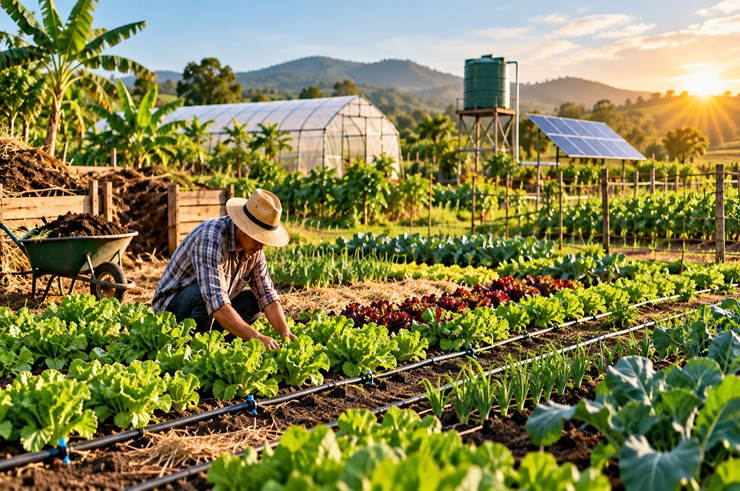
Sustainable farming is an approach to agriculture that aims to balance food production, environmental care and the long-term financial health of a farm. It does not rely on one particular technique. Instead, farmers combine methods that suit their soil, climate, crops, budget and local market.
For example, a vegetable grower might use mulch to help conserve soil moisture, while a cereal farmer may introduce crop rotation to improve field management. Both can be forms of sustainable farming when they are planned and managed appropriately.
This guide explores 12 sustainable farming methods, their practical applications, potential benefits and limitations, and how farmers can decide which methods are worth trying.
#1. What Is Sustainable Farming?
Sustainable farming is the practice of producing agricultural goods while managing natural resources responsibly and maintaining the long-term viability of a farming business.
It considers three closely connected areas:
Environmental sustainability: Protecting soil, conserving water, supporting biodiversity and reducing avoidable pollution.
Economic sustainability: Managing costs, maintaining productivity and making farming financially viable.
Social sustainability: Supporting safe working conditions, responsible animal care and the well-being of farming communities.
A sustainable farm does not necessarily have to be organic. Farmers may use different production systems, provided their practices support long-term resource management and comply with applicable regulations.
For example, a farmer might use crop rotation to improve soil management, drip irrigation to manage water use and regular financial records to understand which crops are economically viable.
The aim is not simply to grow more crops in one season. It is to manage the farm in a way that remains practical and productive over time.
#2. Why Is Sustainable Farming Important?
Agriculture faces several challenges, including changing weather patterns, soil erosion, water shortages, rising input prices and pressure on natural habitats.
Sustainable farming practices can help farmers manage some of these challenges, although results depend on the local environment and how the practices are implemented.
Protecting Soil Quality
Soil provides the physical structure, water and nutrients that crops need. Repeated intensive cultivation, erosion and poor nutrient management can damage soil quality.
Practices such as cover cropping, crop rotation and reduced tillage can help protect soil and improve its condition over time.
Using Water More Efficiently
Water is essential for crop production, but excessive or poorly timed irrigation can waste resources and increase costs.
Better irrigation scheduling, suitable irrigation systems and soil-moisture monitoring can help farmers apply water when crops need it.
Supporting Biodiversity
Agricultural landscapes can provide habitats for pollinators, beneficial insects and other wildlife. Field margins, hedgerows, diverse crops and suitable habitat management can support biodiversity.
Managing Farming Costs
Fertiliser, fuel, irrigation, labour and crop protection can account for a substantial share of farm expenditure.
Sustainable practices may help reduce some avoidable costs, but the financial results should be measured rather than assumed. Certain methods also require additional equipment, labour or initial investment.
Preparing for Changing Conditions
Diversifying crops, improving soil structure and managing water carefully can help farms prepare for some weather-related challenges. These measures cannot eliminate the effects of droughts, floods or extreme temperatures, but they may improve resilience.
#3. 12 Sustainable Farming Methods
Sustainable farming usually involves combining several practices rather than relying on one technique. The most suitable combination depends on soil type, climate, farm size, crops and available resources.
1. Crop Rotation
Crop rotation involves growing different crops in a planned sequence on the same field.
For example, a farmer may grow wheat in one season and a suitable pulse crop in another. Different crops have different nutrient requirements and can be affected by different pests and diseases.
A well-planned rotation can help diversify production, interrupt certain pest cycles and improve nutrient management. Legumes may also contribute nitrogen to the farming system, depending on the crop and growing conditions.
Farmers should consider local seasons, soil conditions, water availability and market demand when planning rotations.
Crop Rotation: 10 Benefits, Types, Examples & Best Practices
2. Cover Cropping
Cover crops are grown primarily to protect or improve the soil rather than to provide the main commercial harvest.
Depending on the species and management, cover crops can help reduce erosion, suppress some weeds, capture nutrients and add organic matter.
Legume cover crops may contribute nitrogen, while grasses can provide soil cover and help capture residual nutrients.
However, cover crops need careful planning. In dry regions, they may compete with the following crop for limited water if they are not terminated at the appropriate time.
3. Composting and Organic Matter Management
Composting converts suitable organic materials into a more stable product that can be used to improve soil.
Materials may include clean crop residues, suitable plant waste and properly managed animal manure. The finished compost can contribute organic matter and nutrients, although its composition varies.
Before applying compost, farmers should consider its maturity, nutrient content, potential contaminants and the needs of the crop.
Using too much compost or manure can create nutrient imbalances and increase the risk of nutrient runoff. Sustainable soil management therefore involves appropriate application rates rather than simply adding more organic material.
4. Water-Efficient Irrigation
Efficient irrigation helps farmers supply crops with the water they need while avoiding unnecessary losses.
Common options include:
- Drip irrigation
- Properly maintained sprinkler systems
- Soil-moisture monitoring
- Irrigation scheduling
- Leak detection and repair
- Rainwater collection where practical and permitted
Drip irrigation delivers water close to plant roots and can reduce some losses compared with less targeted methods. However, it requires suitable design, maintenance and filtration where needed.
Farmers should select an irrigation system based on crop requirements, water availability, installation costs and ongoing maintenance.
5. Reduced Tillage
Tillage is used to prepare soil for planting and manage weeds, but repeated intensive cultivation can contribute to erosion or damage soil structure under certain conditions.
Reduced tillage limits soil disturbance, while no-till systems aim to establish crops without conventional full-width cultivation.
These methods can help retain crop residues on the surface and reduce erosion in suitable systems. Results vary according to soil, climate, crop rotation and equipment.
Reduced tillage may also require changes in weed management and machinery. Some systems depend on herbicides, so the approach must be adapted to the farm’s production requirements and any organic standards that apply.
6. Integrated Pest Management
Integrated pest management, commonly known as IPM, combines prevention, monitoring and suitable control measures to manage pests.
Rather than automatically treating every pest sighting, farmers assess the problem and decide whether action is needed.
IPM may involve:
- Regular crop inspections
- Correct pest identification
- Crop rotation
- Resistant crop varieties
- Physical and mechanical controls
- Biological controls
- Appropriate pesticide use when necessary
This approach can help reduce unnecessary pesticide applications while protecting crops. It does not mean pesticides can never be used; any products must be selected and applied in accordance with relevant regulations and label instructions.
7. Crop Diversification
Crop diversification means growing a variety of crops instead of depending entirely on a single crop.
A farm might combine cereals, pulses, oilseeds and seasonal vegetables across different fields or growing periods.
Diversification can spread some production and market risks, particularly when crops respond differently to weather or price changes.
However, growing several crops also increases management complexity. Each crop needs appropriate equipment, labour, storage and a realistic market outlet.
Crop Farming: Types, Methods, Benefits & Examples | Best Crops for Profit: 15 Profitable Crops to Grow
8. Agroforestry
Agroforestry combines trees or shrubs with crops or livestock in a planned agricultural system.
Depending on the design, trees can provide fruit, timber, shade, wind protection or other products. They may also influence soil conditions and provide habitats for wildlife.
Agroforestry can be useful in some farming landscapes, but tree species and spacing must be selected carefully. Poorly planned trees may compete with crops for sunlight, water and nutrients.
Farmers should also consider the time required for trees to mature and the potential market for any products they produce.
9. Conservation of Natural Habitats
Hedgerows, field margins, flowering strips, ponds and other suitable habitats can support biodiversity within agricultural landscapes.
For example, flowering plants may provide food for pollinators and beneficial insects at certain times of the year.
Habitat management should suit the local ecosystem and farm operations. Invasive species, excessive competition with crops and poorly located habitats can create problems.
The goal is to integrate suitable habitat into the farm without compromising essential production activities.
10. Precision Farming
Precision farming uses information and technology to manage agricultural operations more accurately.
Tools may include GPS-guided machinery, soil sensors, yield maps, satellite imagery and variable-rate application systems.
For example, a farmer may use soil data to identify differences between field areas and adjust fertiliser applications accordingly.
Precision farming can improve decision-making and reduce some forms of input waste. However, equipment and software can be expensive, and their value depends on the quality of the data and how the information is used.
Precision Farming: 7 Key Benefits, Technologies, Examples & How It Works
11. Integrated Crop and Livestock Farming
Integrated crop and livestock farming combines crop production with animal husbandry under a coordinated management plan.
For example, suitable crop residues may be used as animal feed, while properly managed manure may be used as a nutrient source for crops.
These arrangements can improve resource use, but they require careful planning. Not all residues are suitable for feed, and manure must be stored and applied responsibly to reduce nutrient losses, contamination and environmental damage.
Animal welfare, feed requirements and farm biosecurity must also be considered.
12. Renewable Energy and Efficient Farm Equipment
Farms use energy for irrigation, machinery, ventilation, cooling, processing and storage.
Solar power, suitable renewable-energy systems and energy-efficient equipment may help some farms reduce their reliance on conventional energy sources.
For example, a solar-powered irrigation system may be worth considering where sunlight, water storage, pumping requirements and installation costs make it practical.
Farmers should compare initial investment, maintenance, energy savings and equipment lifespan before making a decision. Renewable energy is not automatically the most cost-effective option for every farm.
#4. Sustainable Farming Examples
Sustainable farming looks different depending on the farm’s location, size and production system.
Here are four practical examples.
Example 1: A Cereal Farm Using Crop Rotation
A cereal grower introduces a suitable pulse crop into the rotation. This changes the crop’s nutrient requirements and may help interrupt certain cereal-specific pest cycles.
The farmer monitors yields, input costs and soil conditions to assess whether the rotation is working.
Example 2: A Vegetable Farm Using Drip Irrigation
A vegetable grower installs a drip irrigation system and adjusts watering according to crop requirements and soil moisture.
The farmer records water use, energy costs and crop performance to determine whether the system provides worthwhile savings.
Example 3: A Farm Using Cover Crops
A farmer plants a suitable cover crop between main growing seasons to protect exposed soil.
The farmer selects the species and termination date carefully to avoid competing with the following crop for water or nutrients.
Example 4: A Diversified Farm
A small farm grows vegetables, pulses and seasonal cereals rather than relying on one crop.
The farmer plans planting dates, labour and sales channels separately for each crop. This may spread certain risks, although it also requires additional management.
These examples are illustrations of possible approaches, not guarantees of improved yield or profit.
#5. Soil Health and Conservation
Healthy soil supports crop roots, nutrient availability, water movement and biological activity. Sustainable farming places considerable emphasis on protecting these functions.
Useful soil-management practices include:
- Testing soil to understand pH and nutrient levels
- Keeping soil covered when practical
- Using crop rotations suited to the farm
- Adding suitable organic materials where needed
- Preventing erosion on slopes and exposed fields
- Avoiding unnecessary soil compaction
- Managing fertiliser and manure applications responsibly
Farmers should assess soil changes over time rather than expecting one season of improved management to solve every problem.
Soil testing, crop records and regular field observations can help identify whether management practices are producing useful results.
#6. Water Management in Sustainable Agriculture
Water management is important for both crop productivity and the long-term viability of a farm.
Poor irrigation management can waste water, increase pumping costs or contribute to waterlogging and nutrient losses.
Farmers can improve water management by:
- Understanding the water requirements of each crop.
- Checking soil moisture before irrigation where practical.
- Repairing leaks in pipes and irrigation equipment.
- Using suitable irrigation scheduling.
- Improving drainage where waterlogging occurs.
- Collecting rainwater where permitted and feasible.
- Selecting crops that suit local water availability.
No single irrigation method is best for every farm. The right system depends on crop type, soil, climate, water quality, energy supply and budget.
#7. Sustainable Pest and Nutrient Management
Pests, weeds and nutrient deficiencies can all reduce crop yields. Sustainable management aims to address these problems without creating unnecessary costs or environmental impacts.
Pest Management
Regular monitoring, correct pest identification, crop rotation and suitable resistant varieties can help prevent or manage some problems.
When control is needed, farmers should consider the available options and follow applicable safety requirements.
Nutrient Management
Crops require nutrients in appropriate amounts and at the right stages of growth.
Soil testing, nutrient budgeting, crop rotation and careful fertiliser application can help farmers meet crop requirements while reducing avoidable losses.
Organic materials can also be useful, but their nutrient content and release rates vary.
A sustainable approach is not simply to eliminate all fertilisers or crop protection products. It is to select and manage inputs responsibly according to crop needs, environmental conditions and applicable regulations.
#8. Benefits of Sustainable Farming
Sustainable farming can provide several potential benefits when practices are appropriate for the farm.
Better Soil Protection
Cover crops, suitable rotations and conservation methods can help reduce erosion and support soil structure.
More Efficient Resource Use
Accurate irrigation and nutrient planning may reduce avoidable water, fertiliser and energy use.
Support for Biodiversity
Suitable habitats and diverse cropping systems can support a wider range of organisms in agricultural landscapes.
Potential Cost Savings
Some practices can reduce waste or improve efficiency. The financial outcome depends on the investment required, labour, yields and input prices.
Greater Farm Resilience
Crop diversity, soil protection and careful resource management may help farms prepare for certain production risks.
Long-Term Business Planning
Monitoring costs, yields and resource use helps farmers make better decisions about future investments and crop selection.
These benefits are not automatic. Farmers should measure results and adapt practices to their own conditions.
#9. Challenges and Limitations of Sustainable Farming
Although sustainable farming has potential advantages, it also involves practical challenges.
Initial investment: Irrigation systems, sensors, machinery and renewable-energy equipment can require substantial upfront spending.
Labour requirements: Cover crops, habitat management, compost handling and diversified cropping may require additional work.
Technical knowledge: Some methods require training, monitoring and adjustments to established farming practices.
Short-term uncertainty: Certain practices may take time to deliver benefits, and yields can vary during a transition.
Market access: Diversified or specialty crops may require different buyers, storage arrangements and marketing strategies.
Local limitations: Water scarcity, soil type, climate and farm size can limit the usefulness of particular methods.
Farmers should compare expected benefits with the full cost of implementation. Starting with a manageab
#10. Sustainable Farming vs Organic Farming
Sustainable farming and organic farming overlap, but they are not identical.
| Feature | Sustainable Farming | Organic Farming |
|---|---|---|
| Main focus | Long-term environmental, economic and social viability | Production under an applicable organic standard |
| Fertilisers | May include conventional and organic nutrient sources | Restricted to inputs permitted by the relevant organic standard |
| Pest control | May combine prevention, biological controls and permitted conventional methods | Must comply with organic pest-control requirements |
| Soil management | Emphasises soil protection and appropriate resource use | Often uses rotations, compost and other permitted practices |
| Certification | No single universal certification covers every sustainable farming system | Certification may be required for regulated organic claims |
| Main objective | Maintain a viable farming system over time | Produce according to defined organic requirements |
A farm can be sustainable without being certified organic. Similarly, organic farming does not automatically guarantee that every aspect of a farm’s environmental or economic performance is sustainable
#11. How to Start a Sustainable Farm
Farmers do not need to adopt every method at once. A practical starting point is to identify the farm’s biggest challenges and choose improvements that can be measured.
Step 1: Assess Your Farm
Review soil condition, water availability, crop performance, machinery, labour and existing expenses.
Step 2: Identify the Main Problem
Determine whether the biggest opportunity is reducing erosion, improving irrigation, managing pests, reducing input waste or diversifying crops.
Step 3: Select a Suitable Practice
Choose a method that fits the crop, climate, available resources and budget. Seek local agricultural advice where needed.
Step 4: Estimate the Cost
Include equipment, installation, labour, maintenance and any additional operating expenses.
Step 5: Test on a Manageable Scale
Where practical, trial the practice on a limited area before adopting it across the entire farm.
Step 6: Record the Results
Track costs, yields, water use, labour and crop quality. Compare the results with previous seasons or an appropriate comparison area.
Step 7: Review and Adjust
Keep the practices that demonstrate useful results, and change those that do not suit the farm.
This process helps turn sustainable farming from a general idea into a series of practical, evidence-based decisions.
#12. How to Measure Farming Sustainability
A farming practice should be evaluated by its actual results rather than by its label alone.
Farmers can track several useful indicators.
| Indicator | What to Monitor |
|---|---|
| Soil condition | Soil tests, erosion and organic matter where measured |
| Water use | Irrigation volume and crop water requirements |
| Crop productivity | Yield per hectare or acre |
| Input efficiency | Fertiliser, fuel and crop protection used per unit of production |
| Farm finances | Revenue, operating costs and net profit |
| Biodiversity | Presence of suitable habitats and observed beneficial organisms |
| Post-harvest losses | Quantity of produce lost during harvesting, storage and transport |
Not every farm needs to measure every indicator. Start with information that is practical to collect and relevant to the farm’s main goals.
For example, a vegetable grower investigating irrigation improvements could compare water use, energy expenses, marketable yield and installation costs before deciding whether to expand the system.
#13. Common Mistakes to Avoid
Farmers exploring sustainable methods should avoid these common mistakes:
- Adopting a practice without checking whether it suits the local climate.
- Assuming that every sustainable method reduces costs immediately.
- Investing in technology without identifying a clear need.
- Applying compost or manure without considering nutrient levels.
- Planting cover crops without planning their water requirements.
- Changing several farming practices at once without keeping records.
- Ignoring maintenance costs and labour requirements.
- Assuming crop diversification will automatically improve profitability.
- Failing to identify a market for new crops.
- Measuring success only by yield while ignoring costs and resource use.
Sustainable farming works best when practices are selected carefully, monitored regularly and adjusted according to the results.
FAQs.
Q1. What is sustainable farming in simple words?
Sustainable farming means producing agricultural goods while managing soil, water and other resources responsibly and maintaining a financially viable farming business over the long term.
Q2. What are the main methods of sustainable farming?
Common methods include crop rotation, cover cropping, composting, efficient irrigation, reduced tillage, integrated pest management, crop diversification, agroforestry, habitat conservation, precision farming, integrated crop-livestock systems and renewable energy.
Q3. Is sustainable farming profitable?
It can be profitable, but results depend on crop selection, input costs, yields, labour, market prices and the investment required. Some practices reduce costs, while others require significant upfront spending.
Q4. Is sustainable farming the same as organic farming?
No. Organic farming follows defined production standards, while sustainable farming is a broader approach that considers environmental, economic and social outcomes. A farm may use sustainable practices without being certified organic.
Q5. Can small farms use sustainable farming methods?
Yes. Small farms can consider crop rotation, composting, mulching, careful irrigation, crop diversification and integrated pest management. The best options depend on the available land, labour, water and budget.
Q6. Does sustainable farming always increase crop yields?
No. Some practices may improve soil conditions or resource efficiency, but yield outcomes depend on the crop, climate, soil, management and time required for the practice to become effective.
Q7. How can farmers begin sustainable farming?
Start by assessing the farm, identifying its main challenges, selecting one or two suitable practices, estimating their costs and tracking the results before expanding.
Conclusion:
Sustainable farming is about making practical decisions that support productive agriculture while protecting the resources farms depend on. Crop rotation, cover crops, efficient irrigation, responsible nutrient management and integrated pest control can all contribute to a more carefully managed farming system.
However, sustainability does not look the same on every farm. A method that works well in one region may be unsuitable elsewhere, and an environmentally beneficial practice still needs to make sense for the farmer’s budget and production goals.
The best starting point is to understand your farm’s conditions, choose improvements with a clear purpose and measure their results over time. By combining sound agricultural practices with realistic financial planning, farmers can work towards a more resilient and viable farming business.
5 thoughts on “Sustainable Farming: 12 Methods, Benefits, Examples & Best Practices”