
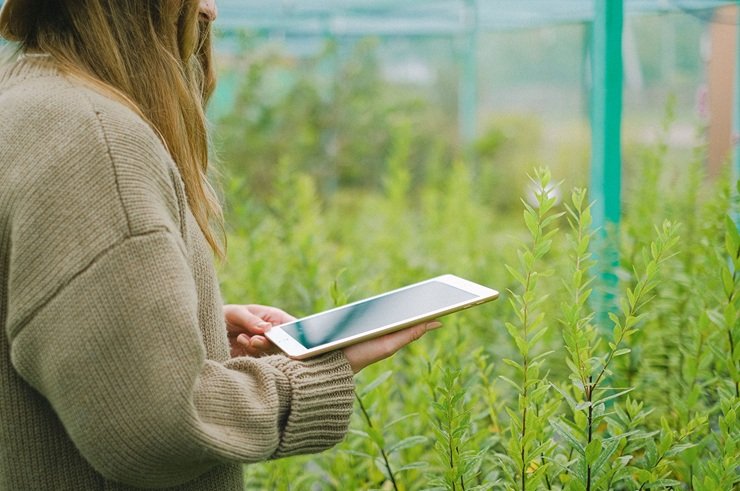
Farming is changing quickly. What once depended almost entirely on experience, weather and manual work is now increasingly supported by sensors, mobile apps, connected machinery and data.
This new approach is often called smart farming.
Smart farming uses modern technology to help farmers understand what is happening on their farms and make better decisions. A farmer can monitor soil moisture from a phone, receive weather alerts, track livestock or use automated irrigation without being physically present in the field.
But smart farming is not simply about buying expensive technology. At its heart, it is about using information and automation to make farming more efficient, productive and sustainable.
In this guide, we will explain what smart farming means, how it works, the technologies behind it, its major benefits, practical examples, challenges and its future in agriculture.
What Is Smart Farming?
Smart farming is a modern approach to agriculture that uses connected technologies, data and automation to improve the way farms are managed.
It can combine technologies such as:
Internet of Things (IoT) devices
Sensors
Artificial intelligence (AI)
GPS
Drones
Robotics
Satellite imagery
Mobile applications
Automated machinery
Weather monitoring systems
These technologies collect and analyse information about crops, soil, weather, livestock and farm equipment.
Farmers can then use this information to make more informed decisions.
In simple words:
Smart farming means using technology and real-time information to manage a farm more efficiently.
How Does Smart Farming Work?
Smart farming generally works through a combination of sensors, connectivity, data and automated actions.
#1. Sensors Collect Information
They can measure things such as:
Sensors can be placed in fields, greenhouses, irrigation systems or livestock areas.
Soil moisture
Temperature
Humidity
Light levels
Water conditions
Crop conditions
Livestock activity
#2. Data Is Sent to a Digital System
Connected devices can send collected information to a computer, cloud platform or mobile application.
For example, a soil sensor may detect that moisture levels have fallen below a selected level.
#3. Data Is Analysed
Farm-management software can help farmers understand the information.
Some advanced systems use artificial intelligence and machine learning to identify patterns and provide recommendations.
#4. Farmers Take Action
Based on the information, farmers can decide whether they need to:
Irrigate
Apply fertiliser
Check crops
Move livestock
Repair equipment
Protect plants from pests
#5. Automation Can Handle Some Tasks
In more advanced systems, technology can automatically respond to certain conditions.
For example, an automated irrigation system could switch on when soil moisture becomes too low.
7 Key Benefits of Smart Farming
#1. Better Use of Water
Water management is becoming increasingly important for farmers.
Smart irrigation systems can use soil-moisture sensors and weather information to determine when crops actually need water.
For example, if recent rainfall has left the soil sufficiently moist, the irrigation system may delay watering.
This can help reduce unnecessary water use.
#2. Improved Crop Monitoring
Large farms can be difficult to monitor manually.
Smart farming technologies such as drones, sensors and satellite imagery can help farmers identify changes in crop conditions.
A farmer may notice that one part of a field is developing differently from the rest and investigate the area before the problem becomes more serious.
#3. More Efficient Use of Fertilisers
Smart farming can work alongside soil testing and precision agriculture to improve nutrient management.
Instead of relying entirely on a fixed fertiliser schedule, farmers can use soil and crop information to make more informed decisions about when and where fertiliser is required.
This can help reduce unnecessary applications and input costs.
#4. Saves Time and Labour
Automation can reduce the amount of repetitive manual work involved in farming.
For example, automated systems can assist with:
Irrigation
Greenhouse climate control
Feeding livestock
Crop monitoring
Machinery guidance
This allows farmers and farm workers to spend more time on tasks that require human judgement.
#5. Better Decision-Making
Farmers have always relied on experience, and that experience remains valuable.
Smart farming adds another layer: real-time data.
Instead of asking only, “What normally happens at this time of year?”, farmers can also ask, “What is happening on my farm right now?”
That information can support better decisions.
#6. Improved Livestock Management
Smart farming is not limited to crops.
Technology can also be used to monitor livestock.
Wearable devices and sensors may help farmers track:
- Movement
- Feeding behaviour
- Location
- Activity levels
- Health-related changes
For example, an unusual change in an animal’s activity could prompt a farmer to check it more closely.
#7. Supports Sustainable Agriculture
Smart farming can contribute to more sustainable agriculture by improving how resources are used.
Better monitoring can help farmers manage:
Water
Fertiliser
Pesticides
Energy
Fuel
Soil
The aim is not simply to use more technology, but to use resources more intelligently.
Technologies Used in Smart Farming
Smart farming brings several technologies together.
Internet of Things (IoT)
The Internet of Things allows physical devices to connect and exchange information.
In agriculture, IoT devices can include:
Soil sensors
Weather sensors
Water-level sensors
Livestock trackers
Equipment monitoring devices
These devices can provide farmers with continuous information.
Artificial Intelligence
Artificial intelligence can analyse large amounts of agricultural data and identify patterns.
For example, AI systems may assist with:
Crop disease detection
Yield forecasting
Weather analysis
Pest identification
Farm planning
AI is becoming increasingly useful as farms generate more digital data.
Drones:
Agricultural drones can capture aerial images of farmland.
They can help farmers monitor:
Crop growth
Plant stress
Irrigation issues
Pest damage
Field conditions
Drones can cover large areas much faster than manual field inspections.
GPS and Satellite Technology
GPS helps farmers accurately locate machinery and field activities.
Satellite technology can provide information about large agricultural areas and changes in vegetation.
Together, these technologies can support field mapping, crop monitoring and precision agriculture.
Smart Irrigation Systems
Smart irrigation systems can combine sensors, weather information and automated controls.
For example:
Low soil moisture → sensor detects the change → system receives information → irrigation starts.
This type of automation can make irrigation more responsive to actual field conditions.
Robotics
Agricultural robots are being developed for tasks such as:
Weeding
Harvesting
Planting
Crop monitoring
Transporting materials
Robotics is still developing, but it could become increasingly important where labour availability is a challenge.
Practical Examples of Smart Farming
Smart farming may sound complicated, but its applications can be quite practical.
#Example 1: Smart Irrigation
A farmer grows vegetables in a field equipped with soil-moisture sensors.
When moisture levels fall below a chosen threshold, the farmer receives an alert or the irrigation system automatically starts.
This avoids relying solely on a fixed watering schedule.
#Example 2: Drone Crop Monitoring
A farmer uses a drone to inspect a large field.
The aerial images reveal that one section of the crop looks weaker than the surrounding area.
The farmer investigates that section and discovers an irrigation problem.
Instead of treating the entire field, attention can be focused where it is needed.
#Example 3: Livestock Monitoring
A wearable sensor tracks the movement of cattle.
One animal shows an unusual change in activity compared with its normal behaviour.
The farmer receives an alert and checks the animal.
Technology has not replaced the farmer’s judgement — it has helped the farmer notice something earlier.
#Example 4: Smart Greenhouse
Sensors inside a greenhouse monitor temperature and humidity.
When the temperature becomes too high, ventilation can automatically increase.
This creates a more controlled environment for the plants.
Smart Farming vs Precision Farming
Smart farming and precision farming are closely related, but they are not exactly the same.
| Feature | Smart Farming | Precision Farming |
| Main focus | Connected and intelligent farm management | Accurate, site-specific field management |
| IoT | Commonly used | Sometimes used |
| Sensors | Widely used | Widely used |
| Automation | Strong focus | Used where appropriate |
| GPS | Often used | Very important |
| AI | Increasingly used | Can be used |
| Livestock | Included | Less central |
| Data | Real-time and connected | Location-specific and field-based |
A useful way to think about it is:
Precision farming focuses on doing the right thing in the right place, while smart farming takes a broader approach to connecting data, technology and farm management.
You can also read our guide on [Precision Farming] for a deeper explanation.
Advantages and Disadvantages of Smart Farming
Advantages:
- Better use of farm resources
- Real-time monitoring
- Potential reduction in water waste
- Improved crop and livestock management
- Saves time on repetitive tasks
- Better decision-making
- Can support sustainable agriculture
- Automation of selected farm operations
Disadvantages:
- Initial technology costs can be high
- Farmers may need technical training
- Internet connectivity can be a challenge in rural areas
- Sensors and equipment require maintenance
- Digital systems can be complicated
- Data security and privacy need consideration
- Not every technology is suitable for every farm
Smart farming therefore works best when farmers choose technology based on a real agricultural need, rather than adopting technology simply because it is new.
Smart Farming in India
Smart farming has potential to support Indian agriculture, particularly as farmers deal with challenges such as changing weather, water availability, rising input costs and labour requirements.
Technologies such as:
- Mobile farming applications
- Soil sensors
- Drones
- Smart irrigation
- GPS-based machinery
- Weather monitoring
- Digital marketplaces
can help farmers access useful information and manage farm operations more efficiently.
However, adoption is not always straightforward.
For smaller farms, the cost of equipment, access to technical support, reliable connectivity and ease of use can be just as important as the technology itself.
Affordable, simple and locally appropriate solutions are therefore likely to be particularly valuable.
Is Smart Farming Sustainable?
Smart farming can support sustainable agriculture, but technology alone does not guarantee sustainability.
For example, a smart irrigation system may help reduce unnecessary watering, while sensors can help farmers understand soil conditions more accurately.
However, sustainable farming also depends on:
- Soil management
- Crop selection
- Responsible water use
- Biodiversity
- Appropriate fertiliser use
- Local environmental conditions
The best results usually come when technology is combined with sound farming practices.
How to Start Smart Farming on a Small Farm
You do not need to transform your entire farm overnight.
A gradual approach is often more practical.
#Step 1: Identify a Problem
Start with one genuine challenge.
For example:
“I am using too much water.”
or
“I find it difficult to monitor my greenhouse temperature.”
#Step 2: Choose One Technology
If irrigation is the problem, consider starting with soil-moisture sensors rather than buying an entire smart-farming system.
#Step 3: Monitor the Results
Compare your results before and after introducing the technology.
Look at:
- Water usage
- Labour time
- Crop performance
- Input costs
#Step 4: Expand Gradually
If the first technology proves useful, you can add other tools such as weather monitoring, GPS, drones or automated systems.
This approach can make smart farming more manageable and cost-effective.
The Future of Smart Farming
The future of farming is likely to become increasingly connected.
AI, robotics, IoT sensors, drones, satellite imagery and automated machinery are developing rapidly.
Imagine a farm where sensors continuously monitor soil, weather and crops while software analyses the information and alerts the farmer when something needs attention.
The farmer would still make the important decisions, but technology could provide a much clearer picture of what is happening across the farm.
The biggest challenge will be making these technologies affordable, reliable and easy enough for farmers of different sizes to use.
FAQs.
Q1. What is smart farming in simple words?
Smart farming is the use of technology, data and automation to manage agricultural activities more efficiently and make better farming decisions.
Q2. What are examples of smart farming?
Examples include smart irrigation, soil sensors, drones, GPS machinery, AI-based crop monitoring, automated greenhouses and livestock tracking systems.
Q3. What is the difference between smart farming and traditional farming?
Traditional farming relies heavily on manual observation and established practices, while smart farming combines traditional knowledge with digital data, sensors, automation and connected technologies.
Q4. Is smart farming expensive?
Some advanced systems can be expensive, but farmers can start with relatively simple technologies such as soil sensors, weather monitoring tools or mobile applications.
Q5. Can small farmers use smart farming?
Yes. Small farmers can use selected smart technologies, although affordability, connectivity, training and technical support are important considerations.
Q6. Does smart farming increase crop production?
Smart farming can improve monitoring, resource management and decision-making, which may contribute to better productivity. However, results depend on the crop, technology, farm conditions and how effectively the system is used.
Related Article for Farming
If you are learning about modern agricultural methods, explore these related guides:
Modern Farming: 6 Innovative Farming Methods Explained
Hydroponic Farming: 7 Benefits, Types & How It Works
Vertical Farming: 7 Powerful Benefits, Types & How It Works
Precision Farming: 7 Powerful Benefits, Technologies & Examples
Conclusion:
Smart farming is not about replacing farmers with machines. It is about giving farmers better information, better tools and more control over everyday decisions.
A soil sensor can reveal when a field needs water. A drone can highlight a problem area. A weather station can provide useful local information. A smart irrigation system can automate a repetitive task.
Individually, these technologies may seem small. Together, they can change the way a farm is managed.
As agriculture becomes more data-driven, smart farming could play an important role in producing food efficiently while making better use of water, soil, labour and other resources.
3 thoughts on “Smart Farming: 7 Key Benefits, Technologies, Examples & How It Works”