
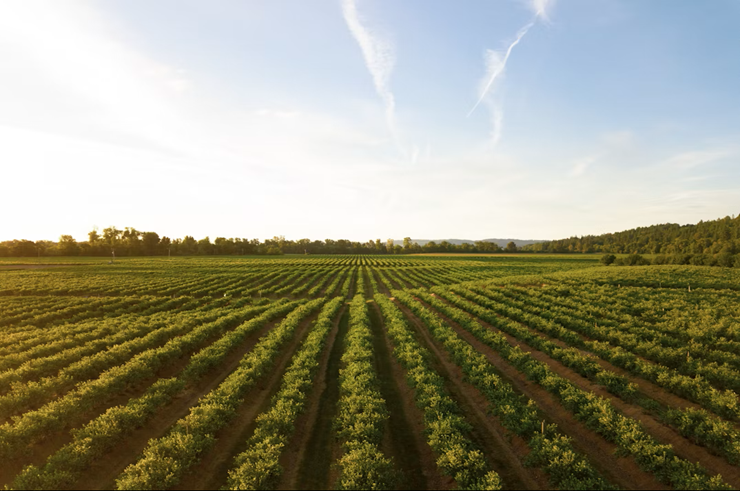
When people think about farming, they often picture fields filled with crops or farmers working on a small piece of land. But agriculture looks very different in places where land is available in large quantities.
In some parts of the world, farmers manage hundreds or even thousands of hectares. Instead of putting a large amount of labour, water and fertiliser into every small section of land, they spread production over a much wider area.
This approach is known as extensive farming.
In simple terms, extensive farming means using a large area of land with relatively low inputs per unit of land. It is particularly common in areas where farmland is abundant, population density is lower, or the climate and soil make intensive cultivation difficult.
You may have seen examples of this type of agriculture without realising it. Large cattle ranches, sheep farms and extensive grain farms are all associated with extensive farming.
But how exactly does it work? What makes a farm extensive, and how is it different from intensive farming?
Let’s take a closer look.
What Is Extensive Farming?
Extensive farming is an agricultural system in which farmers use relatively large areas of land while using fewer inputs such as labour and capital per unit of land.
The aim is not necessarily to produce the maximum possible amount from every hectare. Instead, farmers make productive use of the land available while keeping the level of inputs relatively low.
For example, imagine a farmer managing several hundred hectares of grassland. Rather than growing crops intensively across the whole area, the farmer may raise cattle or sheep and allow them to graze over the land.
The farm may require fewer workers per hectare, although machinery and modern technology can still play an important role.
So, the key idea behind extensive farming is:
More land, fewer inputs per hectare, and production spread over a larger area
Why Do Farmers Use Extensive Farming?
The type of farming a farmer chooses is strongly influenced by the land and resources available.
Extensive farming can be a practical choice when there is plenty of land but intensive cultivation would be too expensive, difficult or unsuitable.
Some common reasons include:
- Large areas of farmland are available
- Population density is relatively low
- Labour is limited or expensive
- Rainfall is low or unpredictable
- Soil is not ideal for intensive crop production
- Natural grasslands are available for grazing
- Farmers have access to large-scale machinery
- The cost of intensive farming would be too high
In other words, extensive farming often works because the land itself becomes an important part of the farming system.
Main Characteristics of Extensive Farming
There isn’t one particular farm size that automatically makes a farm extensive. Instead, we look at how much land is being used in relation to labour, capital and other inputs.
Here are some of the main characteristics.
#1. Large Areas of Land
Extensive farms usually cover much larger areas than farms using intensive methods.
This is particularly noticeable in livestock farming, where animals may need considerable space for grazing.
The actual size can vary considerably between countries. A farm considered large in one region may be relatively small in another.
#2. Lower Inputs Per Hectare
Compared with intensive farming, extensive farming generally involves fewer inputs per hectare.
These may include:
- Labour
- Fertilisers
- Irrigation
- Feed
- Other agricultural inputs
However, “lower inputs” does not mean that extensive farmers avoid technology.
A large farm may use sophisticated machinery, GPS systems and modern monitoring equipment to manage its land efficiently.
#3. Lower Production Per Hectare
One of the main differences between extensive and intensive farming is the amount produced from each hectare.
Extensive farming generally has a lower yield per hectare.
That may sound like a disadvantage, but there is another side to the picture.
A farm may have hundreds or thousands of hectares, so the total production can still be substantial even if production from each individual hectare is relatively low.
#4. Livestock Farming Is Common
Extensive livestock farming is one of the best-known examples of the system.
Cattle, sheep and goats can be raised across large grasslands or rangelands.
Instead of providing all of the animals’ feed directly, farmers may allow them to graze naturally.
#5. Machinery Can Play an Important Role
It is a mistake to assume that extensive farming is always old-fashioned or labour-intensive.
Large farms often depend on machinery because manually managing hundreds of hectares would be extremely difficult.
Tractors, harvesters, GPS technology and other equipment can help farmers cover large areas with relatively few workers.
Types of Extensive Farming
Extensive farming can take different forms depending on the local environment and the products being produced.
Extensive Livestock Farming:
This involves raising animals across large areas of pasture or rangeland.
Cattle, sheep and goats are common examples.
The animals may spend much of their time grazing, while farmers manage their health, water supply, breeding and movement.
Extensive Grain Farming:
Extensive crop farming is also possible, particularly in regions with large areas of suitable farmland.
Common crops include:
- Wheat
- Barley
- Oats
- Maize
Large fields can be cultivated using machinery, allowing a relatively small workforce to manage substantial areas.
Ranching
Large-scale ranching is another familiar example.
Cattle or sheep may be raised across extensive grasslands, with animals moving around large grazing areas rather than being kept in confined spaces.
Examples of Extensive Farming Around the World
Extensive farming is particularly common in areas where agricultural land is available on a large scale.
Some well-known examples can be found in:
Australia
Argentina
Canada
The United States
South Africa
The type of farming varies from region to region.
For example, large sheep and cattle farms are common in parts of Australia, while extensive grain production is important in several agricultural regions of North America and other countries.
Climate, soil, rainfall and the availability of land all influence which form of extensive farming works best.
Extensive Farming in India:
India has a very different agricultural landscape from countries with huge areas of sparsely populated farmland.
Many Indian farmers operate relatively small holdings, particularly in densely populated agricultural regions. This makes intensive farming and multiple cropping more common in many areas.
However, extensive forms of livestock grazing and low-input agriculture can still be found, particularly in areas where large grazing spaces are available or where conditions are less suitable for intensive crop cultivation.
Dry and semi-arid regions can be particularly suitable for certain types of livestock farming.
It’s also worth remembering that farming systems don’t always fit neatly into one category. A farmer may use extensive methods for livestock while using more intensive methods for crops on another part of the farm.
Advantages of Extensive Farming:
Extensive farming has several advantages, especially when land is readily available.
#1. Makes Good Use of Large Areas
One of the biggest advantages is that extensive farming allows farmers to make productive use of large areas of land.
Some land may not be suitable for intensive crop cultivation but can still support grazing animals.
#2. Lower Inputs Per Hectare
Farmers generally use fewer inputs per unit of land compared with intensive systems.
This can reduce some production costs, although the overall cost of running a large farm can still be significant.
#3. Suitable for Livestock
Large grasslands and rangelands can be well suited to cattle, sheep and goats.
Animals can obtain part of their food naturally through grazing, reducing the need to supply all of their feed.
#4. Less Labour Needed Per Hectare
Because production is spread over a large area and machinery can cover significant distances, extensive farming may require fewer workers per hectare.
#5. Can Work Well in Dry or Less Fertile Areas
Some land is simply not suitable for intensive crop production.
Extensive livestock farming can provide a way of making productive use of grasslands and other areas where growing high-yield crops would be difficult.
Disadvantages of Extensive Farming
Like every farming system, extensive farming has its drawbacks.
#1. Lower Yield Per Hectare
The amount produced from each hectare is generally lower than with intensive farming.
Farmers therefore need access to more land to achieve a substantial overall output.
#2. Requires Large Areas of Land
Land availability is essential.
Extensive farming may not be practical in densely populated regions where farmland is limited or expensive.
#3. Weather Can Have a Major Impact
Livestock grazing systems can be particularly dependent on rainfall and natural pasture.
A long period of drought can reduce grass growth and make it harder to provide sufficient food and water for animals.
#4. Transport Can Be Challenging
Large farms can cover enormous distances.
Moving animals, machinery, feed and harvested crops around the farm can take time and increase costs.
#5. Market Prices Can Affect Profit
A large farm does not automatically mean a large income.
Farmers can still be affected by changes in the prices of wheat, livestock, wool and other agricultural products.
Extensive Farming vs Intensive Farming
The difference between extensive and intensive farming becomes much clearer when we put them side by side.
| Feature | Extensive Farming | Intensive Farming |
| Land area | Usually large | Usually smaller |
| Production per hectare | Generally lower | Generally higher |
| Inputs per hectare | Relatively low | Relatively high |
| Labour per hectare | Generally lower | Generally higher |
| Common examples | Ranching, grazing, large-scale grain farming | Rice, vegetables, multiple cropping |
| Main approach | Use a large area efficiently | Increase output from limited land |
Neither system is automatically better.
A small farm with fertile soil and reliable irrigation may benefit from intensive farming, while a huge area of natural grassland may be much better suited to extensive livestock farming.
Read our detailed guide to Intensive Farming
Extensive Farming vs Commercial Farming
This is another area where people sometimes get confused.
Extensive farming describes how land and resources are used.
Commercial farming describes the purpose of farming, particularly when crops or livestock are produced mainly for sale.
That means a farm can be both extensive and commercial.
For example, a large cattle ranch producing beef for the market can be described as extensive commercial farming.
You can learn more about the other side of this classification in our guide:
Commercial Farming: Meaning, Types, Features, Advantages and Examples
Is Extensive Farming Always Large-Scale?
Usually, extensive farming involves a relatively large area, but there is no universal farm-size limit.
What matters is the relationship between land area and inputs.
A farm may be considered extensive because it uses a large amount of land with relatively low labour and capital inputs per hectare, even if its absolute size would not be considered huge in another country.
So, rather than asking, “How many hectares make a farm extensive?”, it is more useful to ask:
How much land is being used compared with the amount of labour and other resources invested in it?
Is Extensive Farming Environmentally Friendly?
It can be, but it is not automatically environmentally friendly.
For example, well-managed grazing can make use of natural grasslands without requiring large amounts of irrigation or fertiliser.
On the other hand, too many animals grazing the same area for too long can lead to overgrazing, soil erosion and loss of vegetation.
The environmental impact therefore depends heavily on how the land is managed.
Good grazing management, appropriate stocking levels and protection of sensitive areas can help reduce environmental damage.
How Can Extensive Farming Be More Sustainable?
Farmers working across large areas have several ways to improve the long-term health of their land.
Rotational Grazing
Moving livestock between grazing areas gives vegetation time to recover and can reduce pressure on individual fields.
Managing Livestock Numbers
Keeping animal numbers in line with the amount of available pasture can help prevent overgrazing.
Protecting Water Sources
Rivers, streams and ponds should be protected from excessive erosion and contamination.
Maintaining Grassland
Healthy grasslands provide food for livestock while helping protect the soil from erosion.
Using Modern Technology
GPS, satellite imagery, remote monitoring and livestock-tracking technology can make it easier to manage large farms and identify problems early.
A Simple Example of Extensive Farming
Let’s imagine a farmer owns several hundred hectares of grassland.
The land isn’t particularly suitable for intensive crop production, but it provides good grazing.
The farmer keeps cattle on the property. Instead of keeping them in a small area and supplying most of their feed, the animals graze across different sections of the land.
The farmer manages fencing, water points, animal health and grazing patterns. Modern equipment may also be used to monitor the farm.
The farmer is making use of a large area of land without putting high levels of inputs into every hectare.
That is extensive farming in a nutshell.
FAQs.
#Q1. What is extensive farming in simple words?
Extensive farming is a system where farmers use relatively large areas of land with fewer labour and capital inputs per unit of land.
#Q2. What are some examples of extensive farming?
Large-scale cattle ranching, sheep grazing and extensive grain farming are common examples.
#Q3. Which animals are commonly raised in extensive farming?
Cattle, sheep and goats are commonly raised using extensive grazing systems.
#Q4. What is the main advantage of extensive farming?
It allows farmers to make productive use of large areas of land without requiring high levels of inputs per hectare.
#Q5. What is the main disadvantage of extensive farming?
The main disadvantage is generally lower production per hectare, meaning farmers need access to larger areas of land.
#Q6. What is the difference between intensive and extensive farming?
Intensive farming aims to obtain relatively high production from a smaller area using more inputs per hectare. Extensive farming generally uses larger areas with fewer inputs per hectare.
Related Farming Guides:
If you’re exploring the different types of farming, you may also want to read:
Types of Farming: 7 Major Types of Farming Explained
Subsistence Farming: Meaning, Types, Features, Advantages and Examples
Commercial Farming: Meaning, Types, Features, Advantages and Examples
Intensive Farming: Meaning, Methods, Advantages and Disadvantages
Conclusion:
Extensive farming shows that there is more than one way to make a living from the land.
For some farmers, the best option is to carefully manage a small plot and aim for high production. For others, particularly those working in regions with large areas of grassland or farmland, spreading production across a much wider area makes more sense.
From cattle ranches in Australia to large grain farms in North America, extensive farming takes many forms. The methods may differ, but the basic principle remains the same: using a large area of land with relatively fewer inputs per hectare.
Of course, having more land doesn’t mean farming is easy. Weather, drought, transport, animal health and changing market prices can all affect the success of an extensive farm.
Ultimately, good extensive farming comes down to using the land according to its natural potential rather than trying to force it into a system that doesn’t suit it.
4 thoughts on “Extensive Farming: Meaning, Types, Features, Advantages and Disadvantages”