
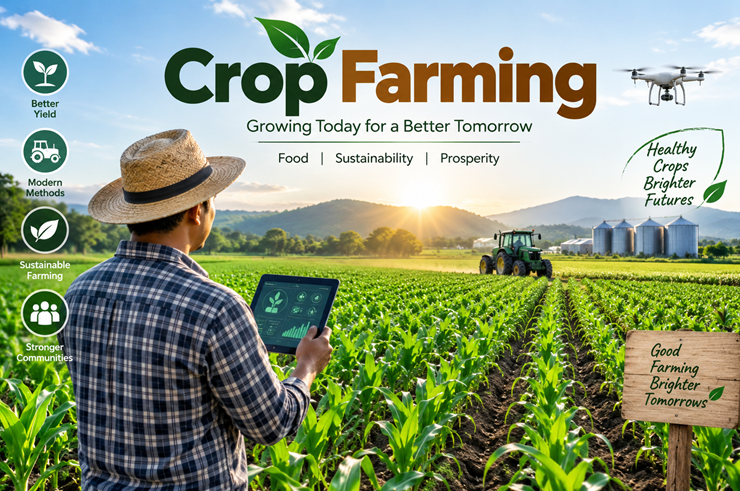
Crop farming is one of the oldest and most important forms of agriculture. From rice and wheat to fruits, vegetables, pulses and oilseeds, crops provide much of the food we eat every day and supply raw materials to many industries.
But crop farming is not simply about putting seeds into the soil and waiting for them to grow. Farmers have to consider the climate, soil, water availability, crop variety, planting season, pests, labor, equipment and market demand before deciding what and how to grow.
Different regions therefore use different crop farming methods. A method that works well in a warm, rainy region may not be suitable for an area with limited rainfall or a short growing season.
In this guide, we’ll look at what crop farming is, its major types, common methods, examples, benefits, challenges, and the factors farmers consider when choosing crops.
What Is Crop Farming?
Crop farming is the practice of growing plants on agricultural land for food, animal feed, raw materials, or commercial purposes.
Crops may be grown on small family farms, large commercial farms, plantations, greenhouses, or controlled indoor environments.
Depending on the farm and location, crop production may involve:
- Preparing the soil
- Selecting seeds
- Sowing or planting
- Irrigation
- Applying nutrients
- Controlling weeds
- Managing pests and diseases
- Harvesting
- Storage
- Processing
- Transportation and marketing
The exact process varies according to the crop and farming system.
Why Is Crop Farming Important?
Crop farming plays an important role in both food production and the economy.
#1. Food Production
Crops such as rice, wheat, maize, potatoes, vegetables and fruits are important sources of food for people around the world.
#2. Animal Feed
Some crops are grown specifically for livestock feed.
Examples include:
- Maize
- Alfalfa
- Sorghum
- Barley
- Fodder grasses
#3. Raw Materials
Agriculture supplies raw materials for many industries.
For example:
Cotton → textile industry
Sugarcane → sugar industry
Oilseeds → edible oils
Rubber → rubber products
Jute → fiber products
#4. Employment
Crop farming creates employment directly on farms and indirectly through transportation, processing, storage, equipment, trading and other agricultural activities.
#5. Rural Economy
In many regions, crop production is an important source of income for rural households and supports local businesses.
Major Types of Crops
Crops can be classified in several ways. One common approach is to group them according to their purpose and characteristics.
#1. Food Crops
Food crops are primarily grown for human consumption.
Examples include:
- Rice
- Wheat
- Maize
- Barley
- Potatoes
- Millets
- Pulses
- Vegetables
- Fruits
These crops form an important part of diets around the world.
#2. Cash Crops
Cash crops are mainly produced for sale rather than direct household consumption.
Examples include:
- Cotton
- Coffee
- Tea
- Sugarcane
- Tobacco
- Rubber
- Cocoa
- Jute
The profitability of cash crops depends on factors such as production costs, yields, quality and market prices.
#3. Cereal Crops
Cereals are grasses cultivated for their edible grains.
Common examples include:
- Rice
- Wheat
- Maize
- Barley
- Oats
- Sorghum
- Millets
Cereals are important sources of carbohydrates and are grown extensively in many parts of the world.
#4. Pulse Crops
Pulses are edible seeds harvested from leguminous plants.
Examples include:
- Chickpeas
- Lentils
- Kidney beans
- Peas
- Pigeon peas
- Black gram
- Green gram
Pulses are important sources of plant protein and are widely used in human diets.
#5. Oilseed Crops
Oilseed crops are cultivated primarily for their oil-rich seeds.
Examples include:
- Soybean
- Mustard
- Sunflower
- Groundnut
- Sesame
- Rapeseed
The extracted oils may be used for cooking, food processing and industrial applications.
#6. Fiber Crops
Fiber crops are grown mainly for fibers that can be used in manufacturing.
Examples include:
- Cotton
- Jute
- Flax
- Hemp
These fibers can be used to produce textiles, ropes, bags and other products.
#7. Fruit Crops
Fruit farming involves growing plants that produce edible fruits.
Examples include:
- Apples
- Mangoes
- Bananas
- Oranges
- Grapes
- Papayas
- Guavas
Fruit production can require careful management of irrigation, nutrition, pests, diseases and harvesting.
#8. Vegetable Crops
Vegetable crops include a wide range of plants grown for their edible roots, stems, leaves, flowers or fruits.
Examples include:
Tomatoes
Potatoes
Carrots
Onions
Cabbage
Cauliflower
Spinach
Peppers
Many vegetables have relatively short growing cycles, although this varies considerably by crop and climate.
Common Crop Farming Methods
Farmers use different production methods depending on their land, resources and objectives.
- Traditional Crop Farming
Traditional farming may rely heavily on local knowledge, manual labor, traditional tools and locally adapted crop varieties.
It remains important in many small-scale farming communities.
- Commercial Crop Farming
Commercial crop farming focuses primarily on producing crops for sale.
Farmers may use:
- Tractors
- Harvesters
- Irrigation systems
- Improved seeds
- Fertilizers
- Storage facilities
- Farm management technology
The scale can range from relatively small market farms to very large agricultural operations.
- Organic Crop Farming
Organic crop farming follows organic production standards and emphasizes natural processes and approved inputs.
Common practices can include:
- Composting
- Crop rotation
- Organic manure
- Cover crops
- Biological pest management
- Soil conservation
Organic farming has its own certification requirements, which vary by country and standard.
- Sustainable Crop Farming
Sustainable crop farming focuses on maintaining agricultural productivity while managing soil, water and other resources responsibly over the long term.
Common practices include:
- Crop rotation
- Efficient irrigation
- Soil conservation
- Mulching
- Integrated pest management
- Reduced erosion
- Diversification
The exact approach depends on local conditions.
- Irrigated Crop Farming
Irrigated farming provides crops with water through systems such as:
- Drip irrigation
- Sprinkler systems
- Canals
- Wells
- Pumps
Irrigation can help farmers produce crops in areas where rainfall is insufficient or unreliable.
However, water needs to be managed carefully to avoid problems such as waterlogging, salinity and excessive groundwater use.
- Dryland Crop Farming
Dryland farming takes place in areas where rainfall is limited or seasonal and irrigation may not be consistently available.
Farmers may focus on:
- Drought-tolerant crops
- Soil moisture conservation
- Appropriate planting dates
- Mulching
- Reduced soil disturbance
- Rainwater management
Crop selection is particularly important in these conditions.
- Mixed Cropping
Mixed cropping involves growing two or more crops on the same piece of land during the same growing period.
For example, a farmer may grow:
Maize + beans
on the same field.
The goal can be to make better use of land and resources or diversify production.
However, crop combinations need to be selected carefully because crops can also compete for water, nutrients and sunlight.
- Intercropping
Intercropping is the practice of growing two or more crops together in a planned arrangement.
Unlike simply mixing crops, intercropping can involve specific row patterns or spacing designed to make better use of available resources.
Examples include:
Maize + beans
Cotton + pulses
Sorghum + legumes
Intercropping can provide diversification, but its success depends on crop combinations, climate and management.
- Crop Rotation
Crop rotation means growing different crops on the same field in a planned sequence over different seasons or years.
For example:
Year 1: Wheat
Year 2: Pulses
Year 3: Maize
Crop rotation can help with:
- Soil management
- Breaking pest and disease cycles
- Diversifying farm production
- Improving resource use
The benefits depend on the crops selected and the overall farming system.
Steps Involved in Crop Farming
Although farming practices vary, crop production commonly follows several stages.
Step 1: Select the Crop
Farmers consider climate, soil, water, market demand and available resources before choosing a crop.
Step 2: Prepare the Land
The field may be prepared through activities such as tillage, leveling, removal of weeds and incorporation of organic matter.
Step 3: Select Quality Seeds
Farmers choose varieties suitable for the local growing conditions and production objectives.
Step 4: Plant or Sow
Seeds or seedlings are planted at an appropriate time and spacing.
Step 5: Manage Water
Crops receive water from rainfall, irrigation or a combination of both.
Step 6: Manage Nutrients
Plants need essential nutrients for healthy growth. Farmers may use organic or approved mineral nutrient sources depending on their farming system.
Step 7: Control Weeds, Pests and Diseases
Farmers monitor fields and use suitable management practices to reduce crop losses.
Step 8: Harvest
Crops are harvested when they reach an appropriate stage of maturity.
Step 9: Store and Transport
After harvesting, crops may need drying, grading, cleaning, storage and transportation before reaching consumers or processing facilities.
Factors That Affect Crop Farming
Several factors can influence the success of crop production.
Climate
Temperature, rainfall, humidity and the length of the growing season affect crop selection and productivity.
Soil
Soil fertility, texture, drainage, pH and organic matter can influence plant growth.
Water
Reliable water availability is important for many crops, particularly in regions with irregular rainfall.
Seeds
Crop varieties can differ significantly in maturity period, yield potential, disease resistance and suitability for local conditions.
Technology
Machinery, irrigation equipment, sensors and farm management software can improve efficiency in some farming systems.
Labor
Some crops require substantial manual work, especially during planting, harvesting or post-harvest handling.
Market
Farmers growing crops for commercial purposes need to understand demand, prices, buyers, transportation and storage.
Benefits of Crop Farming
Crop farming can provide several benefits when managed appropriately.
Food Security
Growing crops helps supply food for local communities and wider markets.
Income Generation
Commercial crop production can provide income for farmers and agricultural workers.
Employment
Crop production supports jobs both on farms and throughout the agricultural supply chain.
Industrial Raw Materials
Many crops provide raw materials for food, textile, pharmaceutical and manufacturing industries.
Rural Development
Agriculture can support local markets, transportation, processing and other rural economic activities.
Challenges of Crop Farming
Crop farming also comes with risks.
- Weather
Drought, excessive rainfall, storms, frost and extreme temperatures can damage crops.
- Pests and Diseases
Insects, fungi, bacteria, viruses and other organisms can reduce crop yields.
- Water Shortages
Limited irrigation water or unreliable rainfall can make production difficult.
- Market Price Changes
Farmers may face lower-than-expected prices after investing heavily in production.
- Rising Input Costs
Seeds, fertilizers, fuel, machinery, labor and irrigation can contribute significantly to production costs.
- Soil Degradation
Poor farming practices can contribute to erosion, nutrient depletion, compaction and other soil problems.
This is why good farm management involves considering both production and long-term resource management.
Crop Farming vs Livestock Farming
Crop farming focuses primarily on growing plants, while livestock farming involves raising animals.
| Crop Farming | Livestock Farming |
| Growing plants | Raising animals |
| Rice, wheat, vegetables, fruits | Cattle, sheep, goats, poultry |
| Requires suitable soil and climate | Requires suitable feed, housing and animal management |
| Harvesting is often seasonal | Animal production may be continuous |
| Main products are crops | Main products can include milk, meat and eggs |
Many farms combine both systems through mixed farming.
How to Choose the Right Crop for a Farm
Choosing a crop should not be based only on which crop sells for the highest price.
Farmers should consider:
- Climate suitability
- Soil conditions
- Water availability
- Growing season
- Seed availability
- Labor requirements
- Production costs
- Expected market demand
- Storage requirements
- Access to buyers
A crop that appears highly profitable on paper may not be suitable for a particular farm if it requires too much water, labor, investment or specialized infrastructure.
FAQs.
Q1. What is crop farming?
Crop farming is the practice of growing plants for food, animal feed, raw materials or commercial purposes.
Q2. What are the main types of crops?
Major groups include food crops, cash crops, cereals, pulses, oilseeds, fiber crops, fruits and vegetables.
Q3. What are examples of crop farming?
Examples include growing rice, wheat, maize, cotton, sugarcane, vegetables, fruits, pulses and oilseed crops.
Q4. What is the difference between crop farming and livestock farming?
Crop farming involves growing plants, while livestock farming involves raising animals. Some farms combine both through mixed farming.
Q5. Is crop farming profitable?
Crop farming can be profitable, but profitability depends on crop selection, yield, input costs, market prices, location, weather and farm management.
Q6. What is sustainable crop farming?
Sustainable crop farming focuses on producing crops while managing soil, water and other resources in a way that supports long-term agricultural productivity.
Q7. What is crop rotation?
Crop rotation is the planned practice of growing different crops on the same field in a sequence over different seasons or years.
Conclusion:
Crop farming is much more than simply growing crops. It is a combination of land management, crop selection, water management, soil care, pest management, harvesting and marketing.
Different farming methods suit different situations. A farmer with reliable irrigation may choose crops that require more water, while a farmer in a dry region may focus on drought-tolerant crops. Similarly, commercial farms may use machinery and technology extensively, while small farms may rely more heavily on family labor and local knowledge.
There is no single crop or farming method that is best for every farmer.
The right choice depends on local conditions, available resources, production goals and market opportunities.
2 thoughts on “Crop Farming: Types, Methods, Benefits & Examples”