
Farming can be a rewarding business, but making money from agriculture is not simply about growing a crop and selling it. The real challenge is choosing something that fits your land, climate, available resources and local market.
A crop that gives good returns in one region may not be a good choice somewhere else. Similarly, a farming business that works well on a large farm may not make sense for someone with only a small piece of land.
If you are thinking about starting an agricultural business, there are many options to consider. Traditional crop farming is still important, but opportunities also exist in vegetables, fruits, livestock, aquaculture, nurseries and modern farming systems.
In this guide, we explore 15 profitable farming ideas, along with the factors you should consider before investing.
Important: There is no farming business that guarantees profit. Actual returns depend on location, production costs, yield, market prices, weather, management and demand.
What Makes a Farming Business Profitable?
Before looking at individual ideas, it helps to understand what actually influences profitability.
A farming business generally becomes more attractive when it has a combination of:
- Strong and consistent market demand
- Suitable local growing conditions
- Manageable production costs
- Reliable access to water
- Good productivity
- Reasonable selling prices
- Limited post-harvest losses
- Reliable buyers
- Efficient use of labour and resources
For example, a farmer may produce a high-value crop, but if production costs are extremely high or there are few buyers nearby, the final profit may be disappointing.
On the other hand, a relatively ordinary crop can become a good business when it is grown efficiently and sold through a strong local market.
That is why profit should be considered after costs, not simply from the selling price.
15 Profitable Farming Ideas
#1. Vegetable Farming
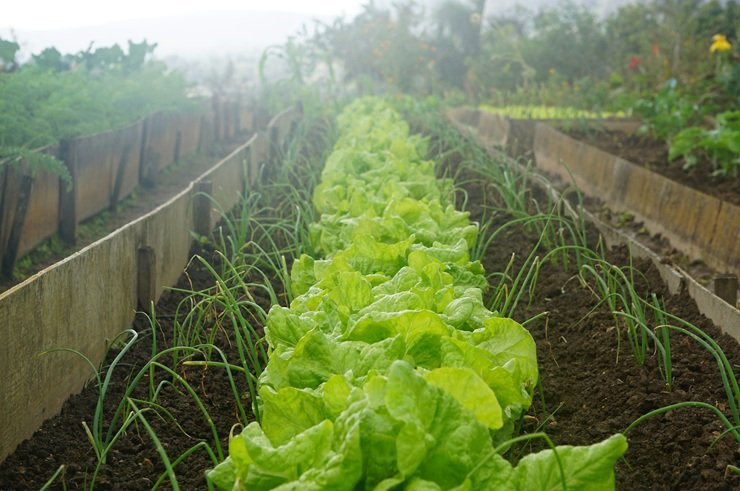
Vegetable farming is one of the most accessible agricultural business ideas, particularly for farmers who have suitable soil, water and access to nearby markets.
Depending on the region and season, farmers can grow:
- Tomatoes
- Onions
- Potatoes
- Cabbage
- Cauliflower
- Carrots
- Spinach
- Peas
- Chillies
- Okra
One advantage is that many vegetables have relatively short growing cycles compared with some fruit crops.
A farmer near a town, for example, may be able to sell fresh vegetables directly to retailers, restaurants or local customers.
Potential advantages
- Regular demand for many vegetables
- Several crops can be grown in different seasons
- Suitable for small and medium farms
- Possibility of direct selling
Challenges
- Perishable produce
- Price fluctuations
- Labour requirements
- Pest and disease risks
Vegetable farming can be particularly interesting when the farmer understands the local market before planting.
#2. Fruit Farming
Fruit farming can be a long-term agricultural business.
Depending on climate and location, farmers may consider:
- Mangoes
- Apples
- Bananas
- Oranges
- Grapes
- Guavas
- Papayas
- Strawberries
Some fruit crops can command good prices, particularly when quality and timing are right.
However, fruit farming requires patience. Certain trees may take several years before reaching commercially useful production.
Potential advantages
- Strong consumer demand
- Long-term production potential
- Opportunities for premium or direct sales
- Possibility of value-added products
Challenges
- Long waiting period for some crops
- Weather risks
- Pest and disease management
- Storage and transportation requirements
Fruit farming should therefore be approached as a long-term plan rather than a quick-income project.
#3. Dairy Farming
Dairy farming is another established agricultural business.
Farmers can generate income by selling milk to dairies, retailers, local customers or other buyers, depending on their location and business model.
However, dairy farming requires daily management.
Animals need:
Quality feed
Clean water
Suitable housing
Healthcare
Regular monitoring
Proper hygiene
Feed is often one of the major costs, so farmers need to calculate expenses carefully.
Potential advantages
- Regular milk production
- Established demand in many markets
- Possibility of direct selling
- Additional income from certain dairy products
Challenges
- Daily labour
- Feed costs
- Animal health
- Housing expenses
- Milk price fluctuations
Dairy farming can work well for someone who is prepared for the day-to-day responsibility involved in livestock management.
#4. Poultry Farming
Poultry farming generally focuses on producing eggs, meat or both.
It can be operated on different scales, from a small flock to a commercial facility.
The main areas to manage include:
- Poultry housing
- Feed
- Temperature and ventilation
- Disease prevention
- Labour
- Market access
Feed prices can have a major effect on profitability.
Before starting, it is sensible to calculate the expected cost per bird and compare it with realistic selling prices.
Potential advantages
- Established demand
- Different production models
- Can be started on a manageable scale
Challenges
- Feed costs
- Disease risks
- Housing requirements
- Market price changes
#5. Goat Farming
Goat farming can be suitable in areas where goats are in demand and suitable feed and housing are available.
Income may come from the sale of goats, meat, milk or breeding animals, depending on the business model.
One common mistake is assuming that simply increasing the number of animals will automatically increase profits.
More animals also mean more:
- Feed
- Water
- Healthcare
- Housing
- Labour
- Management
Good record-keeping is therefore important.
#6. Fish Farming
Fish farming, or aquaculture, involves raising fish under controlled conditions.
Depending on the region, farmers may use ponds, tanks or other suitable systems.
The business depends heavily on:
- Water quality
- Fish species
- Feed
- Stocking levels
- Fish health
- Harvesting
- Market access
Fish farming can be an attractive option where suitable water resources and reliable buyers are available.
However, water management should never be treated as a minor detail. Poor water quality can quickly affect fish health and production.
#7. Organic Farming
Organic farming focuses on production methods that place greater emphasis on soil health, ecological processes and restrictions on certain synthetic inputs.
Some consumers are willing to pay more for certified organic products, creating opportunities in certain markets.
However, organic farming is not automatically more profitable.
Farmers should consider:
- Certification requirements
- Production methods
- Labour
- Input availability
- Market demand
- Selling price
A strong local customer base can be particularly valuable for a small organic farm.
#8. Hydroponic Farming
Hydroponic farming allows plants to be grown without conventional soil-based cultivation.
Plants receive water and nutrients through a controlled system.
This method can be useful where:
- Land is limited
- Water management is important
- Controlled growing conditions are desirable
- There is demand for fresh produce
However, hydroponics requires equipment and technical knowledge.
Electricity, nutrients, maintenance and infrastructure can increase costs.
For a detailed explanation, see our guide to Hydroponic Farming.
#9. Plant Nursery Business
A plant nursery can be a practical agricultural business for people who want to sell plants rather than mature crops.
Possible products include:
- Vegetable seedlings
- Fruit plants
- Ornamental plants
- Flowering plants
- Tree saplings
- Garden plants
A nursery can serve farmers, gardeners, landscapers, homeowners and businesses.
One advantage is that the same customer may return regularly if the nursery maintains good plant quality.
#10. Mushroom Farming
Mushroom farming can be an interesting option where there is suitable market demand and controlled growing conditions can be maintained.
Unlike traditional field crops, mushrooms can be grown in specially prepared environments.
Potential advantages include:
- Relatively limited space requirement
- Controlled production environment
- Potentially short production cycles
- Growing demand in some markets
However, temperature, humidity, hygiene and contamination control are important.
Anyone considering mushroom farming should first understand the production process and local demand rather than investing in equipment immediately.
#11. Beekeeping
Beekeeping can provide income through honey and other bee-related products.
It can sometimes be combined with crop or fruit farming because bees also play an important role in pollination.
Potential products may include:
- Honey
- Beeswax
- Pollen
- Other hive-related products
The business requires knowledge of bee management, seasonal conditions, hive placement and disease prevention.
It may be particularly useful as a complementary agricultural activity rather than a standalone business for every farmer.
#12. Herb Farming
Herbs can be grown for culinary, processing or other specialised markets.
Depending on the region, examples may include:
- Mint
- Coriander
- Basil
- Rosemary
- Lemongrass
- Other locally suitable herbs
The profitability of herb farming depends heavily on the intended market.
Selling fresh herbs to local restaurants is a different business model from supplying dried herbs to processors.
Before growing a large quantity, identify who will buy the product and in what form.
#13. Flower Farming
Flower farming can be suitable in areas with the right climate and access to markets.
Flowers may be sold to:
- Florists
- Event businesses
- Wholesale markets
- Garden centres
- Direct customers
Demand may increase around weddings, festivals, holidays and other occasions.
The main challenge is that flowers can be highly perishable, making harvesting, handling, storage and transportation particularly important.
#14. Fodder Farming
Fodder farming involves growing crops specifically for feeding livestock.
This can include grasses, legumes and other suitable fodder crops.
There may be an opportunity where dairy farms and livestock owners have consistent demand for quality animal feed.
A farmer can also use fodder production to support their own livestock business.
The business case depends on local livestock numbers, feed prices, land availability and transportation costs.
#15. Value-Added Farming
Sometimes the opportunity is not simply in producing a farm product, but in doing something more with it.
For example:
Fresh fruit → Jam
Milk → Yoghurt or other dairy products
Wheat → Flour
Tomatoes → Sauce
Herbs → Dried packaged herbs
Honey → Branded retail honey
Value addition can potentially increase the selling value of a product.
However, it may also introduce additional costs, equipment requirements, packaging, food-safety requirements and regulations.
Farmers should therefore calculate the complete cost before assuming processing will automatically increase profit.
Which Farming Idea Is Best for You?
The best farming idea depends on your circumstances.
Before choosing, consider these questions.
#1. How Much Land Do You Have?
A large agricultural area provides different opportunities from a small plot.
For limited land, vegetables, herbs, nurseries, mushrooms or certain controlled farming systems may be worth investigating.
#2. How Much Water Is Available?
Water availability can determine whether a particular crop or livestock system is practical.
Do not choose a water-intensive business without first checking your reliable water supply.
#3. What Is the Local Climate Like?
Temperature, rainfall, humidity and seasonal conditions all affect production.
A crop that performs well in one climate may struggle in another.
#4. Who Will Buy Your Product?
This is one of the most important questions.
Identify potential customers before making a major investment.
#5. What Is Your Budget?
Calculate not only the initial investment but also the ongoing operating costs.
A business that requires expensive equipment may need more working capital than expected.
#6. Do You Have the Necessary Skills?
Every type of farming has its own learning curve.
If you have no experience with livestock, for example, learn about animal management before investing in a large herd.
How to Compare Farming Business Ideas
A simple comparison can help you narrow down your options.
| Farming Idea | Space | Investment | Market Consideration | Main Challenge |
| Vegetable farming | Small–Large | Low–Medium | Local demand | Perishability |
| Fruit farming | Medium–Large | Medium | Seasonal demand | Waiting period |
| Dairy farming | Medium–Large | Medium–High | Milk buyers | Daily management |
| Poultry farming | Small–Large | Medium | Eggs/meat demand | Feed costs |
| Goat farming | Small–Medium | Medium | Meat/breeding market | Animal care |
| Fish farming | Medium–Large | Medium–High | Local fish demand | Water quality |
| Organic farming | Small–Large | Varies | Premium markets | Certification/ market |
| Hydroponics | Small–Medium | Medium–High | Fresh produce market | Technology |
| Mushroom | Small | Low–Medium | Local demand | Environment control |
| Nursery | Small–Medium | Low–Medium | Farmers/gardeners | Plant care |
These categories are only general guidelines. Actual costs and suitability vary significantly by location and scale.
How to Improve Farming Profitability
Choosing the right farming activity is only the beginning.
Several practical habits can improve the chances of running a healthy business.
Keep Detailed Records
Record:
Production
Labour
Input costs
Transport
Electricity
Sales
Losses
Without records, it is difficult to identify where money is being made or lost.
Reduce Unnecessary Waste
Water, fertiliser, feed, electricity and harvested produce all have value.
Reducing waste can improve overall efficiency.
Find Buyers Before Harvest
Do not wait until the crop is ready before thinking about sales.
Understanding your market early can help you make better production decisions.
Consider Direct Selling
Depending on your location, selling directly to customers, restaurants or retailers may provide an alternative to wholesale markets.
However, direct selling also requires time and customer management.
Start Small
If you are new to farming as a business, starting with a manageable project can give you practical experience before you expand.
Common Mistakes to Avoid
Chasing High Prices
A high selling price does not necessarily mean high profit.
Always calculate the production cost.
Copying Another Farmer
A farming business that works for someone else may not suit your land, climate or market.
Ignoring the Market
Producing a large quantity without knowing who will buy it can create serious problems.
Underestimating Operating Costs
Seeds and equipment are not the only expenses. Labour, transport, electricity, maintenance and losses also matter.
Starting Too Big
Large investments can increase risk when you are still learning.
Assuming Farming Guarantees Profit
Agriculture is affected by many factors outside a farmer’s control. Good planning reduces risk, but it cannot eliminate it.
FAQs.
Q1. Which farming business is the most profitable?
There is no single farming business that is the most profitable everywhere. The right choice depends on local demand, production costs, climate, resources and management.
Q2. What is the best profitable farming idea for a small farm?
Vegetables, herbs, nurseries, mushrooms and some specialised farming systems may be suitable for smaller farms, depending on local conditions and demand.
Q3. Can I start a profitable farming business with limited money?
Some farming businesses can be started on a smaller scale with limited capital. However, you should still calculate operating costs and keep money available for unexpected expenses.
Q4. Which farming business gives quick returns?
Some vegetables, mushrooms and certain livestock or poultry systems may have shorter production cycles than fruit orchards or other long-term crops. However, a shorter production cycle does not automatically mean higher profit.
Q5. Is organic farming more profitable?
Organic farming can provide access to premium markets in some areas, but higher selling prices do not automatically result in higher profits. Production, certification, labour and marketing costs need to be considered.
Q6. Is hydroponic farming profitable?
Hydroponic farming can be commercially viable in suitable circumstances, but profitability depends on crop choice, energy costs, equipment, yields and selling prices.
Q7. How can I choose the right farming business?
Start by looking at your land, water, climate, skills, budget and local market. Then compare the expected costs and potential revenue of different options.
Conclusion:
There are plenty of profitable farming ideas to explore, but the most profitable option on paper is not always the best option for you.
A successful farming business usually starts with a simple question:
What can I produce efficiently, and who is willing to buy it?
Once you have an answer, you can work backwards and calculate the land, water, equipment, labour and investment required.
If you are completely new to farming as a business, starting small can be a sensible way to gain experience and understand your market.
For the next step, explore our guide to Small Farm Business Ideas, where we look specifically at agricultural businesses that can be considered on smaller plots of land.
You can also return to our main Farming Business guide for a broader overview of agricultural business opportunities, costs and planning.
Explore. Learn. Grow.
One thought on “Profitable Farming Ideas: 15 Agriculture Business Ideas to Consider”