
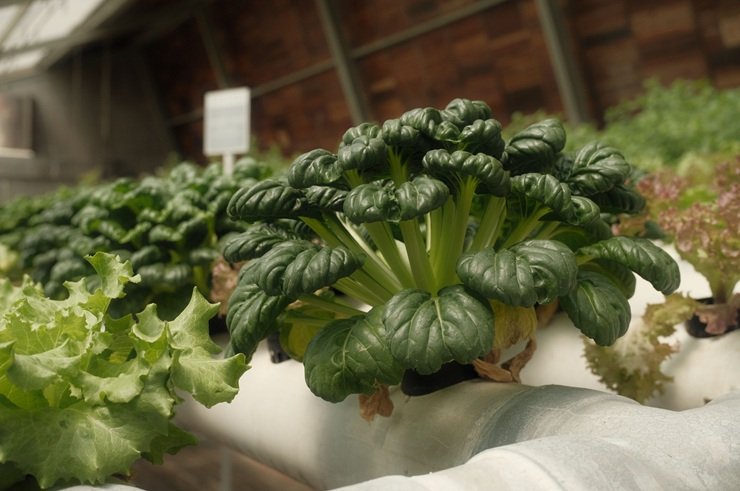
Have you ever seen plants growing without being planted in ordinary soil?
It may look unusual at first, but the idea is actually quite simple. Plants need water, nutrients, light and the right conditions to grow. Soil is one way of providing those things, but it isn’t the only way.
Hydroponic farming is a growing method where plants are cultivated without traditional soil. Instead, their roots receive water and essential nutrients through a carefully managed system.
What makes hydroponics interesting is the level of control it can offer. A grower can monitor the water, nutrients, pH, light and growing environment much more closely than in many conventional growing systems.
This doesn’t mean hydroponics is automatically better than traditional farming. It has its own costs, challenges and learning curve.
So, how exactly does hydroponic farming work, what can you grow with it, and is it worth considering?
Let’s take a closer look.
What Is Hydroponic Farming?
Hydroponic farming is a method of growing plants without traditional agricultural soil, using water containing the nutrients plants need for healthy growth.
The roots receive water, oxygen and nutrients through a controlled growing system.
Some hydroponic systems keep the roots directly in nutrient-rich water, while others use a growing medium such as coco coir, perlite or clay pebbles to support the plant.
The important difference is that soil is not being used as the main source of nutrients.
Instead, the grower supplies the nutrients directly.
How Does Hydroponic Farming Work?
The basic idea behind hydroponics is easier to understand when you think about what a plant actually needs.
A plant requires:
Water
Nutrients
Oxygen
Light
Suitable temperature
Space for its roots and leaves
In traditional farming, soil provides support and holds water and nutrients around the roots.
In hydroponics, the system provides these conditions in a different way.
A typical system may include:
- A water reservoir
- Nutrient solution
- Growing containers
- Pumps or pipes
- A growing medium, depending on the system
- Lighting, particularly for indoor growing
- Monitoring equipment
The nutrient-rich water is delivered to the roots, and the system is managed to maintain suitable growing conditions.
Some systems continuously circulate water, while others deliver it at specific intervals.
7 Key Benefits of Hydroponic Farming
Hydroponics has become popular partly because it offers several potential advantages over conventional soil-based growing.
#1. No Traditional Soil Is Required
The most obvious difference is also the most interesting one.
Hydroponic plants don’t need ordinary agricultural soil to grow.
This means the method can be useful in places where soil quality is poor or suitable agricultural land is limited.
It can also make indoor and urban crop production easier to explore.
#2. Water Can Be Recirculated
Many hydroponic systems are designed to circulate water rather than allowing it to simply drain away.
The same water can move through the system and return to a reservoir.
This can make water use more efficient than some conventional growing methods, although actual water savings depend on the system, crop and management.
Water is still lost through evaporation and plant transpiration, so hydroponics does not mean that crops require no water.
#3. Nutrients Can Be Controlled More Precisely
In traditional farming, nutrients in the soil can vary considerably.
With hydroponics, growers can manage the nutrients supplied through the water.
This gives the grower greater control over the plant’s growing environment.
However, that control also creates responsibility. If the nutrient balance is wrong, plants can suffer.
#4. Efficient Use of Space
Hydroponic systems can be designed for relatively small areas.
This makes them interesting for:
- Urban farms
- Rooftops
- Greenhouses
- Indoor growing facilities
- Small-scale commercial operations
When combined with vertical farming, hydroponics can also be used in stacked growing systems.
#5. Growing Conditions Can Be Controlled
Hydroponics can be combined with controlled-environment agriculture.
Growers may monitor:
- Temperature
- Humidity
- pH
- Nutrient concentration
- Light
- Water temperature
This level of control can help create more consistent growing conditions.
#6. Can Be Used in Areas With Poor Soil
A lack of fertile soil doesn’t necessarily prevent someone from growing crops hydroponically.
This is one reason hydroponics can be useful for urban agriculture and other locations where conventional farming is difficult.
#7. Potential for Year-Round Production
When hydroponics is used indoors or in a controlled environment, crops can be grown with less dependence on outdoor seasonal conditions.
However, year-round production still requires appropriate lighting, temperature control, water management and other infrastructure.
Types of Hydroponic Farming Systems
There isn’t just one way to grow plants hydroponically.
Different systems deliver water and nutrients to the roots in different ways.
#1. Deep Water Culture (DWC)
In a Deep Water Culture system, plant roots are suspended in nutrient-rich water.
An air pump is commonly used to provide oxygen to the water.
This system can be relatively simple, making it popular with beginners.
#2. Nutrient Film Technique (NFT)
In an NFT system, a thin stream of nutrient-rich water flows along a channel where the plant roots are located.
The water eventually returns to a reservoir and can be circulated again.
This system can work particularly well for smaller crops with relatively light root systems.
#3. Drip Hydroponics
A drip system delivers nutrient solution to individual plants through small tubes or emitters.
The amount and timing of water delivery can be controlled.
This approach can be useful when growers want more precise control over individual plants.
#4. Ebb and Flow
An ebb-and-flow system periodically floods the growing area with nutrient solution and then allows the water to drain back into a reservoir.
This creates cycles of watering and drainage.
It can provide both nutrients and oxygen to the root zone when properly managed.
#5. Wick System
The wick system is one of the simpler hydroponic approaches.
A wick draws nutrient solution from a reservoir towards the growing medium and plant roots.
It doesn’t usually require a pump, which makes it relatively simple, although it isn’t suitable for every type of crop.
#6. Aeroponics
Aeroponics takes the idea of soilless growing even further.
Instead of keeping the roots submerged in water, the roots are suspended in air and exposed to a fine mist containing water and nutrients.
The system can provide excellent root oxygenation, but it can also be more technically demanding.
What Crops Can Be Grown Hydroponically?
Not every crop is equally practical for hydroponic farming.
Some plants are particularly well suited to controlled growing systems.
Common examples include:
- Lettuce
- Spinach
- Basil
- Mint
- Coriander
- Kale
- Tomatoes
- Cucumbers
- Peppers
- Strawberries
Leafy greens and herbs are especially popular because they can grow relatively quickly and don’t always require large amounts of space.
Larger fruiting crops can also be grown hydroponically, but they may require more support, lighting, nutrients and careful management.
Hydroponic Farming vs Traditional Farming
The biggest difference is the growing environment.
| Hydroponic Farming | Traditional Soil Farming |
| Does not require conventional soil | Uses agricultural soil |
| Nutrients are supplied through water | Nutrients are mainly managed through soil |
| Water can be recirculated | Water is usually applied to soil |
| Growing conditions can be closely controlled | More dependent on natural conditions |
| Can be used indoors | Usually takes place outdoors |
| Can work in areas with poor soil | Requires suitable soil for the crop |
| Requires technical management | Relies more heavily on conventional farming practices |
Neither method is suitable for every situation.
A large field of wheat, for example, is very different from a small indoor farm growing lettuce.
The right system depends on the crop, location, investment and available resources.
Advantages of Hydroponic Farming
Beyond the specific benefits mentioned earlier, hydroponics can offer some practical advantages.
Better control
Growers have greater control over water and nutrient delivery.
Efficient use of space
Hydroponic systems can be designed for compact growing areas.
Potential water efficiency
Recirculating systems can reduce unnecessary water loss.
Less dependence on soil quality
Poor soil does not necessarily prevent hydroponic production.
Suitable for urban growing
Hydroponics can be used in locations where traditional agricultural land is unavailable.
Disadvantages of Hydroponic Farming
Hydroponics also has some important limitations.
#1. Initial Setup Can Be Expensive
Depending on the system, growers may need:
Pumps
Reservoirs
Pipes
Grow lights
Sensors
Nutrients
Climate-control equipment
A simple home system can be inexpensive, but a commercial operation can require a much larger investment.
#2. Technical Knowledge Is Important
Hydroponics requires more than simply putting plants in water.
Growers need to understand things such as nutrient concentration, pH, oxygen levels and water temperature.
Small mistakes can affect plant health.
#3. Electricity May Be Required
Pumps, fans, lighting and climate-control systems can all consume electricity.
This is particularly important for indoor hydroponic farms.
#4. Equipment Failure Can Cause Problems
In conventional farming, a short equipment failure may not immediately destroy a crop.
In a hydroponic system, a failed pump or blocked pipe can interrupt water and nutrient delivery.
Having suitable monitoring and backup systems can therefore be important.
#5. Not Every Crop Is Practical
Some crops simply make more economic sense in conventional fields.
Hydroponics is generally more interesting for crops that can justify the cost of controlled production.
Hydroponic Farming in India
Hydroponic farming is attracting interest in India, particularly in urban and peri-urban areas.
One reason is the growing interest in producing fresh vegetables where agricultural land is limited.
Hydroponic systems can potentially be used in:
Urban farms
Greenhouses
Rooftops
Small commercial units
Controlled indoor farms
However, the economics matter.
Electricity, equipment, nutrient costs, maintenance and market prices can all affect whether a hydroponic business is financially viable.
For someone considering hydroponics as a business, it is therefore important to research the local market before investing in a system.
Growing a crop successfully is only one part of the equation. The crop also needs to have a market.
Is Hydroponic Farming Profitable?
It can be profitable in the right circumstances, but there is no guaranteed return.
Profitability depends on factors such as:
- Crop choice
- Selling price
- Electricity costs
- Water costs
- Equipment investment
- Labour
- Maintenance
- Production volume
- Local demand
High-value crops can sometimes make controlled production more attractive, but higher selling prices do not automatically mean higher profits.
Anyone planning a commercial hydroponic farm should calculate the expected costs and revenue before investing.
Is Hydroponic Farming Better for the Environment?
The answer depends on how the system is designed and operated.
Hydroponics can potentially reduce water use and eliminate the need for large areas of soil.
But indoor systems may consume considerable electricity for lighting and climate control.
The environmental impact therefore depends on several factors, including:
- Energy source
- System efficiency
- Water management
- Equipment lifespan
- Nutrient use
- Waste management
So it would be too simple to say that every hydroponic farm is automatically more sustainable.
Hydroponics and Vertical Farming: Are They the Same?
No.
This is a common point of confusion.
Hydroponics describes how plants receive water and nutrients without traditional soil.
Vertical farming describes how crops are arranged in layers to make better use of vertical space.
They can be used together.
For example, an indoor farm may grow lettuce in several stacked layers using a hydroponic system.
So:
Hydroponics = growing method
Vertical farming = space arrangement
This distinction becomes useful when comparing modern farming technologies.
You can also read our complete guide to Vertical Farming
How to Start a Small Hydroponic Farm
If you’re thinking about trying hydroponics, starting small can be a sensible approach.
Step 1: Choose the crop
Start with a crop that is well suited to hydroponic growing, such as lettuce or herbs.
Step 2: Choose the system
Research systems such as DWC, NFT, drip or ebb-and-flow.
Step 3: Understand water and nutrients
Learn how pH and nutrient concentration affect plant growth.
Step 4: Set up the growing area
Make sure there is adequate light, ventilation, water and electrical access where required.
Step 5: Start with a manageable number of plants
A smaller setup makes it easier to learn how the system behaves.
Step 6: Monitor regularly
Check plant health, water levels, nutrient conditions and equipment.
Step 7: Calculate your costs
If the goal is commercial production, record every major expense before scaling up.
Starting small can help you learn the system without making a large investment immediately.
The Future of Hydroponic Farming
Hydroponic farming is likely to remain an important part of controlled-environment agriculture.
As technology improves, growers may have access to better sensors, automation and monitoring systems.
Artificial intelligence and data analysis may also help growers identify changes in plant conditions more quickly.
But technology will not remove the fundamentals.
A hydroponic farm still needs healthy plants, clean water, suitable nutrients, reliable equipment and careful management.
The most useful developments will probably be those that make hydroponic systems more efficient, reliable and practical, rather than simply more complicated.
FAQs.
Q1. What is hydroponic farming?
Hydroponic farming is a method of growing plants without traditional soil, using water and nutrients supplied directly to the roots.
Q2. Can plants grow without soil?
Yes. Plants can grow without conventional soil when they receive the water, nutrients, oxygen, light and support they need through an appropriate growing system.
Q3. What are the main types of hydroponic systems?
Common systems include Deep Water Culture, Nutrient Film Technique, drip systems, ebb and flow, wick systems and aeroponics.
Q4. What plants grow best in hydroponics?
Leafy greens and herbs are commonly suited to hydroponic systems. Tomatoes, cucumbers, peppers and strawberries can also be grown with suitable equipment and management.
Q4. Does hydroponic farming save water?
Some hydroponic systems recirculate water and can use it efficiently. However, actual water savings depend on the system, crop and management.
Q5. Is hydroponic farming expensive?
The cost varies significantly. A small home system can be relatively simple, while a commercial hydroponic farm may require substantial investment in equipment and infrastructure.
Q6. Is hydroponic farming profitable?
It can be, but profitability depends on crop selection, market demand, operating costs, electricity, labour, equipment and selling prices.
Related Article for Modern Farming:
If you’re interested in modern farming, you may also want to explore:
Modern Farming: 6 Innovative Farming Methods Changing Agriculture
Vertical Farming: 7 Key Benefits, Types, Examples & How It Works
Precision Farming: 7 Key Benefits, Technology, Examples & How It Works
Hydroponic Farming: 7 Key Benefits, Types, Examples & How It Works
Smart Farming: 7 Key Benefits, Technologies, Examples & How It Works
Indoor Farming: 7 Key Benefits, Types, Crops & How It Works
Conclusion:
Hydroponic farming may look very different from the traditional image of agriculture, but the basic goal is still the same: to grow healthy food efficiently.
Instead of relying on soil to provide the growing environment, hydroponics gives growers more direct control over water, nutrients and other conditions.
That control can be a major advantage, especially where land or suitable soil is limited.
At the same time, hydroponics isn’t a shortcut to easy farming. Pumps can fail, nutrients need to be managed, electricity costs can add up and plants still require careful attention.
For some growers, particularly those working with limited space or controlled environments, hydroponics can be a practical option. For others, traditional farming may remain the better choice.
The key is not to ask whether hydroponics is better than every other farming method.
A better question is:
Does hydroponics make sense for the crop, location, resources and market you’re working with?
That is where this modern farming method can really show its value.
4 thoughts on “Hydroponic Farming: 7 Key Benefits, Types, Examples & How It Works”