
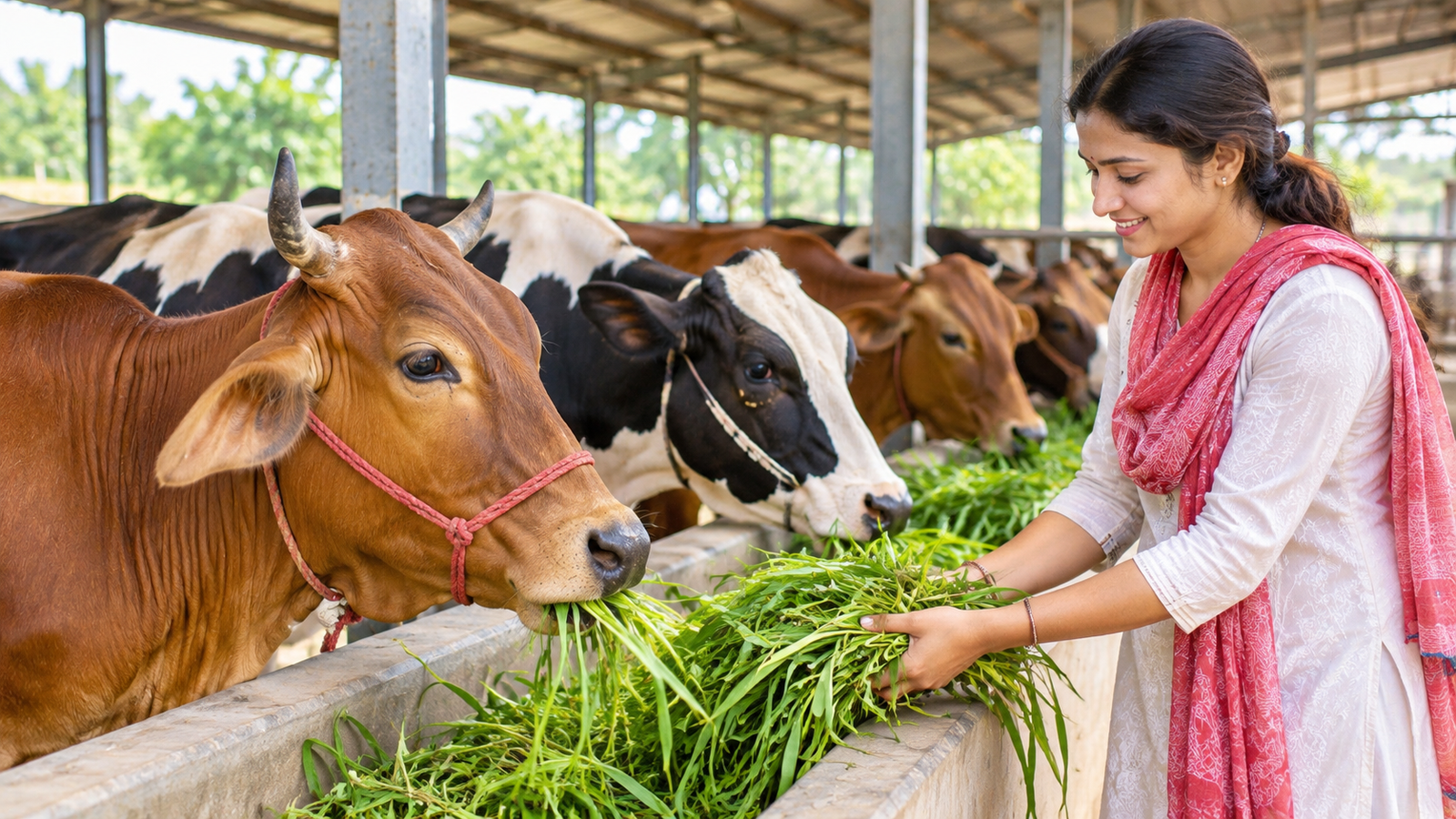
One of the most important pillars of Indian agriculture is- cattle farming. It not only provides milk and nutritional value to the economy but also employment and opportunities to earn an income for many rural households in India. Cattle farming is not only about selecting a cow and selling milk for many commercial cattle businesses, but it is also more than that. The breed of cow will determine the quality of milk, as will the feeding, breeding, and healthcare; all combined will constitute the quality of cattle farming.
Cattle farming demonstrates the close relationship between humans and animals. These animals are raised with great care since the ultimate goal is to optimise milk production and use their strength for agricultural labour. In India, on the other hand, cattle farming holds the biggest hand behind the agricultural economy. Cattle farming is a form of animal husbandry in which cattle are bred and domesticated for various purposes.
Here in this article, you will get to know how to start cattle farming in India, which breeds farmers can consider, how much investment may be required, and what factors affect farm income.
What Is Cattle Farming?
Cattle farming is a form of animal husbandry where cattle are domesticated and used for various purposes. In this section of agriculture, cows and buffaloes are the focus cattle since they are used for milk production and draught purposes. Farmers who are interested in cattle farming can start small and gradually increase over time in this field. You need to select higher-quality feed and enriched grass so that milk production is better.
The main activities include:
- Dairy cattle farming for milk production
- Indigenous cattle breeding and rearing
- Crossbred cow farming
- Calf and heifer rearing
- Production of organic manure using cattle dung
- Sale of milk and other dairy-related products
If you are one of those farmers who want to focus specifically on milk production, you can also learn more about dairy farming in India, including its setup, feeding practices and management.
Popular Cattle Breeds in India
When starting a cattle farm, choosing the right breed is very important for better milk production. The suitable breed depends on the local climate, availability of fodder, veterinary facilities, milk demand and the farmer’s budget. And because the breed of the cattle determines the quality of milk, it becomes an important distinction that shouldn’t escape your mind.
Here, India offers several indigenous cattle breeds as well as crossbred varieties. Each has different characteristics and management requirements. You can select the breed according to the management and feed you can provide to the cattle.
#1. Sahiwal
If something could compete with exotic breeds that offer high milk yield and still be indigenous, it is Sahiwal. Sahiwal cows are the prominent breed of Zebu cattle originating in the Indian subcontinent. They are widely used in cattle farming because of their heat and disease resistance. The Sahiwal cows show remarkable reproductive capabilities, and their long lactation period is something that contributes to their high milk yield.
Key characteristics:
- Indigenous dairy breed.
- Reddish-brown coat.
- Adapted to warm climates.
- High-quality milk yield with a longer lactation period.
- Requires proper feeding and breeding management.
#2. Gir
Gir cow is native to the Gir hills and Kathiawar, Gujarat; it is a cow that belongs to the humped category of cows in India. The Gir cow is considered to be the pure and oldest breed in India. It is known for its high milk-producing capacity and is resistant to many tropical diseases. Their maintenance is relatively easier than other breeds and it has the ability to adapt themselves with the entire central belt along with Northern and Southern stretches.
Key characteristics:
- Indigenous Indian cattle breed
- Known for heat tolerance
- Suitable for indigenous cattle breeding programmes
- Excellent dairy cattle with high milk-producing capacity.
- Requires access to good-quality fodder and healthcare
#3. Red Sindhi
Red Sindhi, as the name says, originated in the Sindh Province of Pakistan; also known as Malir or Red Karachi. It has a very distinct red colour, darker than Sahiwal cows. Red Sindhi cow has a very strong genetic adaptation for milk yield. It is recommended to always check the colour of the cow, since the males have a darker colour than the females. This indigenous breed is much better adapted to the heat, whereas the exotic breed can suffer from it.
Key characteristics:
- Reddish coat
- Adapted to warm climates
- High yield milk production
- Suitable for indigenous cattle improvement programmes
#4. Tharparkar
Tharparkar cattle originated in the arid regions of the Indian subcontinent. They are one of the top 5 finest milking cattle in India, with their dual-purpose and disease-resistant traits. These cows are mostly found in Gujarat and Rajasthan, and because of that, they can live in small, bushy vegetation in drought and food-scarce conditions.
Key characteristics:
- Generally white or light grey coat
- Adapted to dry and hot conditions
- Dual-purpose characteristics
- Suitable for areas where climate and fodder availability favour the breed
#5. Jersey
Jersey cows are native to Jersey, the British Islands. They are short-horned and lighter in shade, but you can find many darker cows in the Jersey breed too, so you don’t have to be confused. The Jersey cows are adaptable to any weather conditions, and their milk is rich in butterfat. And because of that, they are highly in demand and often sought after. Their principal capacity lies in rich milk production that is high in fat and milk solids.
Key characteristics:
- High weather adaptability.
- Often suitable for small and medium dairy units
- Need balanced nutrition
- Require protection from heat stress and proper healthcare
#6. Holstein Friesian (HF) Crossbred
Holstein Friesians are native to Holland and Friesland. If you picture a cow grazing grass in fields, the image that comes to mind is HF cows. They have this signature black-and-white coat that gives them an exceptional distinction from other cows. They were originally developed in the Netherlands and, over time, became globally known. They have an annual capacity for milk production that is much higher than Jersey cows.
Key characteristics:
- Crossbred dairy cattle
- Potential for relatively high milk production
- Require good-quality feed and clean water
- Need careful heat-stress management
It is important to note that you shouldn’t buy a cow because someone has claimed a certain amount of milk annually. You should check the breed, adaptability in different weather, and their management system so you won’t have difficulty later on. Since India is a hot, humid country, selecting a cow accordingly becomes really crucial.
How to Start Cattle Farming in India
To start cattle farming in India, you would need extensive planning. Whether you can handle one or two cows from the start or not. And if you have a commercial business, which cow to add to it; all of these factors become really important while planning to start cattle farming in India. Here are some steps you can consider before buying or thinking of buying a cow.
- Select a suitable location; this point should be the number one priority before you even buy cattle. If you don’t have a suitable place, it will become a problem for cows that cannot adapt to the surroundings. Especially if you are buying young calves.
- Then you should determine the number of cattle you want to have in your place. If you are a beginner or just went into cattle farming, then one or two cattle are enough for you. But if you are in a commercial business, you would need a lot more than just a few.
- A suitable shed is needed to house your cattle and save them from heat, cold and rain. Make sure you have proper ventilation, water arrangement, drainage, a clean area for calves and safe storage for feed and fodder.
- Make sure you buy the cattle from a trusted seller, so you won’t end up with sick or disease-laden cattle. It is advisable to check their health condition before the purchase.
- Two of the most important requirements are water and fodder. Before purchasing cattle, make sure you have sufficient fodder and water to keep them healthy. Not only that, but better healthcare is needed too.
Cattle Farming Setup Cost in India
If you are planning to invest in cattle farming, it is important to know that the price depends on many factors. From the breed you have selected to its high-quality milk yield, the better the quality, the higher the price. The investment doesn’t end after you finish buying the cow; it becomes ongoing. The fodder, the quality feed, their healthcare and management also demand investment.
Here is the breakdown of the budget you can consider before buying cattle:
| Farm size | Indicative initial investment |
|---|---|
| 2 cows | ₹2.5–4 lakh |
| 5 cows | ₹5–8 lakh |
| 10 cows | ₹9–15 lakh |
| 20 cows | ₹18–30 lakh |
These estimates differ by breed, their age, milk-producing abilities and management of the fodder. It should not be assumed to be fixed, since the price of cattle depends on the seller too. If a cow is disease-free, healthy and has a good lactation period, it will obviously be priced higher.
Feeding Management for Cattle
Choosing proper fodder and quality feed plays a crucial role in milk production and the health of the cattle. You cannot expect high milk yield with low-quality fodder. The kind of fodder you feed the cattle will affect their health, good fodder, good health, and good milk production.
Green Fodder
Green fodder is enriched with moisture and nutrients. Because of its high moisture content, the cattle remain hydrated, and it helps cattle meet their daily water intake. Not only that, but the nutrients they get from green fodder directly affect milk production and health. Green fodder also reduces the feeding budget, since it can be available locally. Overall, it’s a good option for feeding nutrients to your cattle without affecting their lactation.
Dry Fodder
Dry fodder is an important part of cattle’s daily diet. It contains fibre that helps in their digestion and proper rumination. Adequate fibre intake helps in maintaining saliva in their mouth, which can help in their rumen activity. The main benefit of dry fodder is that it can be stored for a longer period, making it a suitable fodder source for cattle. Because of this, you can mix the dry fodder with green fodder for a balanced diet for cattle. Common example of dry fodder are- Wheat straws, Paddy straws, Oat hay, Grass hay.
Concentrate Feed
Concentrate feed is enriched with essential nutrients, protein and energy. Feeding concentrate feed to cattle helps their daily nutrient intake, especially for milk-producing cows. Because of its high amount of protein, it helps cattle maintain a healthy body weight and retain the muscle tissue. Not only that, but it can improve reproduction in cattle with a good lactation period. A balanced diet containing essential nutrients helps maintain cattle’s immune system. If you want your cattle to remain healthy and produce good-quality milk, feed them concentrated feed once a day along with green fodder and dry fodder to give them good health and an immune system to fight diseases.
Mineral Mixture and Salt
Mineral mixture and salt are actually required in small quantities but can help meet the needs of your cattle’s daily nutrient intake. It generally contains calcium, phosphorus, magnesium, zinc, copper, iodine, cobalt and other minerals. Minerals are essential for normal milk synthesis and help meet the demands of lactating cows’ nutritional intake. Salt for cows and cattle helps balance their electrolytes in the body and supports their appetite. The quantity of salt should be monitored since they are not given a lot of minerals daily: 50 to 60 gm of minerals and 30-40 gm of salt are a good start for a healthy adult cow.
Clean Drinking Water
Water intake for cattle is just as essential as preparing fodder. Although green fodder can help retain hydration in the cattle’s body, it doesn’t mean they don’t need clean drinking water. They need clean water daily, since water contains electrolytes and will affect the quality of milk directly. Make sure the water troughs are cleaned thoroughly so your cattle also drink clean water. It is essential to know that animals can drink any water, clean or not, but it affects their health. If you want your cattle to remain healthy for a long time, make sure to provide them with clean drinking water.
Daily Management of a Cattle Farm
A consistent daily routine helps maintain hygiene, animal comfort and production.
A typical routine includes:
- Provide clean drinking water.
- Offer fresh fodder and balanced feed.
- Clean the shed and remove dung.
- Follow hygienic milking practices.
- Observe animals for changes in appetite or behaviour.
- Check for injuries, swelling or signs of illness.
- Keep calves in clean and safe conditions.
- Record milk production, feed use and health treatments.
Maintain an individual record for every animal. Records help farmers identify changes in milk production, breeding dates, vaccination schedules and treatment costs.
Cattle Healthcare and Disease Prevention
For maintaining healthy cattle, proper healthcare is needed, since good nutrition alone cannot keep your cattle healthy. Timely checkups can prevent your cattle from catching many diseases on time. Your cattle can get diseases even after good nutrient intake, and the health concerns them will affect the direct milk production. A sick cow won’t give better-quality milk, so it is important to get your cattle checked on time so that serious conditions can be addressed earlier.
Common health concerns include:
- Foot-and-mouth disease
- Mastitis
- Brucellosis
- Parasitic infections
- Digestive disorders
- Lameness and hoof problems
Timely vaccination plays a crucial role in the cattle’s health. It can protect the cattle from specific infectious diseases and can reduce the chance of disease outbreaks in the herd. Vaccination can help the immune system of the cow and strengthen their bodies, so do not skip the regular checkups for your cattle’s better health.
Sometimes internal parasites can affect nutrient absorption and digestion. Because of this, it is important to protect animals from harmful infectious diseases; here deworming comes in handy. A clean and hygienic place for your cattle also plays a crucial role in their healthcare; the cleaner the space is, the less the chance of catching fever and diseases.
Cattle Farming Income and Profit Calculation
Cattle farming is an important source of income for farmers in India. Milk production is the primary source of income for dairy farmers. Along with agriculture, many farmers practice cattle farming for additional income. This reduces the feeding budget, since the farming land can produce green and dry fodder. The additional cost is for concentrated feed and their healthcare management.
Let’s understand this with an example. You have two cows that are currently producing milk. Each of them produces 8 litres per day, and the assumed price is ₹ 40. Then your estimated monthly milk revenue will be something like this:
2 cows × 8 litres × ₹40 × 30 days = ₹19,200
This is gross milk revenue, not profit.
| Particulars | Estimated monthly amount |
|---|---|
| Gross milk revenue | ₹19,200 |
| Feed and fodder | ₹9,000 |
| Veterinary and medicine provision | ₹500 |
| Electricity, water and cleaning | ₹500 |
| Miscellaneous expenses | ₹500 |
| Balance | ₹8,700 |
This is just an assumed example; the reality could be different. The milk production might be lower or higher. Or maybe you have set a different price for the milk. The estimate doesn’t include the shed facilities, insurance, and other expenses that are expected day-to-day. A farmer can expect fluctuations in revenue, especially when a cow is due to give birth. In those months, the revenue can go down because of less milk production.
Government Schemes and Support for Cattle Farmers
There are many government schemes that could benefit farmers in many ways. Many farmers can get financial assistance, loans, insurance and veterinary services to support cattle farmers. The government can reduce much of the financial burden on farmers’ shoulders. Some of the state governments provide subsidies and loan procedures for struggling cattle farmers. Some of the programs initiated by the Indian government are:
#1. Rashtriya Gokul Mission
The Rashtriya Gokul Mission was launched in December 2014 with an aim in the mind. The main purpose of this mission was to conserve indigenous cattle and buffalo breeds and improve their genes and productivity. It strengthened the sustainability of livestock and farmers’ income sources.
#2. Livestock Health and Disease Control Programme
This programme supports livestock health through disease prevention, vaccination, surveillance and veterinary services. Farmers can contact their local veterinary department for information about services available in their area.
Besides cattle rearing, goat farming in India is another livestock business that farmers can explore, particularly where suitable grazing and fodder resources are available.
#3. National Programme for Dairy Development
The National Programme for Dairy Development aims to strengthen dairy infrastructure, including milk procurement, processing and related facilities.
#4. Bank Finance and NABARD Unit Costs
Farmers may approach banks for eligible dairy or cattle-farming finance. NABARD publishes indicative unit costs that banks may use as a reference while assessing projects.
Loan approval, margin requirements, interest rates and any subsidy eligibility depend on the applicable scheme, bank rules and the applicant’s circumstances. Do not assume that every cattle-farming loan automatically includes a subsidy.
Is Cattle Farming Suitable for Himachal Pradesh?
Cattle farming can be considered in Himachal Pradesh, but the farm plan should reflect local terrain, climate, fodder availability and market access.
Farmers in hilly areas should pay particular attention to:
- Selecting animals suited to local climatic conditions
- Planning fodder storage for winter
- Constructing sheds that protect from rain and cold
- Ensuring safe access to veterinary services
- Arranging reliable milk collection or local buyers
- Managing transportation on hilly roads
Growing suitable fodder crops and storing hay or silage can help manage seasonal feed shortages.
Common Mistakes to Avoid in Cattle Farming
New farmers sometimes face losses because they focus only on the purchase price and expected milk production.
Avoid these common mistakes:
- Purchasing animals without a veterinary check.
- Choosing a breed without considering the local climate.
- Starting without a reliable milk buyer.
- Underestimating daily feed expenses.
- Ignoring vaccination and preventive healthcare.
- Keeping animals in overcrowded or poorly ventilated sheds.
- Buying too many animals before gaining experience.
- Assuming that all cows will produce milk throughout the year.
- Failing to maintain milk, breeding and expense records.
- Taking a loan without preparing a realistic repayment plan.
FAQs About Cattle Farming
Q1. Is cattle farming profitable in India?
Cattle farming can provide regular income, but profitability depends on milk yield, animal health, feed costs, labour, milk prices and market access. Farmers should calculate all recurring expenses before starting.
Q2. How many cows are suitable for beginners?
A beginner may consider starting with two or three healthy cows, depending on available capital, fodder, labour and experience. Starting small makes it easier to learn daily farm management.
Q3. Which cattle breed is suitable for dairy farming?
Sahiwal, Gir, Red Sindhi, Jersey crossbred, and HF crossbred cattle are among the options farmers may consider. The best choice depends on local climate, feed resources, management capacity and milk-market requirements.
Q4. How much investment is required for two cows?
A basic two-cow unit may require approximately ₹2.5–4 lakh as an initial planning estimate. The actual cost depends on animal quality, shed construction, equipment and local prices.
Q5. What do cattle eat?
Cattle generally require a balanced diet containing green fodder, dry fodder, concentrate feed, minerals and clean drinking water. Feed quantities should be adjusted to each animal’s needs.
Q6. Can cattle farming be started on a small piece of land?
Yes, a small cattle unit may be possible if there is sufficient space for housing, feeding, waste management and animal movement. Farmers must also arrange a dependable supply of fodder and water.
Q7. Can farmers get government support for cattle farming?
Farmers may benefit from eligible breeding, animal-health, dairy-development or bank-finance programmes. Availability and eligibility should be confirmed through the local animal husbandry department and participating bank.
Conclusion
Cattle farming can be a useful agricultural business for farmers who have access to fodder, clean water, veterinary services and a reliable milk market. Starting with a manageable number of healthy animals, choosing a suitable breed and maintaining proper feeding and healthcare routines can help build a sustainable farm.
Before investing, prepare a detailed project report that includes animal purchase, shed construction, feed requirements, labour, veterinary expenses, expected milk sales and loan repayment. Careful planning and regular record-keeping are essential for long-term success.
Disclaimer: Investment figures and income examples in this article are indicative estimates for educational purposes. Actual costs, milk yields and returns vary by location, breed, animal health, market price and farm management. Consult a local veterinarian, animal husbandry officer and bank before making investment decisions.
References and Useful Resources
For additional information about cattle farming, indigenous cattle breeds, dairy farm investment and government support programmes, readers can refer to these official resources:
1. NABARD – Unit Cost Booklet: Indicative dairy farming project costs and financial estimates. View NABARD Unit Cost Booklet
2. NDDB – Indigenous Cattle Breeds: Information about India’s indigenous cattle breeds and their characteristics. Explore Cattle Breeds
3. Rashtriya Gokul Mission: Official information about indigenous bovine breed development and conservation. View Government Scheme