
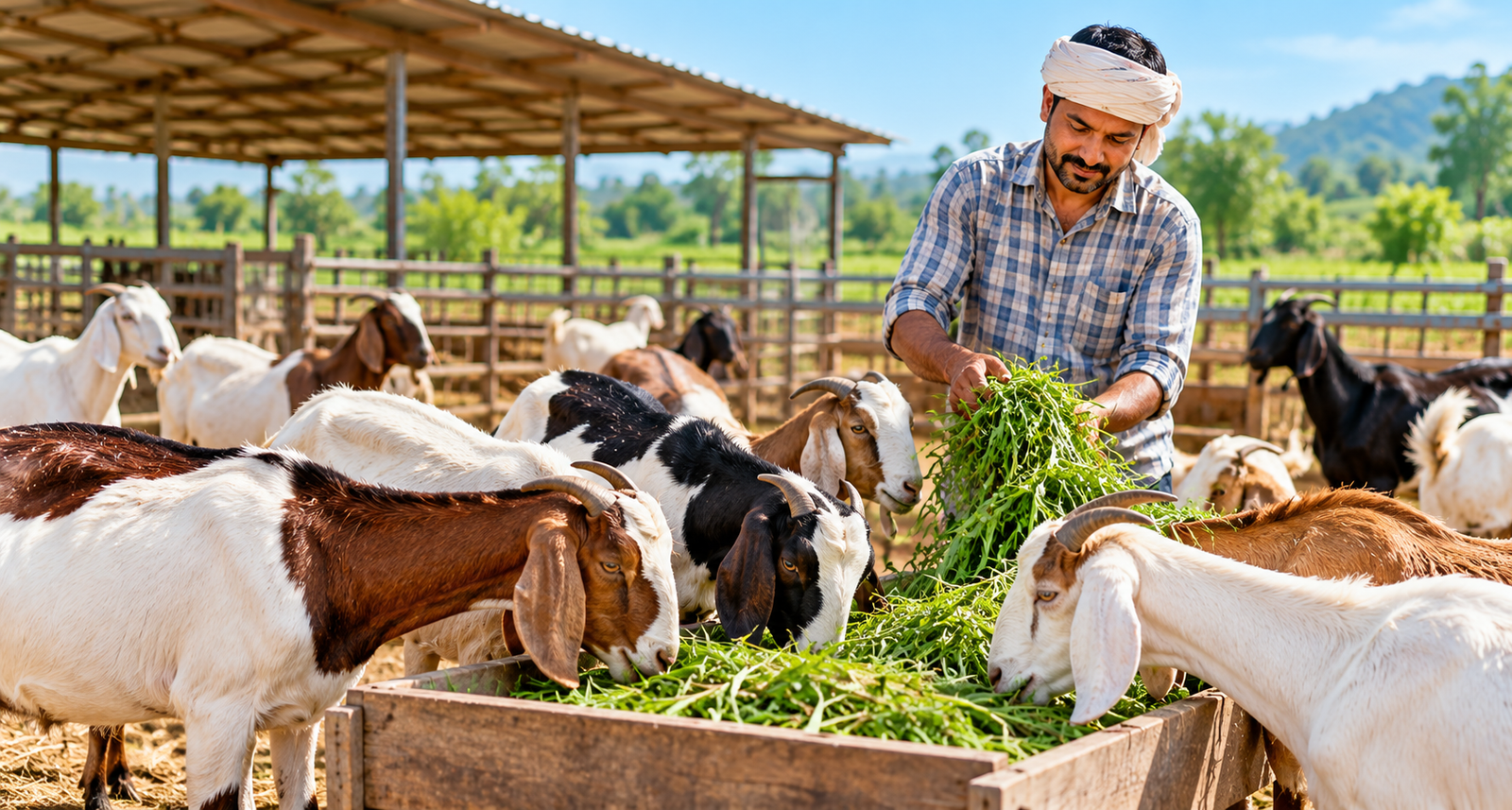
Goat farming is an important part of livestock agriculture in many parts of the world. Goats provide milk, meat, manure, and, in some regions, fibre and hides. They can also be suitable for farmers who have limited land and want to diversify their agricultural income.
However, starting a goat farm is not simply a matter of buying a few animals and waiting for them to multiply. Successful goat farming depends on selecting suitable breeds, providing nutritious feed, maintaining clean housing, preventing disease, and finding a reliable market.
For beginners, a small and manageable herd is often a sensible starting point. It gives the farmer an opportunity to understand animal behaviour, feeding requirements, breeding cycles, and local market demand before investing more money.
This guide explains how goat farming works, which breeds to consider, how to establish a farm, and what to understand about its costs and potential returns.
What Is Goat Farming?
Goat farming is the practice of raising and managing goats for agricultural and commercial purposes. Depending on the breed, location, and farming system, goats may be raised for meat, milk, breeding stock, fibre, or manure.
Goats are adaptable animals and can feed on a variety of suitable grasses, leaves, shrubs, and other forage. Nevertheless, they still need balanced nutrition, clean drinking water, proper shelter, and routine health care.
The main objectives of goat farming include:
- Producing meat for local and commercial markets.
- Producing milk and value-added dairy products where demand exists.
- Breeding and selling healthy kids or breeding animals.
- Producing manure for crop fields and gardens.
- Diversifying income on mixed farms.
The most suitable objective depends on local demand. For example, a farmer near a town with a strong market for goat milk may choose a different breed and production system from a farmer supplying meat animals.
Types of Goat Farming
Goat farming can be organised in several ways. The right system depends on available land, feed resources, investment, labour, and climate.
#1. Meat Goat Farming
Meat goat farming focuses on raising goats for meat production. Farmers may sell young goats, mature animals, or breeding stock, depending on their business model.
Suitable breeds vary by region. Boer goats are known internationally as a meat breed, while breeds such as Black Bengal, Barbari, and Sirohi are important choices in different parts of India.
Before selecting a breed, check its adaptability to the local climate, disease conditions, feed availability, and buyer preferences.
#2. Dairy Goat Farming
Dairy goat farming focuses on milk production. Some goat breeds can produce useful quantities of milk when provided with good nutrition, comfortable housing, and appropriate milking management.
Common dairy breeds include Saanen, Alpine, and Toggenburg. Jamunapari and Beetal goats are also kept for milk and other purposes in parts of South Asia.
Dairy farming requires reliable milk hygiene, regular milking routines, suitable storage, and access to customers or a collection centre. Farmers should also confirm local regulations for selling raw milk and dairy products.
#3. Breeding Goat Farming
Breeding farms raise healthy male and female goats to produce kids for sale to other farmers. Buyers may be interested in animals with desirable growth, reproductive performance, health, and breed characteristics.
A breeding business requires careful recordkeeping. Farmers should track mating dates, kidding dates, offspring survival, growth, parentage where possible, and health history.
Selling breeding animals may provide an additional income stream, but it depends on the farm’s reputation and genuine local demand.
#4. Semi-Intensive Goat Farming
In a semi-intensive system, goats receive some grazing or browsing time and additional feed in a managed area or shelter.
This system can suit farmers who have limited grazing land but can grow fodder or purchase feed. It also allows closer monitoring of animals than an entirely free-ranging system.
Good fencing, controlled grazing, and a consistent feeding routine are important for success.
#5. Intensive Goat Farming
Intensive goat farming involves keeping animals in a managed housing system and supplying most of their feed directly. Farmers have greater control over feeding, breeding, manure collection, and daily monitoring.
However, intensive farming may require more investment in housing, feed storage, labour, drainage, and health management. Poor ventilation, overcrowding, or inadequate nutrition can quickly create problems.
A fully housed system is not automatically more profitable than grazing or semi-intensive farming. Its performance depends on feed costs, animal productivity, management quality, and selling prices.
Best Goat Breeds for Farming
Breed selection is one of the most important decisions when starting a goat farm. A breed that performs well in one region may not be the best choice in another.
Popular Goat Breeds in India
| Goat breed | Common characteristics | Farming purpose |
|---|---|---|
| Jamunapari | Large-bodied breed associated with northern India | Milk, breeding, and meat |
| Beetal | Relatively large breed found in Punjab and nearby regions | Milk and meat |
| Barbari | Compact breed suitable for managed small-scale systems | Meat and breeding |
| Black Bengal | Small breed known for meat quality and skin characteristics | Meat and breeding |
| Sirohi | Adapted to conditions in parts of Rajasthan and western India | Meat and mixed-purpose farming |
| Osmanabadi | Important breed in parts of Maharashtra | Meat and breeding |
| Malabari | Associated with Kerala and surrounding regions | Meat and mixed-purpose farming |
These are general descriptions, not guarantees of performance. Individual animals differ, and results depend on feeding, genetics, health, and management.
International Goat Breeds
Some international breeds are also worth understanding:
- Boer: Primarily developed for meat production.
- Saanen: A well-known dairy breed.
- Alpine: A dairy breed valued for milk production.
- Toggenburg: Another recognised dairy breed.
- Angora: Raised mainly for mohair fibre.
Imported or less locally adapted breeds may need extra care and investment. Beginners should compare locally adapted animals with specialised breeds before purchasing.
How to Start a Goat Farming Business
Starting with a practical plan is usually better than purchasing a large herd immediately. The following steps can help you establish a farm in an organised way.
Step 1: Decide Your Farming Objective
First, decide whether your main goal is meat production, milk production, breeding stock, or a combination of these activities.
Your objective influences almost every other decision, including breed selection, herd size, housing, feed, labour, and marketing.
For instance, a meat-focused farm will generally pay close attention to growth rates, kid survival, and sale weight. A dairy-focused farm will need to plan for milk production, milking hygiene, and regular customers.
Step 2: Research Your Local Market
Before investing in animals, speak with livestock traders, meat sellers, farmers, dairy buyers, and local agricultural advisers.
Find out:
- Which breeds are in demand.
- Typical prices for healthy animals of different ages and weights.
- Whether buyers prefer live animals or processed products.
- Seasonal changes in demand.
- Availability and prices of fodder and concentrate feed.
- Veterinary services and livestock transport options.
Do not base your business plan entirely on festival-season prices or unusually high sale prices. Use realistic estimates for ordinary market conditions as well.
Step 3: Select Suitable Land and a Location
Goats do not always need extensive land, but the farm must provide enough space for shelter, movement, feeding, water access, and safe handling.
A suitable location should have:
- Good drainage to prevent standing water.
- Access to clean drinking water.
- Reliable road access for feed deliveries and animal transport.
- Adequate ventilation and protection from extreme weather.
- Secure fencing to prevent escapes and protect animals.
- Space for feed storage and manure management.
Check local rules and any permissions required before constructing a commercial farm.
Step 4: Prepare the Housing
Goat housing should protect animals from rain, excessive heat, cold winds, and predators. It should also be easy to clean and maintain.
A practical goat shed needs a dry resting area, sufficient airflow, safe flooring, appropriate feeding space, and clean water containers.
Avoid overcrowding. Adult bucks, pregnant does, young kids, and sick animals may require separate pens or management areas.
A useful farm layout may include:
- A general housing area.
- Separate kidding and kid-rearing pens.
- A quarantine area for newly purchased goats.
- A separate pen for sick animals.
- Feed and equipment storage.
- A manure collection area.
Housing requirements vary by animal size, climate, production system, and local welfare guidance. Consult a local livestock expert when planning dimensions and stocking density.
Step 5: Purchase Healthy Goats
Buy animals from reputable breeders or reliable livestock suppliers. Whenever possible, inspect the animals before payment and ask for their health and vaccination history.
Look for animals that are alert, active, and able to walk normally. Check their body condition, eyes, coat, breathing, appetite, and signs of diarrhoea, wounds, or lameness.
For breeding animals, also consider age, reproductive history, body structure, and breed characteristics.
Do not purchase animals based on appearance alone. Arrange a veterinary examination when practical, and quarantine new arrivals according to veterinary advice before introducing them to the existing herd.
Step 6: Plan Feed and Water
Feed is one of the most important recurring expenses in goat farming. A feeding plan should provide adequate energy, protein, fibre, minerals, and vitamins according to each animal’s age and production stage.
Common feed resources include:
- Suitable grasses and cultivated fodder.
- Browse, leaves, and shrubs known to be safe for goats.
- Legume fodder such as lucerne, where suitable.
- Dry roughage and hay.
- Balanced concentrate feed when required.
- Appropriate mineral supplements under local guidance.
Pregnant and lactating does, growing kids, and breeding bucks may have different nutritional requirements.
Provide clean drinking water every day, with access adjusted for weather, diet, body size, and production. Introduce feed changes gradually, and never assume that every plant or household food is safe for goats.
A balanced feeding programme should be planned with a veterinarian or livestock nutrition adviser, especially for larger herds.
Goat Breeding and Kid Management
Reproduction affects the number of animals available for future sales, but breeding should prioritise the health of the doe and the survival of her kids rather than simply increasing herd size.
Breeding Management
Keep records of breeding dates, the animals involved, expected kidding dates, and previous reproductive performance. Avoid repeated mating between closely related animals.
Select breeding stock based on health, sound structure, reproductive history, and desirable traits. The appropriate breeding age and body condition depend on the breed and individual animal, so seek veterinary or experienced breeder guidance.
Care During Kidding
Prepare a clean, dry, and quiet kidding area. Monitor pregnant does closely as kidding approaches, and seek veterinary assistance if labour appears abnormal or the animal shows signs of distress.
After birth, ensure that kids receive colostrum promptly. Colostrum is the first milk produced by the mother and supplies important nutrients and antibodies.
Check that newborn kids are breathing normally, remain warm, and can stand and nurse. If a kid is weak or cannot feed, seek prompt veterinary advice.
Kid Growth and Weaning
Monitor the growth, appetite, and general health of young goats. Provide suitable clean water and age-appropriate feed as they begin eating solid food.
Weaning should be based on the kid’s development, feed intake, and condition rather than using a fixed age for every animal. Maintain good hygiene and keep accurate growth records.
Goat Health Care and Disease Prevention
A healthy herd is essential for productive goat farming. Disease can lead to veterinary expenses, slower growth, reduced milk production, reproductive losses, and animal deaths.
Important preventive measures include:
- Keeping housing dry, clean, and well ventilated.
- Providing adequate nutrition and clean water.
- Following a locally appropriate vaccination programme.
- Managing internal and external parasites with veterinary guidance.
- Quarantining new animals.
- Separating sick goats when advised.
- Cleaning feed and water equipment regularly.
- Keeping records of illness, treatment, and vaccination.
Goats may suffer from parasitic infections, respiratory illness, digestive disorders, hoof problems, and other diseases. The risks vary by region and management system.
Contact a veterinarian if animals stop eating, develop persistent diarrhoea, have difficulty breathing, show severe weakness, or experience unusual swelling or sudden deaths. Do not rely on home remedies or administer medicines without appropriate guidance.
Cost of Starting a Goat Farm
The initial investment depends on herd size, breed, land ownership, housing design, feed resources, labour costs, and local animal prices.
Typical expense categories include:
| Expense category | What it covers |
|---|---|
| Goat purchase | Breeding does, bucks, or animals for fattening |
| Housing | Shed construction, flooring, roofing, and pens |
| Fencing | Boundary fencing, gates, and secure enclosures |
| Feed and fodder | Grazing arrangements, fodder cultivation, hay, and concentrate |
| Water equipment | Troughs, pipes, storage, and cleaning facilities |
| Veterinary care | Health checks, vaccines, medicines, and parasite control |
| Labour | Daily feeding, cleaning, handling, and recordkeeping |
| Transport | Animal purchases, feed deliveries, and sales |
| Working capital | Funds to cover ongoing costs before revenue arrives |
Example Budget for a Small Goat Farm
The following is an illustrative planning framework for a farm in India with 10 breeding females and 1 breeding male. These are example budget allowances, not current market quotations.
| Expense | Illustrative amount (INR) |
|---|---|
| 10 breeding females | ₹60,000–₹1,20,000 |
| 1 breeding male | ₹8,000–₹20,000 |
| Basic housing and fencing | ₹40,000–₹1,00,000 |
| Feed and fodder reserve | ₹15,000–₹35,000 |
| Veterinary and biosecurity reserve | ₹5,000–₹15,000 |
| Equipment and transport | ₹5,000–₹15,000 |
| Illustrative initial budget | ₹1,33,000–₹3,05,000 |
The example excludes land purchase, major construction, financing costs, and some labour expenses. Actual prices may fall outside these ranges, depending on breed, region, and farm design. Check local quotations before making an investment.
It is also important to keep emergency funds available. A farm may need to pay for feed, health care, and labour for several months before significant sales occur.
Goat Farming Profit: How to Calculate Potential Returns
Goat farming can generate income, but there is no single profit figure that applies to every farm. Revenue depends on how many animals survive and reach sale condition, their selling prices, breeding performance, milk production where applicable, and operating costs.
For a meat-focused farm, calculate potential returns using a simple approach:
Total revenue = Number of goats sold × Average selling price per goat
Operating profit estimate = Total revenue − Operating expenses
Operating expenses may include feed, labour, veterinary care, transport, breeding costs, utilities, and other routine farm costs. A complete business analysis should also account for depreciation, loan interest, infrastructure expenses, and the value of the farmer’s own labour.
Illustrative Example
Suppose a farmer sells 15 goats during a particular period at an average of ₹7,000 each.
- Sales revenue: 15 × ₹7,000 = ₹1,05,000.
- If the operating expenses for that same period are ₹70,000, the remaining amount is ₹35,000 before depreciation, interest, taxes, and other excluded costs.
This is only a mathematical example, not a prediction of actual goat farming profits. It does not establish how many saleable goats a farm will produce or how long production will take.
For a reliable estimate, use your own local animal prices, expected survival and growth rates, feed budget, breeding records, and sales schedule. Calculate results over a complete production cycle and include periods when the farm has expenses but little or no revenue.
Factors That Influence Profitability
Several factors can make a significant difference to the financial performance of a goat farm:
- Feed costs: Home-grown fodder may reduce purchased-feed expenses where land, water, and labour are available.
- Animal health: Disease prevention and prompt treatment can reduce losses.
- Breeding performance: Healthy does and good kid survival influence the number of animals available for sale.
- Market access: Reliable buyers and reasonable transport costs can improve the amount received by the farmer.
- Stocking decisions: Expanding too quickly may increase feed costs and overcrowding.
- Recordkeeping: Accurate records reveal which animals and practices are performing well.
A farm should be expanded only when its feed supply, housing, health management, and cash flow can support additional animals.
Advantages of Goat Farming
Goat farming offers several potential benefits when it is managed properly.
1. Multiple Income Opportunities
Farmers may earn money through meat sales, milk production, breeding animals, and manure. The best combination depends on local demand and the farmer’s resources.
2. Flexible Herd Size
A farmer can begin with a relatively small herd and expand as experience, finances, and market access improve.
3. Use of Suitable Fodder Resources
Goats can utilise a variety of suitable forage plants. On some farms, this helps make use of land that is less suitable for intensive crop cultivation, provided grazing is managed sustainably.
4. Manure for Agriculture
Goat manure can contribute organic matter and nutrients to agricultural soil when handled, stored, and applied appropriately.
5. Diversification
For farmers already growing crops or raising other livestock, goats can provide another source of income. Mixed farming may also allow better use of farm resources.
Challenges of Goat Farming
Although goat farming has advantages, it also involves risks that beginners should understand.
- Disease and parasites: Poor prevention and delayed treatment can cause substantial losses.
- Feed shortages: Seasonal changes can raise feed costs or reduce animal condition.
- Market fluctuations: Selling prices vary by region, season, animal weight, and buyer demand.
- Reproductive losses: Poor breeding management and weak kid care can reduce the number of saleable animals.
- Predators and theft: Secure fencing, suitable housing, and supervision may be necessary.
- Cash-flow pressure: Feed and health expenses continue even when animals are not ready for sale.
Planning for these challenges is part of running a business, not a sign that the business idea is unsuitable.
Is Goat Farming Suitable for Beginners?
Goat farming can be suitable for beginners who have access to appropriate feed, water, housing, veterinary support, and a realistic market opportunity.
Before starting, beginners should:
- Visit established goat farms in their area.
- Learn basic animal handling and health management.
- Compare local breeds and purchase prices.
- Prepare a realistic feed and housing budget.
- Identify potential buyers before buying animals.
- Maintain records of all expenses, breeding activity, health events, and sales.
- Start at a scale they can manage consistently.
A smaller, well-managed herd can provide a better learning experience than a large herd that exceeds the available budget or labour capacity.
FAQs. About Goat Farming
Q1. Is goat farming profitable?
Goat farming can be profitable, but the outcome depends on animal productivity, feed costs, mortality, sale prices, labour, and farm management. Prepare a local budget before investing.
Q2. Which goat breed is best for farming?
There is no single best breed for every farm. Choose a breed suited to your climate, farming objective, feed availability, veterinary support, and local market demand.
Q3. How much land is required for goat farming?
Land requirements depend on herd size, housing design, grazing access, and whether fodder is grown on the farm. A farm relying on purchased feed has different land needs from one relying on grazing or cultivated fodder.
Q4. What do goats eat?
Goats can eat suitable grasses, browse, leaves, hay, and balanced supplementary feed. Their diet should provide enough energy, protein, fibre, minerals, and vitamins. Avoid unidentified plants and sudden changes in feed.
Q5. How can beginners reduce goat farming costs?
Farmers can compare feed suppliers, grow suitable fodder where practical, prevent disease, reduce feed waste, maintain housing, and monitor expenses. Cost reduction should never come at the expense of animal welfare or essential nutrition.
Q6. Can goat farming be combined with crop farming?
Yes. In suitable systems, goat manure can be used as an organic soil amendment, and crop residues may provide some feed when they are safe and nutritionally appropriate. Any integration plan should consider soil fertility, feed quality, and grazing management.
Conclusion
Goat farming can be a useful livestock enterprise for farmers who plan carefully and manage their animals responsibly. The right breed, nutritious feed, clean housing, preventive health care, and access to dependable buyers all influence the farm’s performance.
Before investing, prepare a realistic budget using local prices and estimate costs across a complete production cycle. Start with a manageable herd, keep accurate records, and expand only when the farm has the resources and market demand to support growth.
Successful goat farming is built on consistent care, informed decisions, and sound financial planning—not simply on increasing the number of animals.
Further Reading
For additional information about livestock management, animal nutrition, and smallholder farming, consult reliable agricultural and veterinary resources:
- Food and Agriculture Organization of the United Nations (FAO): https://www.fao.org/
- International Fund for Agricultural Development (IFAD): https://www.ifad.org/
- Department of Animal Husbandry and Dairying, Government of India: https://dahd.gov.in/
- Your local agricultural university, veterinary department, or livestock extension service.
Disclaimer: This article is for educational purposes only. Costs, production results, animal health requirements, and regulations vary by location. Consult a qualified veterinarian or local livestock extension expert before making farm-management or investment decisions.
One thought on “Goat Farming: Breeds, Setup Costs, Feeding, and Profit Guide”