
Introduction
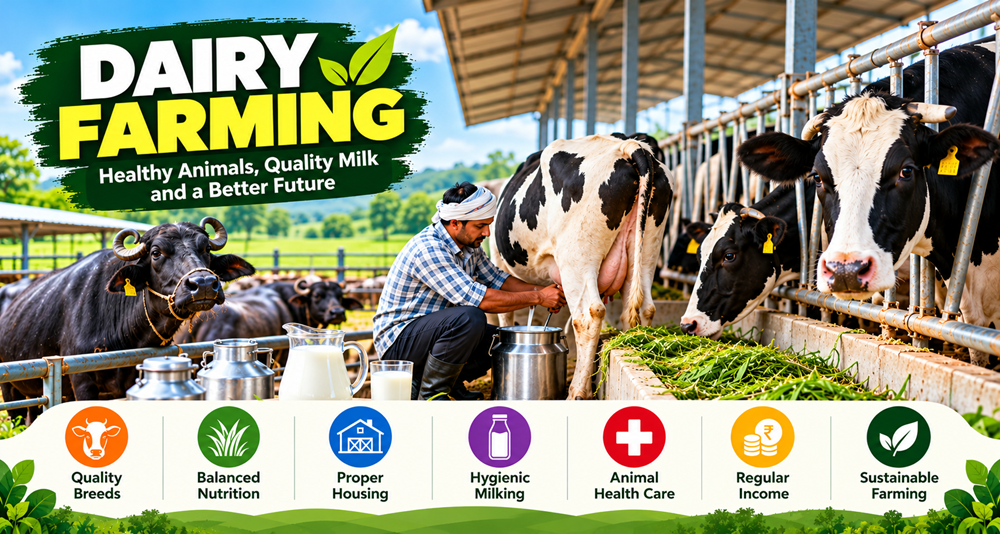
Milk is an important part of the daily diet for millions of people. It is used to prepare products such as curd, butter, cheese, paneer, and ghee. Behind these everyday products is an agricultural activity that supports farmers, dairy workers, milk collection centres, and food businesses.
Dairy farming involves raising and managing milk-producing animals to obtain milk for household use or commercial sale. Farmers may keep a few cows or buffaloes at home, operate a small family dairy, or manage a larger commercial dairy farm with specialized equipment.
However, successful dairy farming involves much more than buying animals and collecting milk. Feeding, clean water, comfortable housing, breeding, animal health, milk hygiene, and financial planning all influence the results.
For someone planning to start a dairy farm, understanding these basics can help avoid common mistakes. For existing farmers, improving daily management may help maintain healthier animals and more consistent milk production.
In this guide, we will explore the main types of dairy farming, popular dairy breeds, feeding practices, farm management, benefits, challenges, and important points to consider before starting a dairy business.
What Is Dairy Farming?
Dairy farming is a branch of agriculture that focuses on keeping milk-producing animals and managing them for milk production.
Cows and buffaloes are commonly used in India, while cattle, goats, sheep, and other milk-producing animals are kept in different parts of the world.
The main activities involved in dairy farming include:
- Selecting suitable dairy animals.
- Providing balanced feed and clean drinking water.
- Maintaining clean and comfortable housing.
- Managing breeding, pregnancy, calving, and young animals.
- Monitoring animal health and production.
- Collecting and handling milk hygienically.
- Managing manure, farm expenses, and milk sales.
Each activity is connected to the others. For example, poor feeding can affect animal health and milk production, while inadequate milking hygiene can reduce milk quality and safety.
Good dairy farming therefore depends on consistent care rather than relying only on the breed or milk-producing potential of an animal.
Main Types of Dairy Farming
Dairy farms can be classified according to their size, management practices, and production goals.
#1. Small-Scale Dairy Farming
Small-scale dairy farming is common in rural communities, where families keep a few cows or buffaloes for milk and income.
Farmers may use locally available fodder, crop residues, and suitable supplementary feed. Milking is often performed by hand, and milk may be sold to neighbours, local shops, or dairy collection centres.
This type of farming can be suitable for households with limited land and capital, provided they have access to feed, water, animal healthcare, and a reliable milk market.
Its main challenge is maintaining a steady supply of good-quality feed while controlling labour and veterinary costs.
#2. Commercial Dairy Farming
Commercial dairy farming is operated primarily as a business, with milk production planned around market demand and operating costs.
These farms may keep larger herds, use specialized housing, maintain detailed production records, and employ workers for feeding, milking, cleaning, and animal care.
Some commercial farms use milking machines, bulk milk cooling systems, and equipment for preparing animal feed.
Although larger operations may benefit from organized processes, they also require careful financial planning. Feed costs, labour, equipment maintenance, disease prevention, and milk prices can all influence profitability.
#3. Intensive Dairy Farming
Intensive dairy farming involves closely managed feeding, housing, breeding, and milk production.
Animals may be kept in purpose-designed barns or other managed housing systems. Farmers plan their diets according to the animals’ nutritional needs and monitor milk production and health.
These systems can make daily operations more organized, but the animals still require adequate space, comfortable resting areas, ventilation, clean water, exercise where appropriate, and regular health checks.
Read More: Intensive Animal Farming: Types, Benefits, Challenges, and Sustainable Practices
#4. Extensive or Pasture-Based Dairy Farming
In pasture-based dairy farming, animals obtain a substantial part of their feed by grazing on suitable grassland.
This approach may reduce dependence on purchased feed when good-quality pasture is available. However, milk production and animal condition can be affected by seasonal changes in grass growth, drought, and pasture quality.
Farmers must manage grazing carefully to avoid overgrazing and provide supplementary feed when pasture alone cannot meet nutritional requirements.
#5. Mixed Dairy Farming
Mixed dairy farming combines milk production with other agricultural activities, such as crop cultivation, fodder production, or vegetable farming.
For example, a farmer may grow fodder for dairy animals and use properly managed manure as a source of nutrients for crops.
This arrangement can help connect different parts of the farm. However, manure must be handled and applied appropriately, and the farm still needs sufficient feed, water, labour, and veterinary support.
Popular Dairy Cow Breeds
Choosing a suitable breed is an important decision, but breed alone does not determine how much milk an animal will produce. Nutrition, age, health, genetics, climate, housing, and stage of lactation also matter.
Some cattle breeds commonly associated with dairy production include the following.
#1. Holstein Friesian
Holstein Friesian cattle are widely known for their potential for high milk production under suitable management.
They are commonly used in commercial dairy systems, including crossbreeding programmes in some regions.
These cattle require appropriate nutrition, comfortable housing, and careful management, particularly where heat stress is a concern.
#2. Jersey
Jersey cattle are a dairy breed known for producing milk that often has a relatively high butterfat concentration.
Their body size is generally smaller than that of Holstein Friesian cattle. Their suitability depends on local conditions, feed availability, breeding goals, and the dairy market.
#3. Sahiwal
Sahiwal is an indigenous dairy cattle breed associated with the Indian subcontinent.
It is valued for its adaptation to warm conditions and its usefulness in dairy production under suitable management.
Actual milk production varies between animals and depends on feeding, health, genetics, and farm conditions.
#4. Gir
Gir cattle originated in India and are known for their distinctive appearance and dairy potential.
The breed is used in dairy farming and breeding programmes. As with other breeds, farmers should evaluate the animal’s health, production history, adaptability, and suitability for the intended farming system.
Buffalo Breeds Used in Dairy Farming
Buffaloes are important milk-producing animals in India and several other countries.
Buffalo milk is commonly used to make products such as paneer, curd, butter, and ghee. Its composition often differs from cow’s milk, including a higher fat concentration, although actual values vary.
#1. Murrah Buffalo
Murrah is a well-known buffalo breed associated with dairy production in India.
It is valued for its milk-producing potential, but performance depends on feeding, health, breeding, and overall management.
#2. Mehsana Buffalo
Mehsana buffaloes are associated with dairy farming in Gujarat and surrounding areas.
Farmers may consider this breed when selecting animals suited to local production conditions and available resources.
#3. Jaffarabadi Buffalo
Jaffarabadi is a large buffalo breed originating from Gujarat. It is used for milk production and may require suitable housing, nutrition, and management because of its size and production needs.
Before purchasing any dairy animal, farmers should examine its health, age, reproductive history, milk records, and suitability for the local climate rather than choosing by breed name alone.
Feeding and Nutrition in Dairy Farming
Feed is one of the major operating expenses on many dairy farms. It also plays a central role in animal health, reproduction, milk production, and milk quality.
A dairy animal needs an appropriate combination of roughage, energy, protein, minerals, vitamins, and clean drinking water.
Green Fodder
Green fodder may include suitable grasses, maize fodder, sorghum, and other locally adapted forage crops.
Growing fodder on the farm can help reduce dependence on purchased feed, where land and water are available. However, crop selection and harvesting must suit the local climate and feeding needs.
Dry Fodder
Dry fodder can include hay, straw, and other suitable dried plant materials.
Its nutritional value varies, so farmers may need to combine it with other feed ingredients to meet the animal’s requirements.
Concentrate Feed
Concentrate feed provides nutrients in a relatively concentrated form. Ingredients may include grains, oilseed meals, bran, and suitable mineral supplements.
The amount and composition should be based on the animal’s body condition, milk output, stage of lactation, and other nutritional needs.
Overfeeding or underfeeding can waste money and affect animal health. A qualified livestock nutritionist or veterinarian can help develop a suitable ration.
Clean Drinking Water
Dairy animals need reliable access to clean drinking water. Water requirements change with temperature, body size, feed, pregnancy, and milk production.
Water containers should be cleaned regularly, and the supply should be checked throughout the day, especially during hot weather.
For detailed guidance, see the FAO’s dairy farm practices resource.
Housing and Daily Management
A dairy farm should provide animals with protection from extreme weather, adequate space, suitable ventilation, and comfortable resting areas.
The design depends on the number and type of animals, local climate, available land, and the farm’s management system.
Important considerations include:
- Ventilation: Good airflow helps manage heat and moisture.
- Clean flooring: Floors should reduce the risk of slipping and injury and allow effective drainage.
- Resting areas: Animals need comfortable places to lie down.
- Feed and water access: All animals should be able to reach feed and drinking water without unnecessary competition.
- Cleaning: Housing, feeding areas, and water containers should be maintained regularly.
- Heat management: Shade, airflow, water, and other suitable cooling measures can help reduce heat stress.
Daily observation is equally important. Changes in appetite, movement, milk production, behaviour, or body condition may indicate that an animal needs attention.
Milking Practices and Milk Hygiene
Milk must be collected and handled carefully to protect its quality and safety.
Before milking, the milking area and equipment should be clean. The animal should be handled calmly, and the udder and teats should be checked and cleaned using appropriate hygienic practices.
During milking, farmers should avoid contamination from dirty hands, equipment, bedding, dust, and other sources.
After milking, milk should be collected in clean, food-safe containers and cooled promptly using a suitable system. It should be stored and transported according to applicable food-safety requirements.
Milk from animals undergoing certain veterinary treatments may need to be withheld for the prescribed period. Farmers must follow veterinary instructions and medication labels to prevent unsafe residues in milk.
Good hygiene protects consumers and helps maintain the value of the farm’s product. The FAO and International Dairy Federation’s Guide to Good Dairy Farming Practice provides additional guidance on milk hygiene, animal health, nutrition, and farm management.
Animal Health and Disease Prevention
Healthy animals are essential for a well-managed dairy business.
Farmers should establish a relationship with a qualified veterinarian and follow a health programme appropriate to the region, species, and farm.
Important practices include:
- Monitoring appetite, body condition, movement, and milk production.
- Following locally recommended vaccination and parasite-control programmes.
- Keeping newly purchased or sick animals appropriately separated when advised.
- Maintaining clean housing, feed stores, and water supplies.
- Providing appropriate care during pregnancy, calving, and early lactation.
- Recording illnesses, veterinary treatments, and breeding events.
Mastitis, an inflammation of the udder that is often associated with infection, is an important concern in dairy farming. Signs may include changes in the udder or milk, discomfort, and reduced production.
Farmers should seek veterinary advice when illness is suspected rather than relying on unverified home remedies or using antibiotics without appropriate guidance.
Benefits of Dairy Farming
#1. Regular Farm Income
Dairy farming can provide a recurring source of income when animals produce milk consistently and the farmer has reliable buyers.
However, income is not the same as profit. Feed, labour, healthcare, breeding, transport, electricity, and equipment expenses must be included when assessing financial performance.
#2. Employment Opportunities
Dairy farms can create work in animal care, feeding, milking, milk collection, transportation, processing, and marketing.
Small farms may rely on family labour, while larger farms may employ trained workers.
#3. Useful Organic Manure
Properly managed dairy manure can be used as an organic nutrient source for crops.
Before application, farmers should consider storage, nutrient content, soil requirements, timing, and local environmental rules. Poorly managed manure can contaminate water and create sanitation problems.
#4. Supports the Dairy Supply Chain
Dairy farming supplies raw milk to collection centres, cooperatives, processors, retailers, and food businesses.
In regions with established milk collection and processing facilities, farmers may have access to organized markets. Reliable payment systems, quality standards, and transport remain important.
#5. Integration With Crop Farming
Farmers who grow crops can sometimes use suitable crop residues as part of livestock feed and return properly managed manure to agricultural land.
This can help connect crop and livestock production, provided the feed is safe and the nutrient-management plan is appropriate.
Challenges in Dairy Farming
Dairy farming can be rewarding, but it also involves costs and risks that should be understood before investing.
High Feed Costs
Feed expenses can account for a significant part of dairy operating costs. Purchased fodder, concentrate feed, and mineral supplements may become more expensive during periods of shortage.
Planning fodder production, storing suitable feed safely, and maintaining accurate feed records can help farmers manage costs.
Animal Health Problems
Disease, reproductive problems, injuries, and reduced milk production can affect farm income.
Prevention, daily observation, suitable housing, and access to veterinary care are essential.
Milk Price Fluctuations
Milk prices may change according to local demand, quality, transport costs, seasonal production, and the buyer’s payment system.
Farmers should understand how milk is priced and whether payments are made according to volume, fat content, or other quality measures.
Labour Requirements
Dairy animals require regular care every day. Feeding, watering, cleaning, milking, and health monitoring cannot simply be postponed when the farmer is busy.
A realistic labour plan is important before starting a dairy operation.
Waste and Environmental Management
Manure and wastewater must be managed to protect nearby land, drains, and water sources.
Farmers should plan suitable collection, storage, and use or disposal systems as part of the farm layout.
How to Start a Dairy Farm
Starting a dairy farm requires planning before purchasing animals. The best approach depends on the farmer’s budget, experience, land, water, and market access.
Step 1: Study the Local Milk Market
Find out who will buy your milk, how it will be collected, what quality standards apply, and how payments are calculated.
Speak with local dairy cooperatives, collection centres, processors, or potential customers before making a major investment.
Step 2: Prepare a Budget
List expected expenses, including animal purchases, housing, feed, water supply, equipment, veterinary care, breeding, transport, labour, and electricity.
Also estimate ongoing monthly expenses and allow for unexpected costs.
Do not calculate profit by multiplying daily milk output by the selling price alone. Feed, health, reproduction, dry periods, and changes in production must also be considered.
Step 3: Choose Suitable Animals
Select animals suited to your climate, feeding resources, experience, and production goals.
Whenever possible, review milk records and reproductive history, examine the animal’s condition, and arrange a veterinary assessment before purchase.
Step 4: Arrange Feed and Water
Plan how you will supply green fodder, dry fodder, concentrate feed, minerals, and clean water throughout the year.
Do not assume that feed will always be available at the same price or quantity. Seasonal planning is especially important where fodder production depends on rainfall or irrigation.
Step 5: Prepare Suitable Housing
Build or adapt housing that provides shade, ventilation, drainage, comfortable resting areas, and safe access to feed and water.
The design should suit the number and type of animals and allow cleaning and routine animal care.
Step 6: Establish Health and Breeding Management
Arrange access to a veterinarian and maintain records for vaccinations, illnesses, breeding, pregnancy, calving, and milk production.
Breeding decisions should focus on animal health, suitable genetics, and the long-term needs of the farm.
Step 7: Maintain Daily Records
Record milk output, feed purchases, expenses, sales, veterinary costs, and other important events.
Reviewing these records can help identify changes in productivity and determine whether the business is financially sustainable.
Is Dairy Farming Profitable?
Dairy farming can be profitable, but there is no single income figure that applies to every farm.
Profit depends on factors such as:
- The purchase price and quality of animals.
- Milk production and the number of productive days.
- Feed and fodder costs.
- Veterinary, breeding, and labour expenses.
- Milk selling price and quality-based payments.
- Animal health, reproduction, and replacement costs.
- Housing, equipment, transport, and other overheads.
Before starting, prepare a farm-specific financial plan. Use realistic local milk prices, feed quotations, and animal-care costs rather than relying on advertised profit estimates.
Starting with a manageable herd may help a new farmer learn daily operations before expanding. Growth should be based on reliable records and actual performance, not only on expectations.
FAQs.
Q1. Which animals are commonly used in dairy farming?
Cows and buffaloes are common dairy animals in India. Goats, sheep, and other milk-producing animals are used in certain regions and specialized production systems.
Q2. What is the most important factor in dairy farming?
There is no single factor. Suitable nutrition, clean water, animal health, comfortable housing, hygienic milking, and reliable market access all contribute to successful dairy management.
Q3. Can dairy farming be started on a small budget?
A small operation may require less initial investment than a large commercial farm, but the farmer still needs suitable animals, feed, water, housing, healthcare, and a milk market. A realistic budget should be prepared before purchasing livestock.
Q4. Is cow milk better than buffalo milk?
Both can provide useful nutrients, and their composition differs. Buffalo milk generally has a higher fat concentration than cow milk, but the actual composition varies. Which is suitable depends on dietary needs, personal preference, and how the milk will be used.
Q5. How can farmers maintain milk quality?
Farmers should maintain animal health, keep the milking area and equipment clean, use hygienic milking practices, prevent contamination, and cool and store milk properly according to food-safety requirements.
Q6. Can dairy farming be combined with crop farming?
Yes. A mixed farming system may combine dairy animals with fodder crops and other agricultural production. Crop residues can sometimes be used as feed, while properly managed manure can supply nutrients to fields.
Conclusion
Dairy farming is an important part of agriculture because it supplies milk, supports rural livelihoods, and connects livestock production with food processing and local markets.
But a successful dairy farm depends on more than choosing a high-producing breed. Consistent feeding, clean water, suitable housing, animal healthcare, hygienic milking, and careful financial planning all play important roles.
For beginners, the best starting point is to understand local market demand, calculate operating costs, and arrange reliable feed and veterinary support before purchasing animals.
With informed decisions and responsible management, dairy farming can become a more organized and sustainable agricultural enterprise.
Further Reading
- FAO: Good Dairy Farming Practices
- FAO and International Dairy Federation: Guide to Good Dairy Farming Practice
- FAO: Small-Scale Dairy Farming Manual
Disclaimer: This article is for general educational purposes only. Dairy animal selection, feeding, breeding, veterinary care, and milk-handling practices should be adapted to local conditions and applicable regulations. Consult a qualified veterinarian or agricultural extension professional before making farm-management decisions.
3 thoughts on “Dairy Farming: Types, Benefits, Breeds, and How to Start a Dairy Farm”