
What Is Cash Crop Farming?
Cash crop farming is the cultivation of crops primarily for sale and income rather than mainly for direct household consumption.
Farmers grow cash crops to supply local markets, processing industries, exporters, manufacturers, and other businesses.
Common examples include:
- Cotton
- Coffee
- Tea
- Sugarcane
- Tobacco
- Rubber
- Cocoa
- Jute
- Groundnut
- Soybean
The exact definition of a cash crop can vary by region. A crop grown mainly for commercial sale in one area may also be used for household consumption in another.
Cash crop farming is closely connected with [Commercial Farming], because both focus strongly on production for markets and income.
How Are Cash Crops Different From Food Crops?
The main difference is the primary purpose of production.
A food crop is generally grown mainly for direct human consumption, while a cash crop is primarily produced for sale.
However, the categories can overlap.
For example, maize, rice, soybean, and groundnut can be grown both for consumption and commercial markets depending on the farmer and region.
| Cash Crop Farming | Food Crop Farming |
| Mainly produced for sale | Mainly produced for food |
| Strong focus on market demand | Strong focus on household or food supply |
| Often connected with processing industries | Often consumed directly |
| Income generation is a major objective | Food availability is a major objective |
| May require commercial-scale planning | Can be small-scale or commercial |
10 Major Cash Crops
Different regions specialize in different cash crops based on climate, soil, market demand, infrastructure, and processing facilities.
#1. Cotton
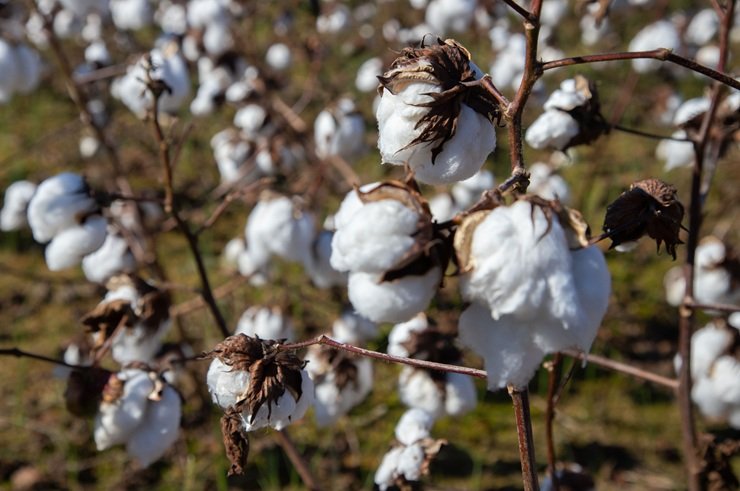
Cotton is an important commercial fiber crop.
It is used extensively in the textile industry to manufacture:
- Clothing
- Fabrics
- Home textiles
- Industrial products
Cotton production requires suitable temperatures, adequate moisture, and effective pest management.
#2. Sugarcane
Sugarcane is an important commercial crop used mainly for sugar production.
It is also used to produce:
- Molasses
- Ethanol
- Bagasse
- Other processed products
Sugarcane generally requires a relatively long growing period and substantial water availability.
#3. Coffee
Coffee is a major commercial crop in many tropical and subtropical regions.
Coffee beans are processed and roasted to produce coffee beverages.
Successful coffee production depends on factors such as:
- Temperature
- Rainfall
- Elevation
- Soil
- Variety
- Shade conditions
#4. Tea
Tea is cultivated primarily for commercial processing.
After harvesting, tea leaves go through various processing stages before reaching consumers.
Tea-growing conditions depend on climate, altitude, soil, rainfall, and production practices
#5. Tobacco
Tobacco is grown commercially for use in tobacco products.
Its production and sale are subject to regulations in many countries, so farmers need to understand the applicable local rules and market requirements.
#6. Rubber
Natural rubber is obtained mainly from the latex of rubber trees.
Rubber is used in products such as:
- Tires
- Gloves
- Industrial components
- Rubber goods
Rubber trees are long-term crops and require suitable warm and humid growing conditions.
#7. Cocoa
Cocoa beans are an important raw material for chocolate and other food products.
Cocoa production is concentrated mainly in suitable tropical regions.
Good management of shade, moisture, soil fertility, pests, and diseases is important for production.
#8. Jute
Jute is an important natural fiber crop.
It is used to produce:
- Bags
- Ropes
- Mats
- Packaging materials
- Other fiber products
Jute generally grows well under warm and humid conditions.
#9. Groundnut
Groundnut, also known as peanut, can be grown for both food and commercial purposes.
It is used for:
- Direct consumption
- Oil production
- Food processing
- Animal feed in some applications
Its classification as a cash crop depends on the farming system and local market.
#10. Soybean
Soybean is widely used as both a commercial crop and an important agricultural commodity.
It can be processed into:
- Soybean oil
- Soy-based food products
- Animal feed
- Industrial products
Soybean production depends on suitable temperature, soil, moisture, variety, and crop management.
Types of Cash Crops
Cash crops can be grouped according to their primary commercial use.
#1. Fiber Crops
These crops are grown primarily for natural fibers.
Examples include:
Cotton
Jute
Their fibers are used in textiles, packaging, ropes, and other products.
#2. Beverage Crops
Some cash crops are processed into popular beverages.
Examples:
Coffee
Tea
Cocoa
#3. Industrial Crops
Some commercial crops provide raw materials for manufacturing.
Examples include:
Rubber
Sugarcane
Cotton
#4. Oilseed Cash Crops
Some crops are grown commercially for their oil.
Examples include:
Soybean
Groundnut
Sunflower
Canola
#5. Plantation Cash Crops
Some crops are commonly grown in plantations or large organized farms.
Examples include:
Tea
Coffee
Rubber
Cocoa
Read More about: Plantation Farming.
How Cash Crop Farming Works
Although production varies considerably between crops, commercial cash crop farming generally follows several stages.
#1. Market Research
Before planting, farmers should understand:
- Local demand
- Expected selling price
- Potential buyers
- Processing facilities
- Transportation costs
- Storage requirements
Market research is especially important for crops that require specialized processing.
#2. Land and Soil Assessment
Farmers should evaluate:
- Soil type
- Soil pH
- Drainage
- Fertility
- Water availability
- Climate
Soil testing can help identify nutrient-related issues before planting.
#3. Crop and Variety Selection
The right crop should match the local environment and market.
Farmers should consider:
- Climate
- Growing period
- Water requirements
- Disease resistance
- Expected yield
- Market demand
- Production costs
#4. Planting
Seeds or planting materials are established at the appropriate time and spacing.
Planting schedules vary by crop and region.
#5. Crop Management
During the growing season, farmers manage:
- Irrigation
- Nutrients
- Weeds
- Pests
- Diseases
- Plant growth
#6. Harvesting
Cash crops should generally be harvested at the appropriate maturity stage to maintain quality and market value.
#7. Processing and Marketing
Some cash crops need processing before they can be sold to their final market.
For example, coffee, tea, cocoa, cotton, sugarcane, and rubber may go through different processing or industrial stages.
Factors to Consider Before Choosing a Cash Crop
Choosing a cash crop should involve more than looking at its selling price.
#1. Climate
The crop must be compatible with the local temperature, rainfall, and growing season.
#2. Soil
Different crops have different soil requirements.
#3. Water Availability
A crop requiring regular irrigation may not be suitable for a farm with limited water resources.
#4. Market Demand
Farmers should identify who will buy the crop and whether there is consistent demand.
#5. Production Costs
Calculate expected expenses for:
Seeds
Fertilizers
Labour
Irrigation
Machinery
Crop protection
Harvesting
Transportation
#6. Processing Facilities
Some crops have better commercial potential when processing facilities are available nearby.
#7. Storage
If the harvested product can be stored safely, farmers may have more flexibility in when to sell.
#8. Risk
Weather, pests, diseases, market price fluctuations, and input costs can all affect returns.
Cash Crop Farming Methods
Conventional Cash Crop Farming
Conventional production may use:
- Improved seeds
- Fertilizers
- Irrigation
- Machinery
The exact practices depend on the crop and local regulations.
Organic Cash Crop Farming
Organic cash crops are produced according to applicable organic farming standards.
Practices may include:
- Composting
- Crop rotation
- Biological pest management
- Soil conservation
- Approved organic inputs
Read Also: Organic Farming.
Sustainable Cash Crop Farming
Sustainable production aims to maintain soil health, reduce unnecessary resource use, and support long-term farm productivity.
Useful practices may include:
- Crop rotation
- Cover crops
- Mulching
- Efficient irrigation
- Reduced soil disturbance
Read More About: Sustainable Farming.
Plantation Farming
Some cash crops are commonly associated with plantation-style production.
Tea, coffee, rubber, cocoa, and certain other crops can be grown in organized plantation systems.
Modern Cash Crop Farming
Technology can help farmers make better production decisions.
Precision Farming
Precision agriculture can use:
- GPS
- Soil sensors
- Satellite data
- Field mapping
- Weather information
- Farm management software
These tools can help farmers manage resources more precisely.
Read More About: Precision Farming
Smart Irrigation
Automated irrigation systems can use soil moisture and weather information to help determine when irrigation is needed.
Farm Machinery
Machinery can reduce manual labour for certain operations, including:
- Land preparation
- Planting
- Spraying
- Harvesting
- Transportation
Digital Market Information
Farmers can increasingly use digital platforms and market information systems to research prices, buyers, and market conditions.
For a broader explanation of agricultural technology, Modern Farming.
Benefits of Cash Crop Farming
#1. Income Generation
Cash crops are primarily grown to generate revenue through sales.
#2. Employment
Commercial crop production can create employment in:
- Farming
- Harvesting
- Processing
- Packaging
- Transportation
- Trading
#3. Supports Industries
Cash crops provide raw materials for industries such as:
- Textile
- Food processing
- Beverage
- Rubber
- Sugar
- Oil processing
#4. Export Opportunities
Some cash crops are traded internationally and can contribute to agricultural exports.
However, export opportunities depend on regulations, quality requirements, market conditions, and international demand.
#5. Farm Diversification
Cash crops can be combined with food crops, livestock, or other agricultural activities to diversify farm income.
Challenges of Cash Crop Farming
Cash crop farming also has risks that farmers should understand.
Market Price Fluctuation
Prices can rise or fall depending on supply, demand, weather, global markets, and other factors.
Weather Risk
Drought, floods, excessive rainfall, heat, frost, or storms can damage crops.
Pest and Disease Pressure
Pests and diseases can reduce both yield and quality.
High Input Costs
Some commercial crops require significant investment in irrigation, fertilizers, labour, machinery, or crop protection.
Dependence on Buyers
Farmers producing specialized crops may depend heavily on processors, traders, or specific markets.
Long Production Periods
Some cash crops, particularly plantation crops, may take several years before reaching significant commercial production.
Is Cash Crop Farming Profitable?
Cash crop farming can be profitable, but profitability is not guaranteed.
Returns depend on:
- Crop selection
- Yield
- Selling price
- Production costs
- Labour
- Irrigation
- Input prices
- Transportation
- Processing
- Market access
- Weather conditions
A crop with a high market price may still provide limited profit if production costs are also high.
Before starting commercial production, farmers should prepare a basic budget that estimates both total costs and expected revenue.
How to Improve Cash Crop Production
Farmers can consider the following practices:
- Choose crops suited to the local climate.
- Test the soil before planting.
- Select suitable varieties.
- Research the market before investing.
- Plan irrigation carefully.
- Maintain proper plant nutrition.
- Monitor pests and diseases regularly.
- Keep records of production expenses.
- Improve harvesting and post-harvest handling.
- Identify potential buyers before harvest.
- Avoid depending completely on one crop where practical.
- Consider crop rotation and diversification.
Cash Crops vs Food Crops
Cash crops and food crops are not always completely separate categories.
For example, soybean, maize, groundnut, and rice can have both food and commercial uses.
The main distinction is the farmer’s primary production objective.
A farmer growing maize primarily to sell to a feed-processing company is using it as a commercial cash crop. Another farmer growing maize mainly for household consumption has a different production objective.
This is why crop classification can vary according to purpose, location, and market.
FAQs.
Q1. What is cash crop farming?
Cash crop farming is the cultivation of crops primarily for commercial sale and income rather than mainly for household consumption.
Q2. What are examples of cash crops?
Common examples include cotton, sugarcane, coffee, tea, tobacco, rubber, cocoa, jute, groundnut, and soybean.
Q3. Which cash crop is most profitable?
There is no single most profitable cash crop for every farmer. Profitability depends on local climate, soil, input costs, yield, market prices, infrastructure, and demand.
Q4. Are cash crops food crops?
Some cash crops can also be food crops. The distinction often depends on the purpose for which the farmer grows the crop.
Q5. Is cotton a cash crop?
Yes. Cotton is widely grown as a commercial fiber crop for the textile and related industries.
Q6. Is sugarcane a cash crop?
Yes. Sugarcane is commonly grown commercially for sugar and other processed products.
Q7. Can small farmers grow cash crops?
Yes. Small farmers can grow cash crops, but they should carefully evaluate land, water, production costs, market access, and price risks before choosing a crop.
Conclusion:
Cash crop farming plays an important role in agricultural economies by connecting farmers with food, textile, beverage, manufacturing, and processing industries.
However, choosing a cash crop should not be based only on its selling price. Climate, soil, water availability, production costs, market demand, processing facilities, and potential risks all need to be considered.
For farmers, the most suitable cash crop is usually one that fits both the farm’s growing conditions and the available market.
With proper planning, responsible resource management, and good market research, cash crop farming can become an important part of a diversified agricultural business.
Read More Related Article
Vegetable Farming: Types, Methods, Benefits, Crops & Complete Guide
Fruit Farming: Types, Methods, Benefits, Crops & Complete Guide
Cereal Crop Farming: 10 Major Cereal Crops, Methods, Benefits & Examples